At four in the morning of 21 July 1934, by the time of the 180th meridian, the pen of a recording thermograph in a buried hut on the Ross Ice Shelf, 123 miles south of Little America, reached the lowest point it would reach all winter. It drew 83 degrees below zero Fahrenheit, 64 below zero Celsius. The hut’s routine called for the thermometers in the shelter on the roof to be read at eight in the morning and eight at night, and the reading at eight that morning was never made. At eight that night the minimum thermometer was read, and it said 78 below. Five years later, in Washington, a Weather Bureau meteorologist compiling the station’s record set the two figures side by side and wrote a footnote: since there was no reading at eight in the morning, and since the thermometer at eight at night gave 78, “following the customary procedure, the recorded value of −83° F. has therefore been corrected to −78° F.” The lowest temperature the station ever recorded was, by the rules, the one a man had read with his own eyes.
The man was Rear Admiral Richard E. Byrd, forty-five years old, the leader of the expedition and its only observer at that station, and on 21 July he was, by his own later account, lying most of the day in his sleeping bag, poisoned, unable to read the instruments he had come 123 miles to read. A hundred and twenty-three miles of radio away, at Little America, nobody yet knew that anything was wrong, because the messages from the hut said that nothing was. That same morning his second in command was out on the trail with a tractor, on the first of three attempts to reach him, and within two days would be turned back on Byrd’s own orders.
Who ran it
Richard Evelyn Byrd was born at Winchester, Virginia, on 25 October 1888, went through the Naval Academy, was invalided out of sea duty on a bad leg, and found in aviation the career the Navy had closed to him. On 9 May 1926 he flew, or reported that he flew, over the North Pole from Spitsbergen, and the eighth anniversary of that flight was kept as a holiday at Little America in 1934 while he sat alone a hundred miles to the south. In 1927 he flew the Atlantic; in 1929, on his first Antarctic expedition, he flew to the South Pole and back from a camp on the Bay of Whales that he named Little America. Congress made him a rear admiral. In the autumn of 1933 he went south again with two ships, the Jacob Ruppert and the old sealer Bear of Oakland, and after three weeks of working along the pack entered the Bay of Whales on the morning of 16 January 1934, dug out the old camp under four winters of snow, and found the lights still worked.
The expedition’s meteorologists were lent by the United States Weather Bureau. William C. Haines, who had been with Byrd in 1929, was senior meteorologist and third in command, and was called “Cyclone” by everyone; George Grimminger was his assistant, and it was Grimminger who would spend the late 1930s turning the two expeditions’ observations into two volumes of tables and summaries. Dr Thomas C. Poulter, a physicist from Mount Pleasant, Iowa, was senior scientist and second in command, and in Byrd’s absence commanded the camp of 55 men. Charles J. V. Murphy, a writer who had known Byrd for years, was communications officer, spoke for the expedition on its weekly broadcasts to the United States, and wrote its dispatches for the newspapers. John Dyer was the radio engineer at the key. E. J. “Pete” Demas, of Irving Street, Washington, had met Byrd in a restaurant in 1925 and talked his way on to the first expedition; now he was in charge of the tractors. Amory H. Waite was a radio operator. Dr Louis H. Potaka of Nelson, New Zealand, had joined at a few days’ notice in February when the expedition’s doctor went home, had been transferred at sea from the research ship Discovery II, and within a month of landing had taken out the appendix of the Navy’s aerial photographer in the buried camp.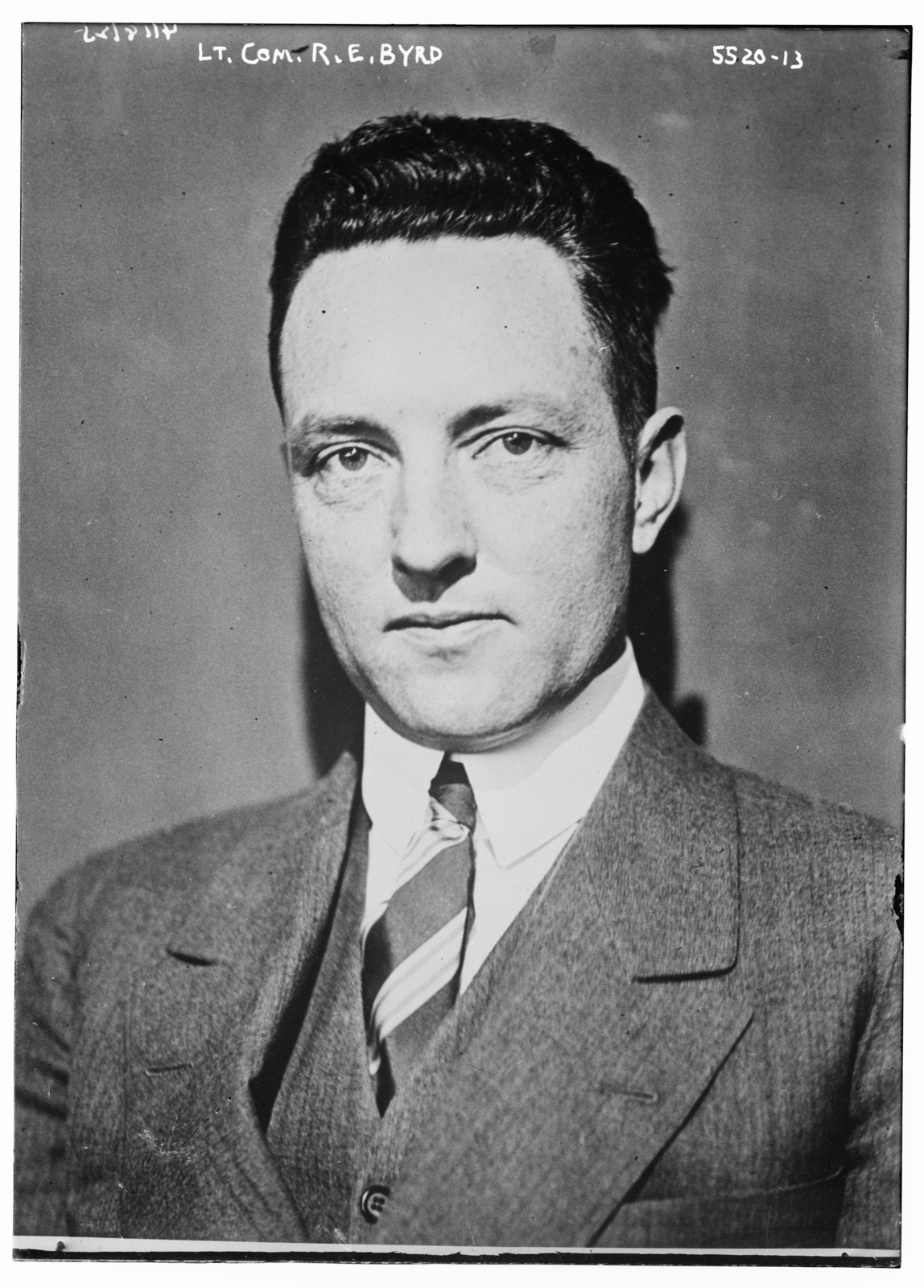
What they were trying to find out
The hypothesis was meteorological, and Haines stated it in the introduction to the Weather Bureau’s tables in 1939. There had never been a permanent weather station on the Antarctic continent. What was known of its weather had come “from the continental coast” and “almost entirely” from surface observations; the interior in winter was a blank. “During the second expedition, a secondary weather station was established at a point on the Barrier 100 geographical miles south of Little America. This was called the ‘Bolling Advance Weather Base,’ and was occupied by Admiral Byrd from March 26 to October 11, 1934. A schedule of surface observations was carried out at the Advance Base during this period.” The point of the station was its distance from the sea. A small portable building had been made in the United States “to house the personnel and equipment of the secondary meteorological station. This was to be located in the interior to the south far away from the moderating influence of the Ross Sea.”
What the station was to produce was a record: pressure, temperature, wind and cloud, read at fixed hours every day through the winter night, to be set beside the same record kept at Little America and at Amundsen’s Framheim in 1911. The difference between the two would be the measure of the interior. The hut carried a second instrument of the same kind: a reticle for the meteor watch that Poulter was running at Little America, so that the heights of meteors could be fixed by observing them from two stations at once. And there was the aurora, to be noted five times a day.
The hypothesis under the hypothesis was about the observer. The plan had been for three men. Haines wrote that “the original plan for three men to occupy the Advance Base during the winter night was abandoned when Admiral Byrd finally decided to occupy it alone,” and that the station was placed “approximately 100 geographical miles south of Little America, which was much closer than had been originally intended.” In March the dispatches had said 200 miles. Commander Gjertsen, the Norwegian officer who had taken the Ruppert through the ice, told reporters in New York in April that “the hut would have been a tight fit for two men,” and that the plan for two had been dropped because the delays in landing supplies had made it impossible. Byrd’s own reason, radioed from the base on 27 March, was not a scientific one: “I am doing it because I am anxious to do it, and am making no sacrifice of any kind whatever.”
So there were two claims. The first was that the interior winter could be read off instruments every few hours, and set against the coast. The second, which nobody wrote down as a claim, was that one man could keep such a station through five months of darkness, with a stove, a petrol engine and a radio, and remain an observer. Sir Hubert Wilkins, asked about the plan by a New Zealand paper in April, doubted both. A station 123 miles away on a barrier a few hundred feet above the sea, he said, would give much the same readings as Little America; and one man “could not hope to maintain these observations without extended intervals for rest.” To make a proper study “two men at least should be at hand.”
What they built
The hut was thirteen feet long, nine wide and seven high, a specially insulated wooden box with a folding bunk, a folding table, a radio, books and an oil stove “with long, crooked pipe radiating heat and carrying off fumes,” as the Christian Science Monitor described it from the expedition’s plans in May. A vestibule at the front led into tunnels cut in the snow for the fuel and the food, so that the fuel could be kept out of the house as a precaution against fire. The building was sunk in a pit until its roof was level with the surface. Light came from a pressure lamp. A small petrol engine drove the generator that charged the radio, and the radio, with its schedules and the men at the other end of them, is the subject of The schedules. The instrument shelter stood on the roof, and the wind vane and anemometer cups on a pole twelve feet above it.
The instruments were the Weather Bureau’s, and Haines listed them: “the usual instruments for registering and automatically recording temperature, pressure, wind direction, and velocity.” The mercurial barometer was broken on the way, “either while en route by plane to the Advance Base or while the house was being assembled,” so pressure came from an aneroid and a barograph calibrated at Little America. Because the cold might stop the standard thermograph in the shelter, a second recorder was fitted, a distant-reading instrument whose bulb sat in the shelter and whose pen sat inside the hut, connected by a tube. The wind vane was “of the light airway type with unprotected wind-direction contacts,” and “frequently these contacts became covered with a very thin film of rime, which had to be constantly removed in order for the wind-direction apparatus to properly record.” Byrd “was given preliminary instruction in the use and care of the instruments” before he went.
The tractors laid the trail. They left Little America on 18 March with the stores, under Harold June, the chief pilot, four machines of which one broke down, and the cable that reached New Zealand called it “the first mass mechanised surface advance in the history of polar exploration.” The trail was flagged every sixth of a mile, with a depot at fifty miles and a nest of crevasses to be skirted at twenty-four. On the morning of 24 March the tractor party dug the pit at the hundred-mile depot, and Ivor Tingloff the carpenter and Paul Siple, who had helped to plan the base, bolted the sections together. Byrd flew down the same day with William Bowlin at the controls and Clay Bailey as radio operator, in 39 below, and the main southern dog party under Captain Innes-Taylor, coming home from 150 miles out, stopped to help. As the plane crossed the fifty-mile depot, Demas crawled out from under a broken-down tractor seventeen miles beyond it and waved; he had been working on it with bare hands.
Byrd had left Little America without ceremony. “Please explain to the other men,” he said at the plane, “that I have not said good-by to them individually because I never say good-by.” He had warned them against concern if his radio went silent: “I am not a radio operator, so the radio will probably fail.” As the plane cleared the ridge, Haines ran into the radio shack with a fur boot in his hand. It was Byrd’s, back from the tailor. “My God!” said Haines, “he’s gone off without this and it will take me seven months to deliver it.”
The tractors left the base on 28 March. The Associated Press, which had its own man at Little America, gave that date and counted from it; the United Press cable that reached New Zealand said 31 March, and the Weather Bureau’s table begins on 27 March. Jacob Ruppert, the brewer who had paid for much of the expedition and lent his name to its ship, radioed on 6 April: “I am very much worried about your personal safety and earnestly urge your return to the base.” Byrd did not return. On 15 April, in a broadcast to England, he sent fifteen words: “The perils of my isolation are greatly exaggerated. Tranquillity is a pearl of great price.” On 21 April the sun went down for four months and he named the hut Bolling Advance Weather Station, after his mother. At Little America one tractor was kept ready “to rush to Admiral Byrd’s assistance if necessary, though it is doubtful if it could reach its destination.”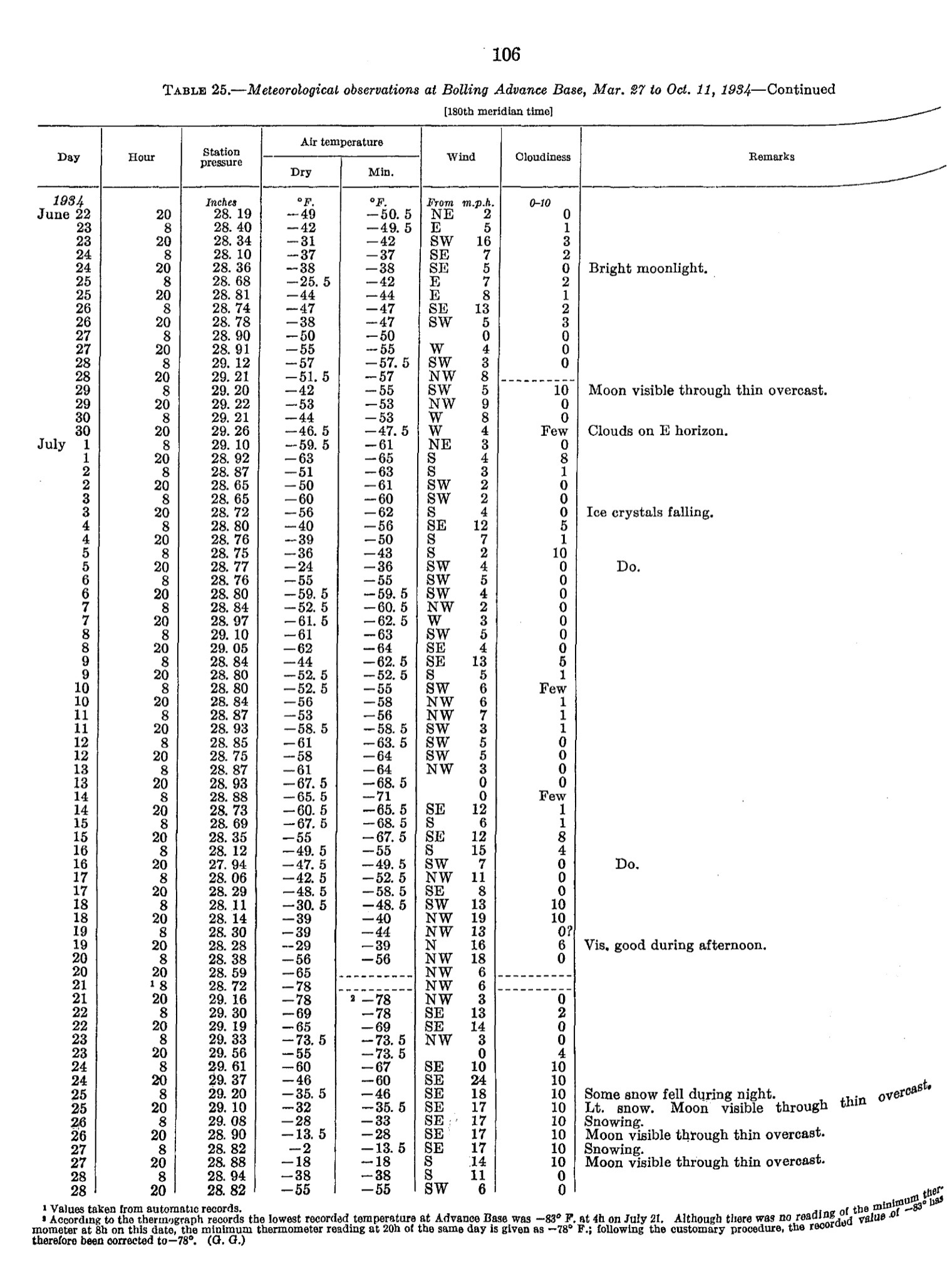
Three starts
For two months the station reported, and what it reported was cold. In daily contact in mid April Byrd gave temperatures between 50 and 60 below, thirty degrees lower on average than Little America’s. On 8 May: “I use the heating stove economically to save fuel. The shack is only 20 degrees above zero. It is quite cold at the telegraph key. However, I am used to that now. There is a wonderful peace and quiet in a place like this. I am enjoying myself. Besides, the meteorological observations keep me busy. I had considerable trouble with the instruments, but they are still running.” On 20 May the minimum thermometer read 72.5 below, lower than anything the first expedition had seen; on 21 May he talked to Haines about the frost that gathered in “gritty layers on the anemometer cups,” about climbing the twelve-foot pole to wipe the vane, about a clock in the shelter that had stopped because its oil had frozen. On 15 June he told Poulter by radio that his condition was good “although he had some difficulty in properly ventilating the shack,” that the few pounds he had lost were back, and that “either my cooking is getting better or I am holding my own in spite of it.”
On Sunday 17 June, in the middle of a radio conversation, he said: “Let us make this short. I will tell you later why.” He explained afterwards that “the motor supplying electric power for the radio was throwing off fumes,” that he had felt “rocky” and had had to shut it down. The expedition’s scientists “warned him to exert the utmost care,” and that was the end of it.
The tractor trip came out of the meteor programme. On 3 July Poulter announced that Little America’s watches had the earth catching a thousand million meteors a day, and that he was “considering a tractor journey to Bolling advance weather station … to place another meteor observer,” a trip of 123 miles that “would be a hazardous trip, requiring travel by moonlight.” The expedition’s dispatch of 9 July set out the case: a second meteor station, balloon runs from the base, a load of stores for the spring parties, and the chance that Byrd would “take advantage of the arrival of the party to return to Little America.” The project had been put to Byrd “a fortnight ago” and he had given it “his tentative approval.” The pros and cons were being argued “during the bi-weekly radio schedules with the advance base.” Tractor No. 1 had made a trial run by moonlight with a wooden cabin bolted to its chassis, two bunks and a stove inside. “Admiral Byrd has insisted that, before the journey is attempted, every possible contingency be prepared for.” He suggested face masks.
Then the base went quiet. On 19 July Little America reported that Byrd had “re-established radio contact … after a nine days’ silence, due to a broken radio set,” and had issued instructions: a tractor, four men, two of them meteor observers, to reach the hut between 23 and 28 July and stay until October. On 20 July, in the conversation that fixed the arrangements, he mentioned that he had “a bad arm,” and gave no details. His main set was dead; he was working a small trail set cranked by hand.
The tractor left on Friday 20 July, late in the day after a morning blizzard, with Poulter navigating, Bernard Skinner, Waite at the radio, and the two observers, Carl Petersen and a New Zealander, Bernard Fleming. The temperature at the start was 50 below. By Sunday they were fifty miles out and could not find the trail. The orange flags “were completely snowed under in places and elsewhere were barely visible”; they had zigzagged 130 nautical miles to make fifty; a nest of crevasses lay ahead; the temperature had ranged from 60 to 71 below; nobody had slept since 6.30 on Friday morning. They turned back. A sixty-mile-an-hour blizzard caught them at twenty-eight miles and half buried the tractor, and they thawed the engine and the transmission with blowtorches, at 71 below, before they could move. They reached Little America on Tuesday night. In October Murphy wrote what the dispatches of July had not said: that the party, “already halfway to the advance base, was obediently turning back in compliance with his instructions.”
The second start was on Saturday 4 August: Poulter, Waite and Demas, in a tractor towing three sledges with 374 gallons of petrol for depots along the way and two months’ food, because the flags were gone and Poulter meant “to resort strictly to navigation.” The temperature at the start was 13 below, against 71 on the first. Byrd, told they were coming, said he would keep a light burning on the roof and fly a kite with a lamp on it. On Monday at noon, twenty-three miles out, the tractor broke down, and they came back.
The third start was at three in the morning of 8 August, in Tractor No. 3. At noon they were twenty-five miles south in zero visibility, Poulter and Waite skiing ahead of the machine planting flags every hundred feet while Demas drove behind them. At eight that night they were at twenty-three miles, picking up the sledges abandoned on Monday. The generator failed and its brushes wore down; the ignition was balky; their faces and hands “were in constant danger of freezing.” At 3.45 on the afternoon of Friday 10 August they reported from eighty-one miles, stopped to mend the generator and eat. They missed their 7.45 schedule. At eight Little America broadcast blind, in the hope that the hut was listening: “They are at 81. They are at 81. If nothing stops them, if they can keep up their present rate of progress, they may be there at midnight. Keep the light burning.” At 11.45 Dyer called the tractor and got nothing. The men in the radio room could hear stations in the United States and nothing from the barrier. At 12.15 Dyer said, “There he comes!” It was Waite: “Heard you calling me on Byrd’s receiver. Can’t hear you on this receiver. Will return to shack and try again in a minute or so.” They had seen the light on the anemometer pole from ten miles out and had driven for it without stopping.
Byrd had come up to meet them. “Hello, fellows,” he said. “Come on down and get warm. I have some hot soup for you.” He had not seen a human face since 28 March. Poulter reported by radio that he was “quite weak, but he will be all right in a moment,” and that “Admiral Byrd was even calmer than we were when we met in this place.” Then Byrd took the key himself, and slowly: “Tell my friends not to worry. I’m all right; I’ve already come up a great ways. You fellows have done a splendid job and I want to thank you.”
What it looked like from inside
Byrd told the story twice that October, once in a short account for the Australian press and once at length to Murphy for the North American Newspaper Alliance, and the two agree. April and May were, he said, “the freest I have ever known.” He was up before eight for the first observation and often did not put out his light until two or three in the morning. He had forgotten to bring an alarm clock and trained himself to wake. The stove was out for hours before he slept and the water he left on it for the morning’s tea was ice by the time he lit it again. While the ice thawed he climbed the ladder through the hatch, read the thermometers and the barograph in the shelter, noted the clouds and the wind, and came down to read the register inside the hut that the vane and the cups on the pole fed by wire. Five times a day, at eleven, one, four, seven and ten, he went up to observe the aurora. In the worst blizzard of the winter he climbed the pole to brush the drift off the electrical contacts, and he did not remember how many times he climbed it. “Out there I was utterly beyond the urgencies and transient crises of everyday life. There were no telephones, no traffic noises, no creditors, no importuning friends, no formal dinners, no stock market reports, no economic crisis, no defeatists, no bores, no stiff collars. It was great.” Three times a week there was the radio.
The stove was a coal stove converted to burn kerosene. Murphy added a fact the dispatches of the winter had left out: the stove first intended for the hut had been thrown out at Little America “as the fumes thrown off by it had made several men quite ill. We supposed that this fault had been remedied in Admiral Byrd’s stove, but apparently it was not.” Grimminger, going through the temperature records in 1941, added another: the instrument shelter on the roof stood beside the chimney, so that “with certain wind directions it is possible that the temperature readings were influenced by warm air from the chimney which issued from the roof and was connected to a kerosene stove inside the hut.” The same pipe that was poisoning the observer may have been warming his thermometer.
“Without noticing it at first, Admiral Byrd was gradually being poisoned by the fumes from the stove. His eyes commenced to smart and puzzling aches and pains developed in his body.” Then, in his words, “I was also seriously poisoned by carbon monoxide fumes from the small gas generator for giving power to the radio. The poison settled into my body. I was all but helpless. The first two weeks of June were really hell. I did not think I had a chance. First it was bewildering, then dismaying. I counted my time in minutes. Finally I think I accepted it calmly. There was nothing else to do.” The diary he kept, which came to auction in 2024, has an entry for 4 May, “Don’t know what’s the matter. Too much carbon monoxide; the lack of sun and some important vitamin”; by the auction house’s summary of it, he collapsed on 31 May from the fumes of the stove and the engine together; and the entry for 8 June states the whole problem: “To cut the poison, I must endure the freezing cold. To reduce the cold, I must endure the poison.” Murphy put the same thing in the third person: “When he cut down on the stove, the cold sapped his strength.” The hut went to 30 below at night. He ate “a mouthful at a time,” sometimes half frozen; his principal food, Poulter found, was powdered milk and tinned vegetables, and seal meat or beef frozen so hard it took him hours to eat enough to matter.
The Weather Bureau’s table is the other witness, and it says the same thing in blanks. On 1 June and on 2 June one of the day’s two readings has no minimum temperature and no cloud, only a dashed line; on 4 June one reading has no minimum; on 18 June, the day after he cut the radio conversation short, there is no minimum and no cloud at either reading. On the evening of 20 July and the morning of 21 July, the coldest morning of the year, there is no minimum again and no cloud, and the morning’s pressure and temperature are footnoted as “values taken from automatic records.” Everything else is there: a reading twice a day, every day, from 27 March to 11 October, in a column of figures that Poulter, when he saw the sheets, called complete. “I marvel,” he radioed, “at how complete a set of scientific data he has obtained and how painstaking he has been with it.”
The radio was the hardest instrument of all, and it was the one Little America could read. To start the engine Byrd had to thaw it by the stove and then, because of its exhaust, drag it into the tunnel. When a pin in the magneto drive sheared, he fell back on the hand-cranked trail set, “cranking with one hand and keying his transmitter with the other. He came to dread the radio schedules.” On 15 June, the day of the message about his cooking, he hung a note over his table listing the letters he had written and where they would be found. In July, Murphy wrote, “the worst thing during this period was missing radio contact with the base camp at intervals. Sometimes he lacked the strength to crank the hand generator and at other times the set, with which he was unfamiliar, gave him much difficulty. He dreaded losing contact with us for fear that his silence would reveal his distress. Sometimes, he said, he could hear Little America calling when he could not reply.” Meanwhile, “without giving our camp the slightest indication of his distress, he managed to clear several messages to dietetic authorities in the United States, obtaining information about foods likely to yield the most benefit.”
At the other end, Murphy “became suspicious and kept hammering at him for a report on his health. Admiral Byrd found it increasingly difficult to turn the questions aside.” Poulter’s suspicion was of a different kind. Six days after he reached the hut he radioed: “As I think back I see things in his messages that were put there to keep us from realizing his condition, fearing that the trip in an attempt to reach him would risk the lives of others.” And: “He was convinced he had reached the limit of his endurance. He was true to the polar code and played the man gallantly.” Little America had read the words. Poulter had read the keying.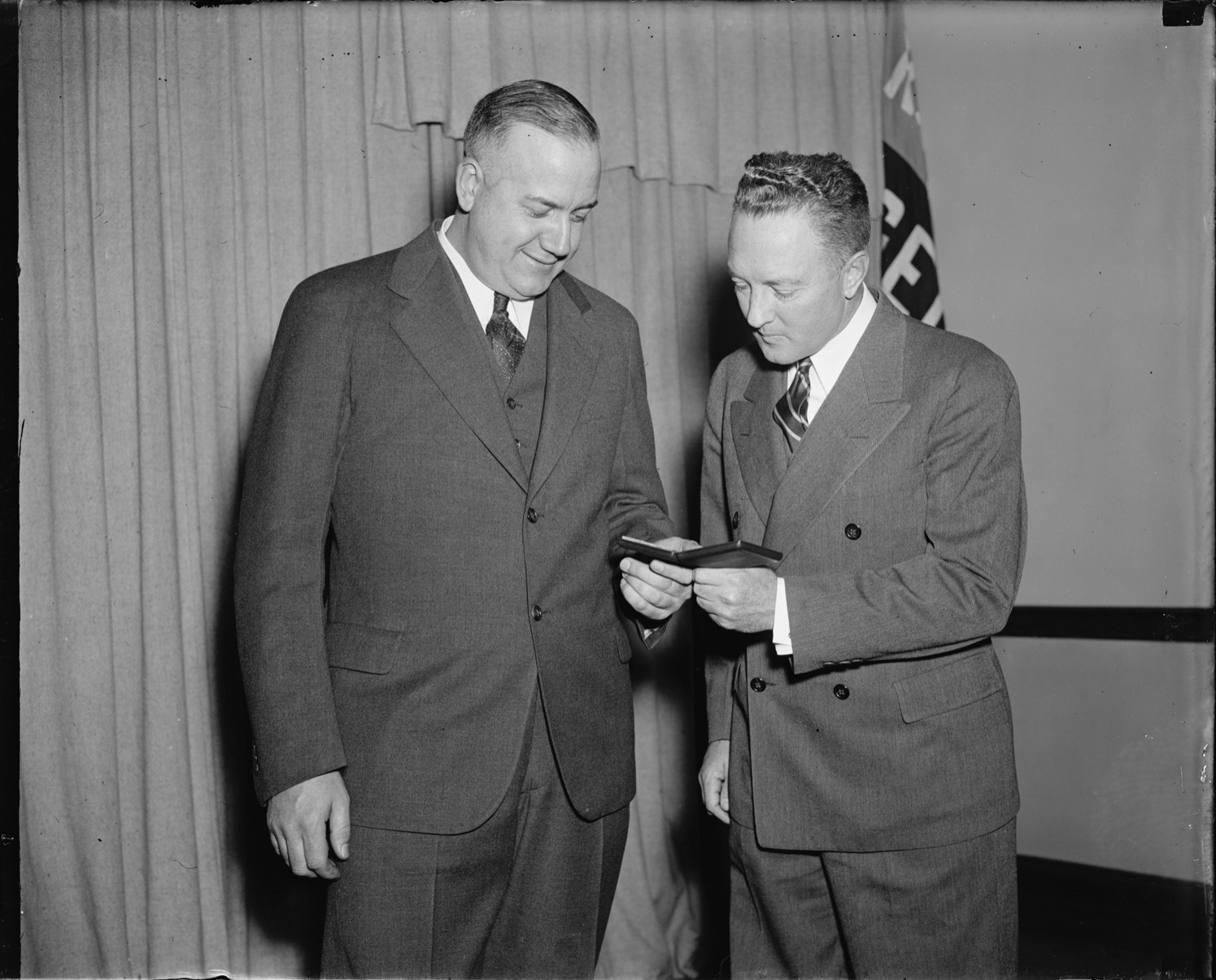
What happened
The tractor party did not bring him home. On 14 August Little America reported that he was “too weak immediately to start on the return journey, and the entire party will remain at the Bolling base for an indefinite time,” and gave Poulter’s diagnosis: Byrd “was so badly weakened as the result of kerosene fumes poisoning in June that he was unable properly to take care of himself, and spent at least half his time in his sleeping bag.” Then the sentence that the newspapers of the world carried: “Dr. Poulter states that he was too proud to call for help and expose the men to the risk of a winter journey on his behalf.” Two days later came the note of 15 June and the second note, written to the rescue party in case the tractor “would arrive too late,” which he “put out of sight when we entered the shack.”
Poulter relieved him of the observations and took them over himself, so that they could be “correlated henceforward with readings at Little America.” Demas offered his bunk and was refused; the three visitors slept in their bags on the floor “with their heads around stoves and their feet under tables and chairs,” in a hut Poulter said was “about as crowded as a telephone booth when only one man is in it.” A ventilator was cut into the tunnel from which the hut drew its air, and “by carefully watching the stove a good supply of fresh air is obtained.” On 15 August Byrd took a walk outside in 61 below. On 23 August he was “confined most of the time to his bunk” but walking a little each day. On 26 August the temperature was about 75 below and the party at the base had still not seen the sun, which had been up over the Ross Sea for five days; he saw it on the 27th, for the first time in more than four months. That week’s average at the base was 62 below and its minimum 77. On 4 October his mother in Winchester received a radiogram: “Am O K again, my work here now finished. Am returning to Little America soon. Told the three fellows here with me that when we get back I am going to bring them to see you for a good feed. Much love. DICK.”
A second tractor, sent south with 3,000 pounds of dog pemmican for the spring parties, sat in drifts fourteen miles from Little America for six days in winds of forty to fifty miles an hour, and Byrd, “impatiently awaiting relief to return to camp to direct operations,” ordered a plane for the first break in the weather. The tractor reached the base at two in the morning of Thursday 11 October. On Friday 12 October Bowlin took off at ten, spent half an hour over the white barrier before he could pick out the hut, and was back at Little America at 2.20 in the afternoon with Byrd and Poulter aboard. “His long hair, uncut since he left, appeared greyer, but he was in excellent spirits. He greeted each man by name and thanked them for carrying on the expedition while he was away.” The Weather Bureau closed the station’s table on 11 October, the same day by the calendar on the American side of the date line. Byrd had been away from Little America for just under seven months and alone for four and a half.
“Coming back even to Little America,” he said at the end of the month, “is like returning to a different world.” He said that there had been “periods of indescribable peace and tranquillity out there,” that June had been “the long nightmare,” and that “as an experience, it was in many respects a beautiful experience. I wanted it, I asked for it, and I would not have missed it for anything.” Murphy asked him why, in July, with the tractor halfway to him and turning back on his own orders, he had not said what state he was in. “He shrugged his shoulders. ‘How could I?’ he asked. ‘Would you?’”
The expedition reached Dunedin on 18 February 1935. Byrd told the Evening Post that “the thing that pleased him most was that all the men had come back safe and well,” that “there were many cases where there might have been casualties,” and that “he had Providence rather than his own efficiency to thank for the immunity.” In January, asked by the Australian press to sum up the expedition’s results, he had written an account that gave the geography and the twenty-two branches of science, and in which, as Poulter pointed out, he had “omitted the part he himself played.” Poulter, “in order that the leader’s experiences may not be entirely lost,” added a note of his own: “When we reached the Byrd advance base we were shocked by his appearance—he was emaciated, hollow-cheeked, weak, and haggard.” He quoted the instructions Byrd had written for his officers in June, which ended, “Don’t worry. Carry on normally—go as far as you can, carrying out our scientific programme, but put the lives of my men first. Do what you can for Ellsworth.” And he gave his verdict: “When we reached the advance base he had fought it out alone. I know nothing finer than that in life or literature.”
After
Haines and Grimminger wrote up Little America’s year on the ice in 1935, and when the expedition came home Grimminger was given the job of compiling everything from both expeditions. The tables came out as Supplement 41 of the Monthly Weather Review in October 1939, 377 pages of them, and the summaries as Supplement 42 in 1941, much of it done, Grimminger wrote, “in his spare time,” with help from a Works Progress Administration project in Massachusetts. The Advance Base record is in them: the twice-daily observations from 27 March to 11 October as Table 25, and then hourly values of pressure, temperature and wind for the whole period, read off the recording instruments and corrected against the eye readings at fixed hours. What the two volumes contain, and what they leave out, is set out in The readings.
The record answered the first question. The station’s mean temperatures were 31.9 below in April, 30.4 in May, 25.0 in June, 51.7 in July, 46.8 in August and 44.8 in September, and 38.1 for the six months together, against 26.6 at Little America for the same dark season. The interior was colder than the coast in every month, by between 8.2 and 16.2 degrees, 11.5 on average; “the mean temperature was always considerably less at Advance Base; and there can be no doubt that this is also characteristic of the other months of the year.” The absolute minimum, by the rules, was 78 below, on 21 July, and 77 below was reached three times in August. The coldest day of all had a mean of 77.1 below. There was no maximum thermometer at the base, so no maxima; hourly cloudiness was not observed, so no table of cloud; the wind vane’s contacts gave “considerable trouble,” so that the wind records were “difficult to interpret in some cases” and the eye observations were used instead. The station’s height above the sea came out at 246 feet by one method and 280 by another. Everything the single observer could not do with his hands is a gap in the summaries, and everything the instruments could do is there.
The second question was answered too, in a different volume. Byrd wrote Alone in 1938. The Weather Bureau’s version of the same months is the table, and its footnote about 21 July. Congress voted the expedition’s members silver medals in June 1936, and the Secretary of the Navy pinned them on in October 1937 with Haines standing by. The National Geographic Society gave Poulter a gold medal that April. Byrd went south again, the last time in 1955, and died in 1957. The diary from the hut, with its entries about the poison and the cold, was offered at auction in June 2024 with an estimate of 40,000 to 60,000 dollars.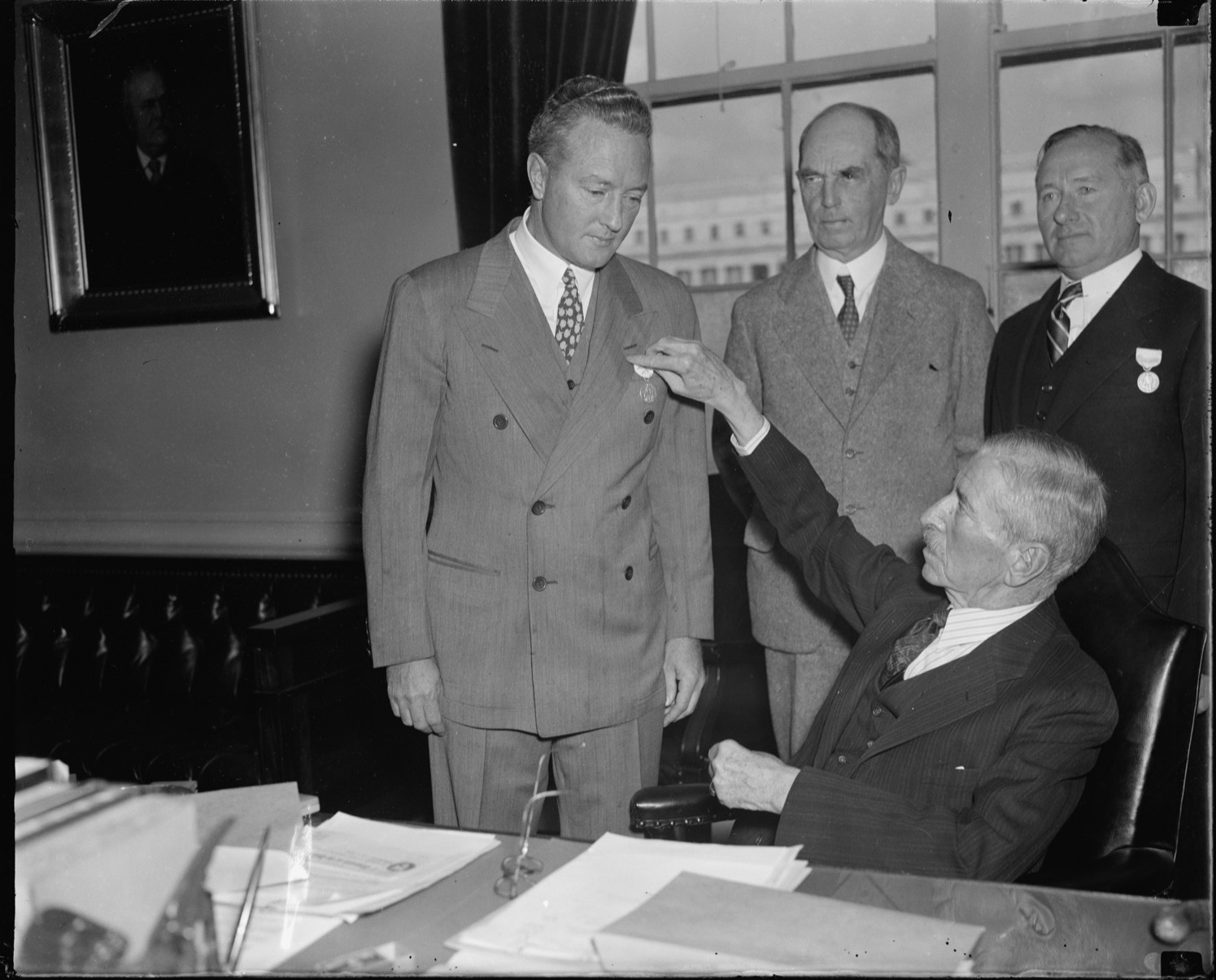
What it taught
The station worked. That is the first thing to say, because the story is usually told as if it had not. The question Haines had asked, what the interior’s winter was like, was answered to the degree and the hour, and the answer is still in print: eleven and a half degrees colder than the coast, 78 below at the worst, and a July whose mean was 51.7 below. The instruments did what instruments do. The thermograph drew its trace at four in the morning of 21 July whether or not anyone was awake to see it.
What failed was the other instrument. A station with one observer is a station whose observer is also its most sensitive detector, and the only one for the thing that was actually going to kill him. There was a thermometer for the cold, a barograph for the pressure, cups on a pole for the wind, and nothing at all for carbon monoxide except a man’s eyes smarting and his limbs aching and his handwriting going. He read those symptoms as the instruments read theirs, and recorded them, and went on. The stove was known to be bad; a stove like it had been thrown out at Little America for making men ill. The generator’s exhaust was known to be bad; he dragged the engine into the tunnel because of it. The hazard was the one thing at the station that nobody had thought to measure, and it was being measured, every day, in the body of the man who sent the readings.
The messages were the instrument the base had, and the base read them for their content. On 15 June the content was that his cooking was getting better; the same day he hung a note over the table saying where his letters were. On 17 June the content was “let us make this short,” and the scientists at Little America, who heard it, warned him to be careful. On 20 July the content was a bad arm. All of that was true and all of it was chosen. Murphy, who knew him best, suspected and could not prove. Poulter, who had the messages in front of him as well as the words, saw “things in his messages that were put there to keep us from realizing his condition,” and went, and was ordered back, and went again, and went a third time. The signal said all well; the hand that sent it said otherwise; and the base, for most of a month, obeyed the signal, because the signal came from the commander and the commander had told them in March to make nothing of what he was about to do.
The complication is that the hand was keying the truth as well, and the base read that too. The observations went on, twice a day, with the gaps that mark the worst days, and when Poulter reached the hut he found a record so complete he marvelled at it. Byrd had reversed the usual failure: it was the data he kept honest and himself he falsified. He explained why in two words, “Would you?”, and the answer the expedition gave was that it would not have either, which is why Poulter did not ask permission for the third start and why Byrd, who had ordered the first party home, kept a light burning on the pole. The lesson is not that the observer lied. It is that a station with one man in it has one channel out, and whoever listens at the other end has to learn to hear the hand and not just the words, because the hand will send through anything.
Sources
- G. Grimminger and W. C. Haines, Meteorological Results of the Byrd Antarctic Expeditions 1928–30, 1933–35: Tables, Monthly Weather Review Supplement No. 41, United States Weather Bureau, October 1939. Haines’s introduction on the purpose, siting and instruments of the Advance Base and the dates 26 March to 11 October; Table 17, the fall tractor journey of 18 to 29 March; Table 25, the observations at Bolling Advance Base from 27 March to 11 October, with its blanks and footnotes; the hourly tables; the station’s coordinates and height. The figure is page 106. library.oarcloud.noaa.gov, via the NOAA Central Library’s Monthly Weather Review page
- George Grimminger, Meteorological Results of the Byrd Antarctic Expeditions 1928–30, 1933–35: Summaries of Data, Monthly Weather Review Supplement No. 42, 1941. The occupation “alone by Admiral Byrd for 6 months,” the shelter beside the chimney, the thermometer readings twice daily, the absence of a maximum thermometer and of hourly cloud, the wind vane trouble, Table 23 (monthly means), Table 25 (the difference from Little America), Table 30 (absolute minima) and its footnote correcting −83° F. to −78° F. library.oarcloud.noaa.gov
- W. C. Haines and George Grimminger, A Brief Meteorological Summary: Byrd Antarctic Expedition II, 1933–1935, Little America, 1935. Little America’s monthly observations for the same winter. archive.org
- Evening Star, Washington, D.C., Associated Press and syndicated dispatches from Little America: 25 March 1934, p. 4 (the base built, Byrd’s flight, Demas under the tractor); 28 March, p. 2 (Byrd’s departure, “I never say good-by,” Haines and the boot); 9 July, p. 3 (Murphy’s dispatch on the plan for the tractor journey); 22 July, p. 7 (the arrangements of 20 July and the “bad arm”); 23 July, p. 1 (the first attempt lost on the trail); 24 July, p. 1 (the blizzard at 28 miles); 12 August, p. 1 (the third start); 13 August, pp. 1–2 (the arrival, the radio room at Little America, Demas); 16 August, p. 2 (Byrd’s walk, the crowded shack, Poulter taking over the observations); 17 August, pp. 1 and 3 (Poulter’s “things in his messages,” the notes of 15 June, the diet); 23 August, p. 30 (the ventilator, the stove and lamps); 30 August, p. 2 (the sun seen on 27 August, the week at 62 below); 4 October, p. 1 (the radiogram to his mother); 28 October, p. 2 (Charles J. V. Murphy’s interview with Byrd for the North American Newspaper Alliance, the source of Byrd’s routine, the stove’s history, the magneto pin, the dietetic messages, “How could I? Would you?”). Read in the Library of Congress’s Chronicling America scans. 25 March, 28 March, 9 July, 22 July, 23 July, 24 July, 12 August, 13 August, 16 August, 17 August, 23 August, 30 August, 4 October, 28 October
- Evening Post, Wellington, United Press Association cables and reprinted dispatches, 1934 to 1935: 29 March (Byrd’s message of 27 March), 3 April (the tractors’ departure), 4 April (Sir Hubert Wilkins’s comments, from the Poverty Bay Herald), 9 April (Jacob Ruppert’s appeal and Gjertsen on the hut), 17 April (“Tranquillity is a pearl of great price”), 23 April (the station named, the tractor kept ready), 3 May (the Christian Science Monitor’s description of the hut), 11 May (the message of 9 May), 23 and 28 May (72 below and the first expedition’s record), 11 June (the May records), 18 June (the message of 15 June), 25 June (the conversation of 17 June), 5 and 10 July (Poulter’s meteors and the plan), 21 July (the nine days’ silence), 23, 26 and 27 July (the first attempt), 6 and 10 August (the second), 13 and 14 August (the third, and the arrival), 16 and 18 August (Poulter on the poisoning and the notes), 28 August, 10 and 15 October (the second tractor and the flight out), 27 October (Byrd’s account for the Australian Press Association), 21 January 1935 (Byrd’s summary and Poulter’s addition), 18 to 20 February 1935 (the return to Dunedin, Potaka, Byrd’s interview). Read on Papers Past. 29 March, 4 April, 9 April, 17 April, 23 April, 3 May, 11 May, 23 May, 28 May, 18 June, 25 June, 5 July, 21 July, 26 July, 6 August, 14 August, 16 August, 18 August, 28 August, 10 October, 15 October, 27 October, 21 January 1935, 19 February 1935, 20 February 1935
- Bonhams, “A Closer Look: Byrd,” 2024, the catalogue essay for lot 61 of the Fine Books and Manuscripts sale of June 2024, Byrd’s Advance Base diary. The entries of 4 May and 8 June are quoted from this essay and have not been checked against the manuscript. bonhams.shorthandstories.com
- Ohio State University, Byrd Polar and Climate Research Center Archival Program, “Byrd Antarctic Expedition II, 1933–35 (A–B),” finding aid. Box 148 holds the Advance Base folders, including “Advance Base, radiograms: 1934” and “Advance Base, rescue of Byrd: 1934”; the originals of the messages quoted here from the press are there. Not consulted. library.osu.edu
- Richard E. Byrd, Discovery: The Story of the Second Byrd Antarctic Expedition (Putnam, 1935), and Alone (Putnam, 1938); Thomas C. Poulter, The Winter Night Trip to Advance Base, Byrd Antarctic Expedition II, 1933–35 (privately printed). The fuller accounts, all in copyright; none is quoted here, and the entry is built on the contemporary record above.
- Photographs: George Grantham Bain Collection, LC-DIG-ggbain-32861, and Harris & Ewing Collection, LC-DIG-hec-28963 and LC-DIG-hec-23479, Library of Congress Prints and Photographs Division, all “no known restrictions on publication.” Bain, Byrd and Poulter, Byrd and Haines