On Wednesday 20 May 1747 His Majesty’s ship Salisbury, fifty guns, was in the Bay of Biscay off the mouth of the Loire, eight weeks out of Plymouth. Some thirty or forty of her 300 men had scurvy. That day her surgeon, James Lind, thirty years old, chose twelve of them and had them put together in the fore-hold, “being a proper apartment for the sick,” and fed from the same pot. He divided them into six pairs. Two were given a quart of cider a day. Two took twenty-five drops of elixir of vitriol, which is dilute sulphuric acid, three times a day. Two took two spoonfuls of vinegar three times a day. Two of the worst, whose hamstrings had gone rigid, drank half a pint of sea water. Two took a paste the size of a nutmeg, made of garlic, mustard seed, horseradish, balsam of Peru and myrrh, three times a day. The last two were each given two oranges and one lemon every day. “These they eat with greediness,” Lind wrote, “at different times, upon an empty stomach. They continued but six days under this course, having consumed the quantity that could be spared.”
Six days was enough. At the end of them one of the two was fit for duty. The other, “being now deemed pretty well, was appointed nurse to the rest of the sick.”
The ship’s log for that week records a death, a cask of pork two pieces short, and a Dutch vessel brought to. It does not record the oranges. The muster book, in which the Navy counted its sick, shows one or two men ill that spring, and usually none.
Lind published the experiment in 1753, in a book of 456 pages. It takes up five of them. The Admiralty began to issue lemon juice to the fleet in 1795, forty-eight years after the fore-hold and a year after Lind died at Gosport. In between, the man who had run the clearest experiment in the history of medicine wrote, from the largest hospital in Europe, that “more enlarged experience must ever evince the fallacy of all positive assertions in the healing art.” He meant it. He had the experience. That sentence, and what the Navy did in the forty-eight years, are the subject of this entry.
Who ran it
James Lind was born in Edinburgh on 4 October 1716, the son of a merchant. In 1731 he was apprenticed to an Edinburgh surgeon, George Langlands. In 1739 he entered the Navy as a surgeon’s mate under Admiral Haddock in the Mediterranean, and served after that on the Guinea coast, in the West Indies and in the Channel.
The Salisbury was the fourth ship of the Navy to carry the name: a fourth-rate of fifty guns, built at East Cowes on the Isle of Wight and launched on 29 January 1746, with a complement of 300. Her captain was the Honourable George Edgcumbe, in his mid-twenties, the Member of Parliament for Fowey. Edgcumbe brought Lind with him from his previous ship, the Kennington, and Lind became her surgeon when the first one left within weeks. The muster later listed seventy-four of her men as deserters.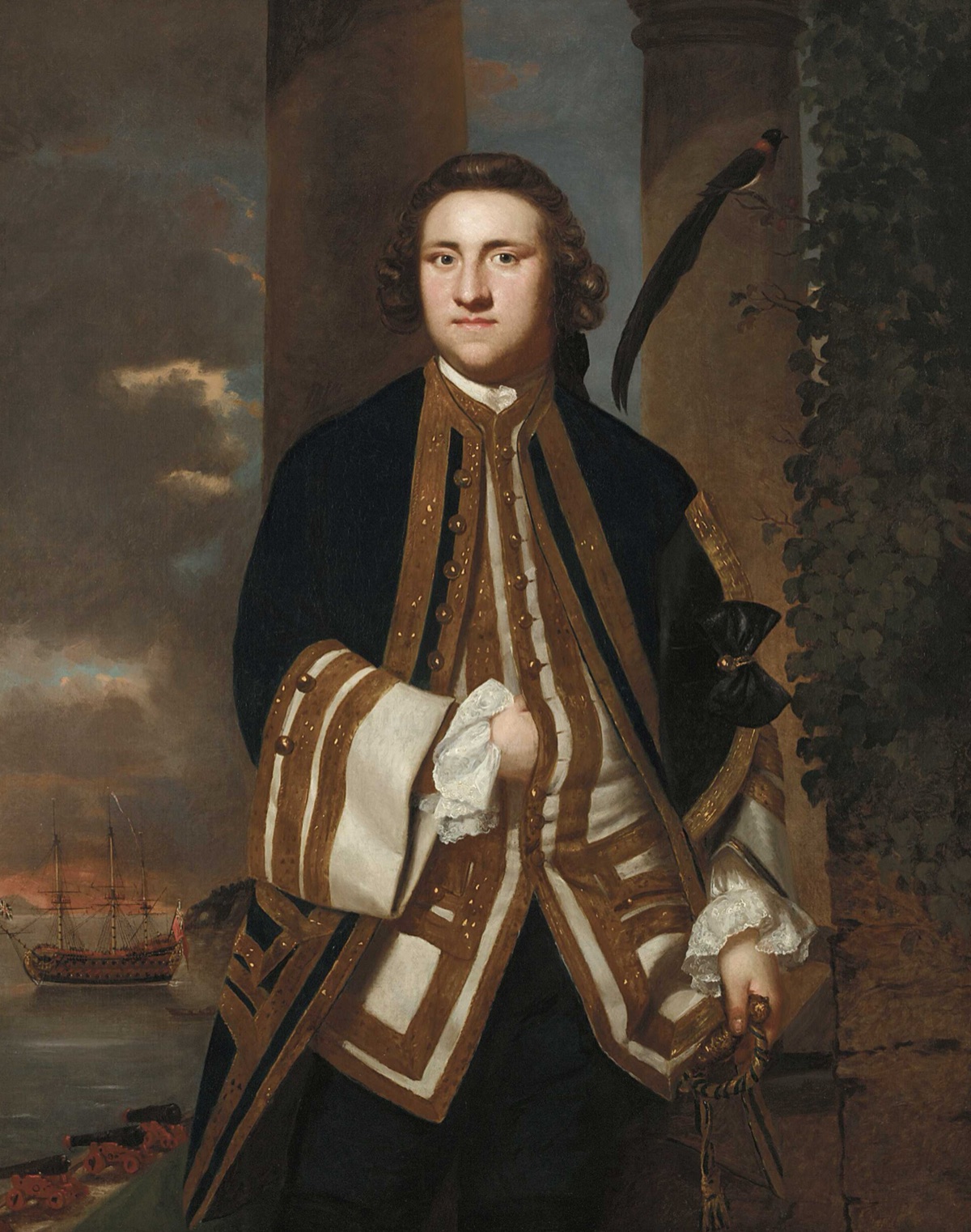
Britain had been at war with Spain since 1739 and with France since 1744, and the smaller ships of the Western Squadron patrolled the Channel and the Bay of Biscay, stopping neutrals, taking privateers and watching the French coast. Her longest cruise, from 10 August to 28 October 1746, had produced one case of scurvy, a marine named Walsh, who had been taking elixir of vitriol for three weeks as a restorative “and yet at length contracted the disease, while under a course of a medicine recommended for its prevention.”
Everyone in the Navy knew what scurvy could do, because everyone had read what it had done to Anson. Commodore George Anson had taken a squadron into the Pacific in 1740 to attack the Spanish and come home in 1744 with one ship. The official account of 1748 told how the disease took hold after Cape Horn: “in that month no less than forty-three died of it on board the Centurion”; in May “we lost near double that number”; and by the time the ship reached land in June, “after the loss of above 200 men, we could not at last muster more than six foremast men in a watch, capable of duty.” Lind copied those sentences into his book. By the time the book came out Anson was First Lord of the Admiralty, and Lind dedicated it to him as the man who “does now preside over her Naval Affairs.”
The scale was not a secret either. When the next war ended, the Annual Register for 1763 printed what it had cost in seamen and marines: 184,893 employed; 1,512 “killed in engagements and by accidents”; 133,708 “dead of diseases and missing.” Later writers give the first figure as 184,899. The page says 184,893, and the lines below it add up to that.
The readers came later: Gilbert Blane, physician to Admiral Rodney’s fleet in the West Indies from 1780 and a member of the Navy’s medical board from 1795; Thomas Trotter, physician to the Channel Fleet from 1794; and James Cook and Sir John Pringle, president of the Royal Society, in 1776. Lind was the writer, and the distance between writer and readers is the experiment’s second result.
What they were trying to find out
Lind stated the question before he described the trial, and there are two claims folded into it.
The first was practical: of the remedies that ships’ surgeons were actually using against scurvy at sea, which worked? “I shall propose nothing dictated merely from theory,” he wrote, “but shall confirm all by experience and facts, the surest and most unerring guides. What I propose is, first, to relate the effects of several medicines tried at sea in this disease, on purpose to discover what might promise the most certain protection against it.” The six treatments were not his inventions. Cider and sea water came recommended by his friend Edward Ives, surgeon of the Yarmouth, who had tried them in the Western Squadron under Admiral Martin and claimed for them no more than “a palliative benefit.” Elixir of vitriol was in every medicine chest. The electuary was “recommended by an hospital-surgeon.” Oranges and lemons had been praised for scurvy for a century and a half, by Dutch and English sea-surgeons and by the account of James Lancaster’s voyage to the East Indies in 1601, and Lind gave a chapter of his book to proving it. The trial was a comparison of what people already believed.
The second claim was about the disease itself, and here Lind had a theory, as everyone did. Scurvy, in his account, came of the moisture of the sea air, which blocked the body’s perspiration; of damp lodging and cold; and of a diet of hard salt food that the body could not properly digest. Fruit and greens worked, in that account, by correcting the quality of the food and opening the pores. “The moisture of the air, and consequently the dampness of their lodging,” he wrote, was “a most powerful and principal cause” of the disease at sea. A theory of that kind has room in it for oranges, but it has room for a great many other things too, and it gives no reason why an orange should be different in kind from an onion or a quart of cider. The trial in the fore-hold could answer the first question. It could not touch the second, and the second was the one Lind spent the rest of his life on.
What they built
The design is in a single paragraph, and it has been quoted ever since because nothing in it needs explaining.
“On the 20th of May 1747, I took twelve patients in the scurvy, on board the Salisbury at sea. Their cases were as similar as I could have them. They all in general had putrid gums, the spots and lassitude, with weakness of their knees. They lay together in one place, being a proper apartment for the sick in the fore-hold; and had one diet common to all, viz. water-gruel sweetened with sugar in the morning; fresh mutton-broth often times for dinner; at other times puddings, boiled biscuit with sugar, &c.; and for supper, barley and raisins, rice and currants, sago and wine, or the like.”
Then the six pairs and their doses. The courses were to run a fortnight. Lind did not say how he decided which man got which, and he had no pair who got nothing, though he compared the failures afterwards with “others who had taken nothing but a little lenitive electuary and cremor tartar, at times, in order to keep their belly open.” Two men to a treatment is not many, but the point of the common diet and the common berth was that whatever happened to a pair could be laid to the one thing that differed.
The ship’s own papers add the ordinariness around it. The captain’s log, which Graham Sutton found in the Public Record Office at Kew in 2003, records the provisions taken on at Portsmouth in March: “6 side fresh Beef, 170 Baggs of Bread, one Puncheon Pork, 3 Barrels Rasons, 3 Barrels & 1 Hogshead Rice, 15 Firkins Butter, 33 Cheeses,” then forty butts of beer and thirty puncheons of water, then fifty butts more of beer. The rice and raisins are the sick men’s puddings. There are no oranges in the log, and no lemons; they came aboard privately, or out of a prize, and the log did not count them. The ship sailed on 29 March, took a French privateer off Portland two days later (“The Chase hoisted French Colours and struck to us”), put her prize into Plymouth and was out again on 2 April. On 5 May she found a French convoy of more than a hundred sail at the mouth of the Loire and watched it go up the river out of reach. She was still on that coast on the twentieth.
The other paper is the muster, in which the Navy counted who was aboard and who was sick, and it is the stranger document. Thirty or forty men had scurvy when Lind began. The weekly roll shows “at most one or two, and usually none, as sick during this entire voyage.” It was how the column was kept. Captain Oakhum, in Tobias Smollett’s Roderick Random of 1748, says what the column meant: “Sixty-one sick people on board my ship!” and then, “I’ll have no sick in my ship, by God!”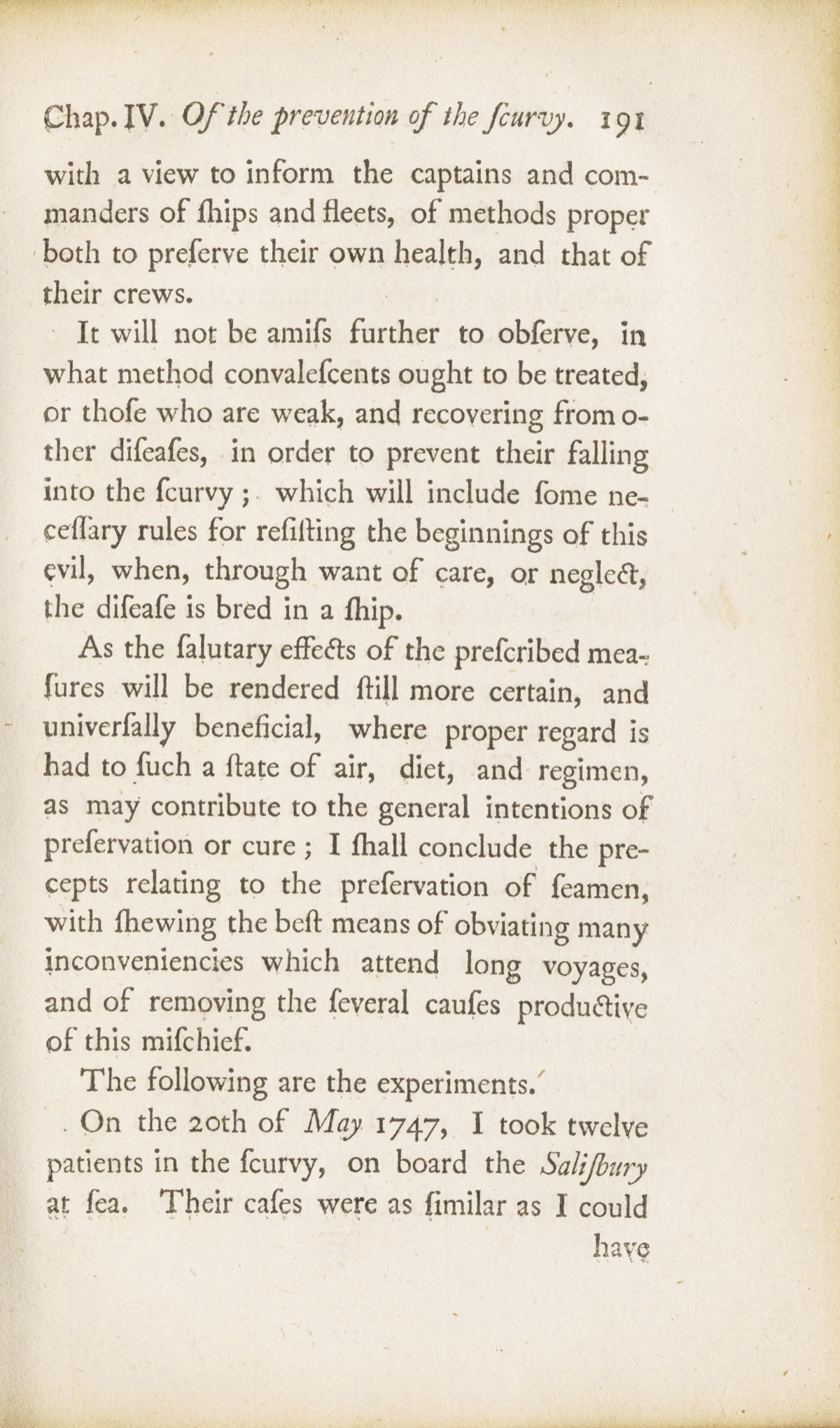
Six days
“The consequence was,” Lind wrote, “that the most sudden and visible good effects were perceived from the use of the oranges and lemons; one of those who had taken them, being at the end of six days fit for duty. The spots were not indeed at that time quite off his body, nor his gums sound; but without any other medicine, than a gargarism of elixir vitriol, he became quite healthy before we came into Plymouth, which was on the 16th of June. The other was the best recovered of any in his condition; and being now deemed pretty well, was appointed nurse to the rest of the sick.”
The oranges had run out on the sixth day. Nobody else’s course stopped early. “Next to the oranges,” Lind went on, “I thought the cyder had the best effects,” though the cider was “not very sound, being inclinable to be aigre or pricked,” and its two men were only “in a fairer way of recovery than the others at the end of the fortnight.” The elixir of vitriol cleaned the mouths of the men who gargled it and did nothing else. “There was no remarkable alteration upon those who took the electuary and tamarind decoction, the sea-water, or vinegar.” One of the vinegar men got a flux. Lind summed it in a sentence that would have served the Navy for fifty years had anyone framed it: “the result of all my experiments was, that oranges and lemons were the most effectual remedies for this distemper at sea.”
The log went on as before. On 21 May, “Fresh gales and squally with Rain. Departed this life Thomas George seaman.” On 4 June, “Condemned after survey 130 pds of Cheese and 90 pds of Butter,” and seven bags of bread taken in from the Shoreham. On 17 June the ship anchored in Plymouth Sound, a day later than Lind remembered it, and went up into the Hamoaze. The sick column stayed at nought until the twenty-second, when a quarter of the crew fell ill in harbour of something that ran, by its course, like dysentery. In the middle of it Lind left. The muster certified him to 4 July 1747 and paid him off on 23 December. He was thirty, and he never went to sea again.
What it looked like from inside
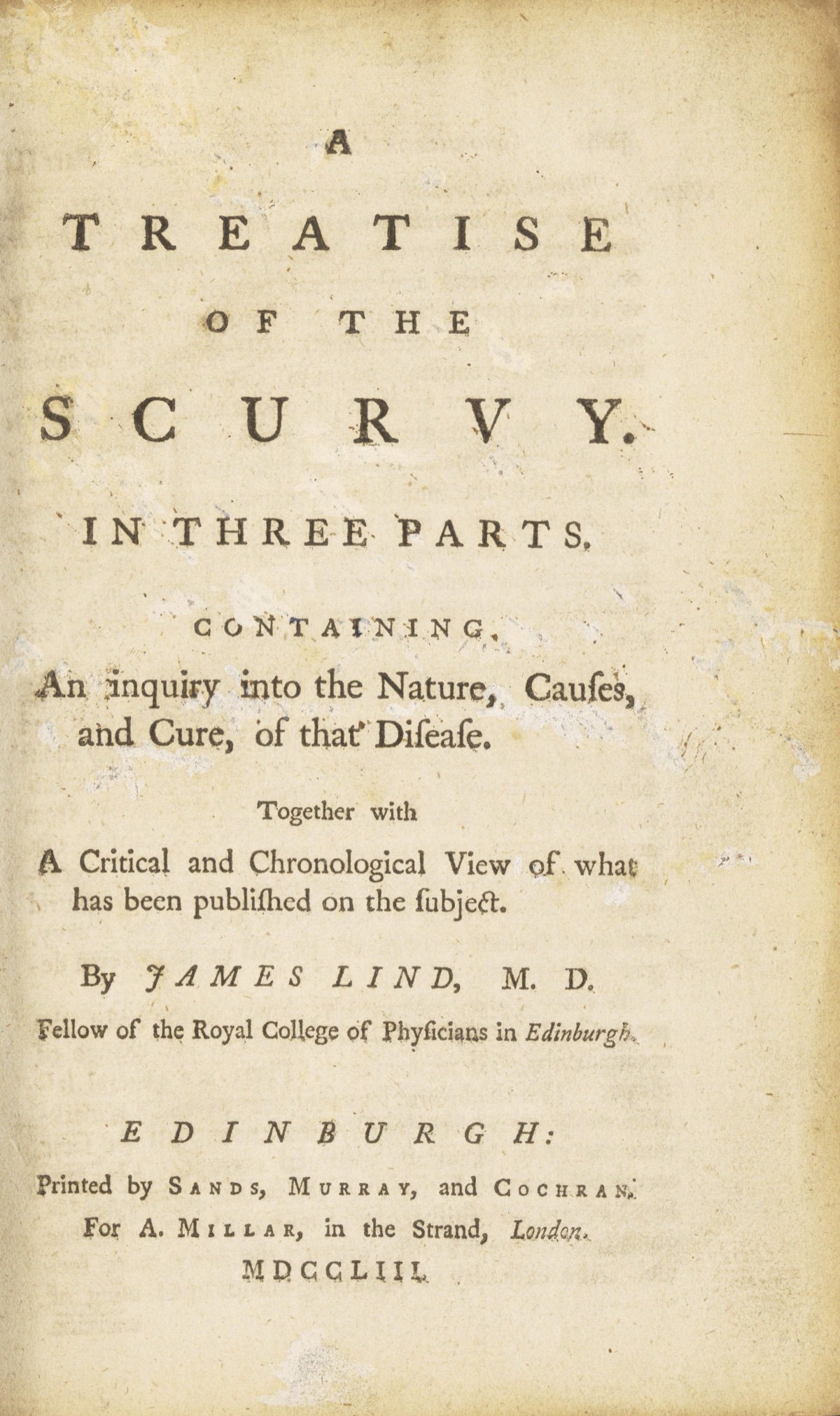
Lind went home to Edinburgh, and on 3 May 1748 took the degree of Doctor of Medicine with a thesis on venereal disease. He was elected a fellow of the Royal College of Physicians of Edinburgh in 1750. In the five years that followed he wrote the book. It had begun, he said in the preface, as “a short paper to be published in the memoirs of our medical navy-society,” and “has now swelled to a volume.” A Treatise of the Scurvy came out in Edinburgh in 1753, in three parts: the first on the disease’s history and causes, the second on its prevention and cure, the third “a critical and chronological view of what has been published on the subject,” a survey of every author since the sixteenth century. The experiment is in Part II, Chapter IV, pages 191 to 196.
The preface is a manifesto. The best descriptions of scurvy were in the voyage narratives, Lind wrote, “but it was regretted, that those were the productions only of seamen; and that no physician conversant with this disease at sea, had undertaken to throw light upon the subject.” Before it could be set “in a clear and proper light, it was necessary to remove a great deal of rubbish.” His conclusions were “founded upon attested facts and observations, without suffering the illusions of theory to influence and pervert the judgment. For, that things certain may precede what is uncertain, the theory, and the inferences from it, are placed at the latter end.”
In Part II the trial’s result is there and is clear. Oranges and lemons “have stood the test of near 200 years.” But it is one recommendation among many, and the others carry the same confidence with none of the evidence. “By my own experience, I found cyder the best of any I have had occasion to try,” he wrote of fermented liquors, which in the fore-hold had come second and had not been very good. Every sailor “ought to lay in a stock of onions.” Green gooseberries could be bottled and heated and would “keep for years.” And since oranges and lemons “are liable to spoil, and cannot be procured at every port, nor at all seasons in equal plenty,” he gave a recipe for keeping them.
The recipe is the hinge of the story. Squeeze the juice, let it settle, pour it off the sediment or filter it. Put it in a china bowl “wider at the top than bottom, so that there may be the largest surface above to favour the evaporation.” Stand the bowl in a pan of water over a clear fire and keep the water “nearly in a state of boiling” for several hours, “until the juice is found to be of the consistence of oil when warm, or of a syrup when cold.” Cork it. Two dozen oranges weighing five pounds four ounces gave a pound nine and a half ounces of juice and “about five ounces of the extract,” so that “the acid, and virtues of twelve dozen of lemons or oranges, may be put into a quart-bottle, and preserved for several years.” He had some four years old, and mixed with water or made into punch “few are able to distinguish it from the fresh squeezed juice.” It was cheap: “our navy may be supplied with it at a much easier rate than any thing as yet proposed.” He called it the rob.
Two hundred and twenty-two years later R. E. Hughes, a biochemist in Cardiff, made the rob by Lind’s instructions and measured it. Twenty-five oranges gave 800 millilitres of juice holding 3.84 grams of vitamin C. The heating left 80 millilitres of syrup holding 1.92 grams: half had gone in the pan. After twenty-eight days on a shelf at room temperature 0.50 grams remained, thirteen percent of what the fruit had held, and a sailor’s spoonful of it would have carried almost nothing. Cider, bottled gooseberries and pickled onions, when Hughes measured them, had next to none. Of all the things in Part II, the fresh fruit and the raw onions would have worked. The rest was the theory Lind had placed at the latter end of the book, coming round to the front.
In 1757 he published a second book, An Essay on the Most Effectual Means of Preserving the Health of Seamen in the Royal Navy, and dedicated it to Edgcumbe. In it the oranges have become a matter for the sutlers who sold to the fleet, who “ought to be obliged at all Times to carry out” either “the Rob of Lemons, or Juice of Oranges,” and for the men, who would buy them “either for Money, or if that is wanting, in Exchange of their Savings of salt Meat and Biscuit.” “Syrup of Lemons ought always to be put in the Surgeon’s Medicine Chest.” There is no proposal in it that the Navy should issue lemon juice to every man.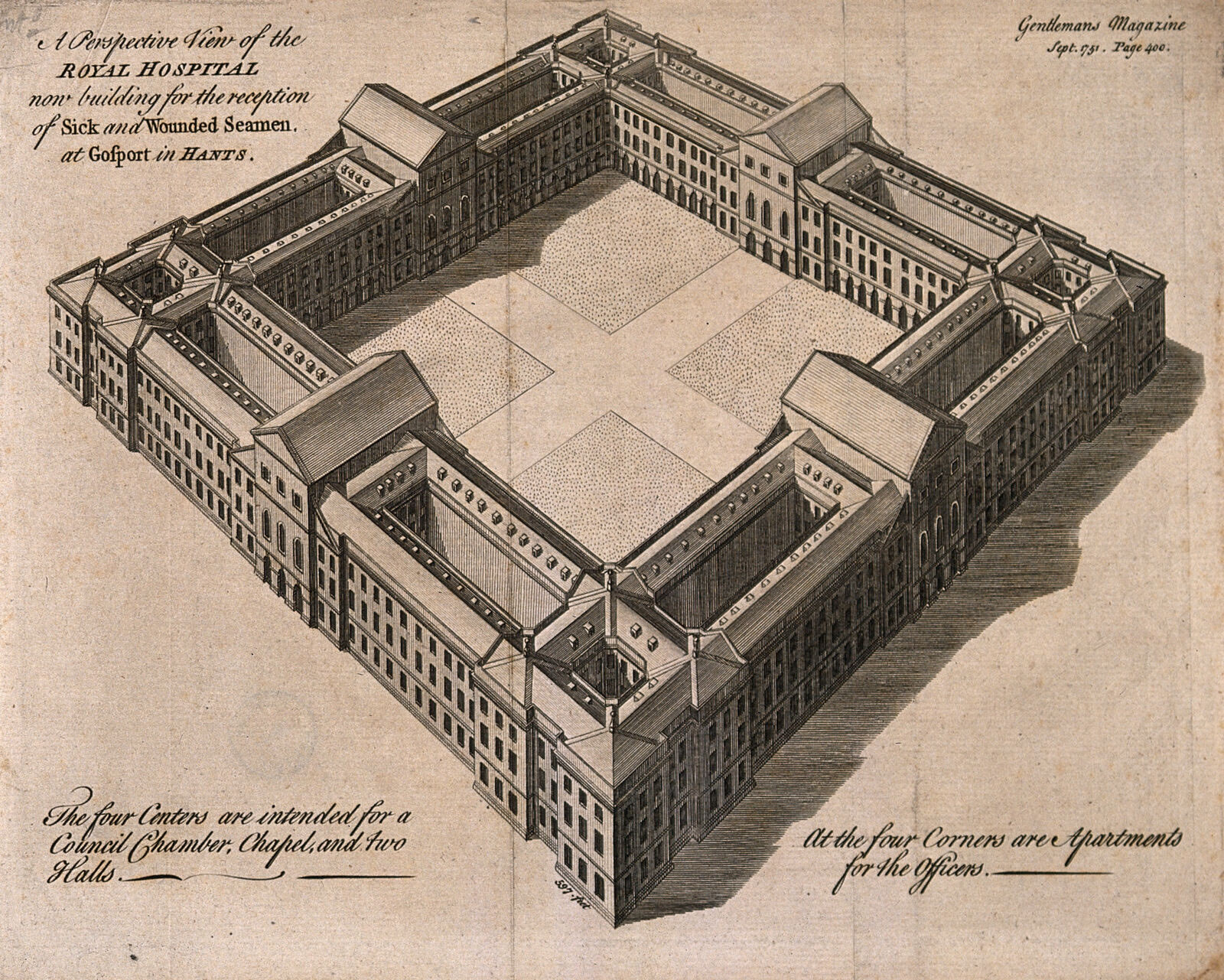
In 1758 Lind was appointed physician to the Royal Naval Hospital at Haslar, across the harbour from Portsmouth, which had been building since 1746 and was not finished. He described it that year as “an immense pile of building” that would “certainly be the largest hospital in Europe when finished.” It held a thousand beds when he arrived and two thousand when he left, and the Channel fleet filled them. His son John, who followed him there, told Blane that in one year of the American war 6,064 men had been landed from the fleet in four months, “almost all affected with fever or scurvy,” and that on another occasion a ten weeks’ cruise had brought 2,500 men into port ill of scurvy. In 1759, he wrote, “the scurvy raged.”
So he had, as no one else in Europe had, the enlarged experience, and in 1772 he put his “last hand” to a third edition of the Treatise, with a long postscript from Haslar. Parts of it are the most emphatic things he ever wrote about citrus. “To what has been already said of the virtues of oranges and lemons in this disease, I have now to add, that in seemingly the most desperate cases, the most quick and sensible relief was obtained from lemon juice; by which I have relieved many hundred patients.” At Haslar in 1759 “many, with whom the distemper encreased during a course of other medicines, and a plentiful diet on green vegetables, owed their recovery entirely to the lemon juice.” His standard dose was four and a half ounces of juice and two ounces of sugar in a pint of wine, and “this composition of the lime or lemon acid, with wine and sugar, so administered, I esteem the most efficacious remedy for this disease.” “Upon repeated trials, I found that the virtues of lemon juice in this disease, exceeded those of green vegetables, and were much superior to that of wine by itself.” Of the rob he now wrote that “there is nothing more lost here than water, with a scarce perceptible acid.”
The same book says this, in the advertisement at the front: “It is indeed not probable, that a remedy for the scurvy will ever be discovered, from a preconceived hypothesis; or by speculative men in the closet, who never saw the disease.” And this: “though a few partial facts and observations may, for a little, flatter with hopes of greater success, yet more enlarged experience must ever evince the fallacy of all positive assertions in the healing art.” And, near the end of the postscript: “Many diseases have been well known, and accurately described for above a thousand years; yet, for which of them have we an infallible remedy? What medicine can counteract the continued influences of improper diet, air, and confinement: the last of which in particular, I now judge to be a principal cause, of the great obstinacy and frequent mortality of the scurvy in long voyages at sea.” In July 1771 he had under his care men from the guard-ships at Spithead, which had not been to sea, pressed six or seven months before and not allowed ashore, who had “solely from confinement on board ship, become highly scorbutic.” Confinement, not diet, was where his theory had come to rest. The man who had cured two sailors in six days with fruit was, twenty-five years and some thousand patients later, less sure than he had been that anything cured scurvy, and surer than ever of its cause.
What happened
1754. The year after the Treatise appeared, the Sick and Hurt Board, the Navy’s medical board, turned down a proposal to supply ships with fruit juice. Ulrich Tröhler, who has gone through the period for the James Lind Library, notes that the Board was not short of suggestions about scurvy, and that lemon juice was not a new one.
1767 to 1776: the wort. The remedy that did get an Admiralty trial was malt. David Macbride, a Dublin physician, proposed in 1767 that scurvy was a want of “fixed air” in the body, and that an infusion of malt, wort, fermenting in the stomach, would supply it. The Admiralty ordered a trial of wort at Haslar, and Lind later put 130 of his own patients on it for a fortnight. Then came Cook. In 1772 James Cook took the Resolution round the world for “three years and eighteen days, through all the climates from 52° North to 71° South,” and lost four men: one to “a complicated and lingering illness, without any mixture of scurvy,” two drowned and one killed by a fall. On 5 March 1776 he wrote to Pringle to say how it had been done, and the letter was read to the Royal Society two days later. First among his reasons was malt. “We had on board a large quantity of Malt, of which was made sweet-wort, and given (not only to those men who had manifest symptoms of the scurvy, but to such also as were, from circumstances, judged to be most liable to that disorder),” up to three quarts a day. “This is without doubt one of the best antiscorbutic sea-medicines yet found out.” Then sauerkraut, a pound a man twice a week, “highly antiscorbutic.” Then, in one sentence: “Further, we were provided with Rob of lemons and oranges; which the surgeon found useful in several cases.” Then the regimen: three watches, dry clothes, clean hammocks, fires between decks, fresh water and greens at every chance.
On 30 November 1776 Pringle gave the Society’s anniversary discourse on the voyage, at which Cook was awarded the Copley Medal, and put the obvious question himself: if fixed air and acids were such preservatives, “why should Captain Cook make so little account of the rob of lemons and of oranges?” He had asked Cook. The robs had been sent out “only upon trial,” the surgeon had been told “at a conjecture” how much to give, and the trial was made “with so little advantage, that judging it not advisable to lose more time, he set about the cure with the wort only.” Pringle, who believed in the acids, offered an explanation that was right in everything but the chemistry: “as they had been reduced to a small proportion of their bulk by evaporation upon fire, it is probable they were much weakened by that process, and that with their aqueous parts they had lost not a little of their aerial, on which so much of their antiseptic virtue depended.” Better, he thought, to send the juice to sea entire in casks, as “an ingenious and experienced navy-surgeon” had proposed to the Admiralty some years before. That was Nathaniel Hulme, whose proposal of 1768 to Sir Edward Hawke, the First Lord, had quoted the two men of the Salisbury.
From Plymouth Sound on 7 July 1776, five days before sailing on his last voyage, Cook wrote to Pringle: “I entirely agree with you, that the dearness of the Rob of lemons and of oranges will hinder them from being furnished in large quantities, but I do not think this so necessary; for though they may assist other things, I have no great opinion of them alone.” The Navy’s most successful commander had carried Lind’s remedy round the world in the form Lind had designed for the purpose, and found that it did little, and he was right. Macbride quoted Cook and Pringle for malt the next year. The lesson the service took from the Resolution was wort, sauerkraut and a captain who made his men wash.
1780 to 1785: Blane’s arithmetic. Gilbert Blane went to the West Indies in 1780 as Rodney’s private physician and became physician to the fleet. He counted. “I found that in a fleet, of which the complement of men was 12,109, the mortality in one year had amounted to 1,518, besides 350 rendered unserviceable, a number more than equal to the equipment of three ships of the line.” One man in seven. He also watched what a few limes did. Two seventy-fours, the Alcide and the Invincible, anchored at Montserrat on 11 May 1780 to water, stayed parts of two days, “and they procured no refreshment, except a few bushels of limes.” Scurvy “was then at a great height in both ships; but between this time and the 23d of May, when they came to an anchor at Barbadoes, sixty men were discharged, as fit for duty, from the sick list of the Invincible, and a hundred and fourteen from that of the Alcide. These were the only two ships that had the advantage of the limes, and during these twelve days the scurvy continued to increase in all the other ships.” Essence of malt had been supplied to the whole fleet that campaign, “and though it was, no doubt, of service, it was far from having that powerful and manifest effect that the acid fruits had.”
In the autumn of 1781 Blane went home with Rodney and put a memorial to the Board of Admiralty. It listed seven causes of the fleet’s sickness. The second was “the want of the supply of an article, which had been found, by the most unequivocal experience to be infallible in preventing and curing scurvy, one of the most destructive scourges, and the most peculiar to the sea service, of any class of disease. The remedy alluded to is the juice of lemons or limes.” The Admiralty gave him wine for the flagship, then for the fleet, and partial supplies of fruit “on particular occasions.”
His book of 1785, Observations on the Diseases Incident to Seamen, gives Lind his due and his verdict within a few pages of each other. “But of all the articles, either of medicine or diet, for the cure of the scurvy, lemons and oranges are of much the greatest efficacy. They are real specifics in that disease, if any thing deserves that name. This was first ascertained and set in a clear light by Dr. Lind.” And of the remedy Lind had actually asked the Navy to carry: “I know, for certain, that the rob of lemons and oranges is not to be compared to the fresh fruit.” Lind himself had printed the same verdict in 1772, in a letter from Ives: “The fresh fruits are best, next to those is their juice preserved with spirits, and lastly their rob or extract.”
1794 to 1795: the Suffolk. At the end of 1793 Rear-Admiral Sir Alan Gardner, one of the Lords of the Admiralty, was given a squadron for the East Indies and asked Blane how to fit it out. Blane advised him, “among other matters, to apply for a large supply of lemon juice. This he did, and obtained it.” The expedition was cancelled, a smaller force went out under Rear-Admiral Peter Rainier, and Gardner’s lemon juice was enough for the whole crew of Rainier’s flagship, the Suffolk, seventy-four guns. She sailed from England on 2 April 1794. Every man had two-thirds of an ounce of lemon juice a day in his grog, with two ounces of sugar. She was at sea “twenty-three weeks and one day” without touching land or taking in fresh provisions, and anchored in Madras road on 11 September “without losing a man, with only fifteen men on the sick list, all slight cases, and none of them affected with the scurvy.” Scurvy had shown in a few men on the passage and “soon disappeared on an increased dose of lemon juice being administered.” Blane set it against Anson’s 143 days from his last refreshment to Juan Fernández. The Suffolk had been 162.
Trotter, with the Channel Fleet at Spithead in March 1795, was watching the other side of the ledger. Men were getting scurvy in harbour. A surgeon’s monthly report, which he printed, says what the surgeons thought: “It is really a melancholly reflexion, that seamen should be attacked with scurvy at Spithead, when the means that would preserve them from that destructive malady, are so well understood. As I have it not in my power to cure them on board, I must send all those that appear to be tainted to the hospital.” Trotter asked the Admiralty in March for lemon juice “for the cure of scurvy only,” and when Rear-Admiral Waldegrave’s squadron was ordered to sea in April before any came, he bought under the admiral’s authority “fourteen or fifteen chests of lemons and oranges, which were all that could be procured in Portsmouth.” The fruit ran out in the fifth week; the squadron fell in with a ship laden with lemons and bought more; it came back on 7 June “without losing a single man in scurvy.”
That year the Board of Admiralty, under Earl Spencer, decided on a general supply of lemon juice, “supplied for the first time at the public expence.” Blane had joined the Sick and Hurt Board a few months before. He wrote afterwards that the credit for proposing it belonged to its chairman, Dr Blair, who “had stated the expediency of the measure some months before my appointment,” and that “one of the most impressive parts of their argument, was built on the report of the effects of it in the Suffolk.” The ration was three-quarters of an ounce of juice a day with two ounces of brown sugar. It was meant for every man in every ship once the beer ran out; the war with Spain made juice hard to come by, and in practice the general issue went to “remote voyages and particular services,” with the rest in the surgeons’ hands for the sick. It was enough.
Lind did not see it. He had retired from Haslar in 1783, his son John succeeding him, and died at Gosport on 13 July 1794, three months after the Suffolk sailed. Edgcumbe, by then Admiral Viscount Mount Edgcumbe, died in 1795. He had watched the experiment from his own quarterdeck, and there is no sign that he ever spoke for its result.
After
“In less than eighteen months after the general supply of it,” Blane wrote, “Lord Spencer did not find a single case of it in Haslar hospital.” The First Lord had gone to the largest hospital in Europe, the one Lind had seen fill with scurvy in 1759, to look at a case, and there was none to show him. In 1800 the fleet blockading Brest, twenty-four of the line under Lord St Vincent, kept the sea from 27 May to 28 September “without the men having a single meal of fresh beef, and without sending more than sixteen to an hospital.” In 1830, near the end of his life, he wrote the sentence the eighteenth century had not managed: “The scurvy has been prevented, subdued, and totally rooted out, by the general use of lemon juice, supplied for the first time at the public expence in the year 1795, and which operated so speedily that in less than two years afterwards it became extinct, and has remained so.” He added that the virtues of lemon juice “had been ascertained in the reign of Elizabeth.”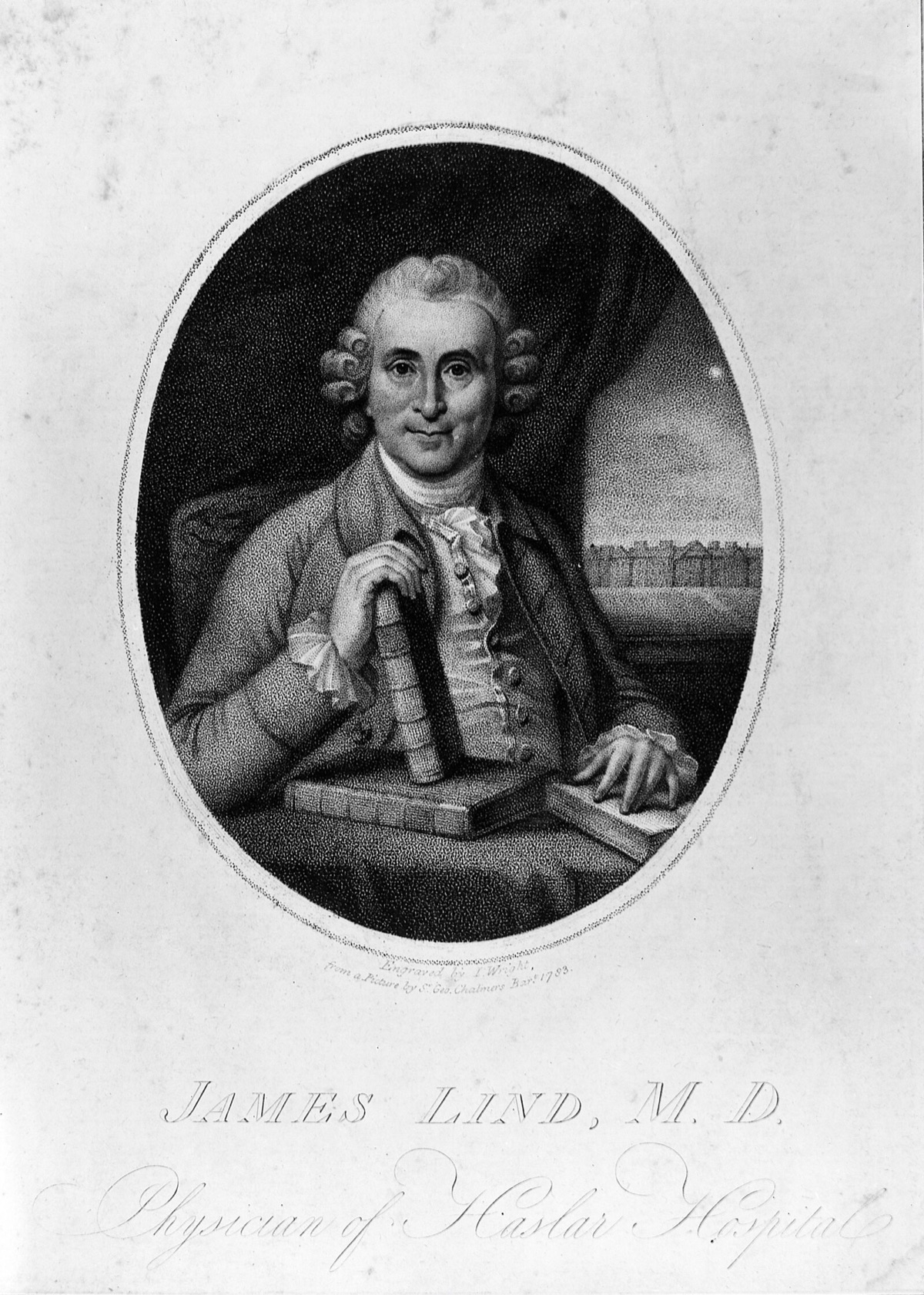
The rest is the long afterlife of a result. Lind’s name sank with the disease. By 1896 a medical journal could run him under the heading “Heroes of Medicine” as a man few of its readers knew, and the one writer who had kept the gap in print was Herbert Spencer, who used them in his Study of Sociology as an instance of what the journal called “administrative torpor.” In 1912 Frederick Gowland Hopkins described “accessory food factors” in the diet; in the 1930s the antiscorbutic one was isolated and named ascorbic acid, and the thing that had been in the oranges and not in the rob had a formula. In 1955 the Sunkist Growers of Citrus Fruit in California and Arizona put up a plaque in the old medical school quadrangle calling Lind “The Hippocrates of Naval Medicine.” Hughes boiled the oranges in 1975. In 2003 Sutton read the Salisbury’s log and muster at Kew and drew the conclusion the papers invited: “if the Navy’s own records were taken at face value, Lind never cured scurvy on the Salisbury because there was no sickness there for him to treat.” At least one historian has since suggested that the trial was never run, because the twelve men are on no sick list. The library that collects the history of fair tests of treatments is named after him.
What it taught
The experiment in the fore-hold did what an experiment is for. It took six things people believed and showed, in a fortnight, that one of them was true. What followed was not a failure to see the result. Everyone saw it: Lind printed it, Hulme put it before the First Lord, Blane cited it as settled. The failure was in what the result was taken to be evidence of.
A result is read through the theory of the reader, and the author is a reader too. Lind had a theory in which scurvy came from damp air and bad digestion, and in which an orange was one corrective among many. So the comparison that had singled out the orange became, in his book, one observation in a chapter of remedies that had never been compared with anything, and the sharpest sentence he ever wrote sits between a recommendation for cider and one for onions. Twenty-five years of hospital experience then did what experience does to a man whose theory does not fit his results: it made him doubt results. “More enlarged experience must ever evince the fallacy of all positive assertions” is not the sentence of a man who has forgotten the fore-hold. It is the sentence of a man who has cured many hundreds with lemon juice and still does not know why it should be the lemon, and has concluded that nothing is ever quite known.
When you change the remedy to fit the supply, test the remedy you changed. The oranges worked in six days. The rob was oranges made cheap, portable and durable, and nobody tested it until Cook’s surgeon tried it at a guessed dose and gave up. Lind’s assurance that nothing was lost in the pan but water was a chemical argument, not an observation, and it is the one place in the book where he did exactly what his preface forbade. Pringle guessed in 1776 that the fire had taken something out. It took until 1975 to weigh it. The thing you measured and the thing you shipped are not the same thing until you have measured the second one.
What moved the institution was not the comparison but the account. Twelve men did not change the Navy. One in seven did; 114 men off a sick list in twelve days did; a seventy-four 162 days at sea with fifteen on the sick list and none of them scorbutic did. Blane’s evidence was the fleet’s own returns, in the form the Board read, from a man who sat on the Board, and it arrived with a bill the Board could pay. A result that costs money has to be shown at the scale of the money, and Lind, who wanted the men to buy their own fruit from the sutlers, never asked for it at that scale.
The instrument the Navy trusted could not see the disease. The muster showed one or two sick on a ship where the surgeon had thirty or forty with scurvy, because sickness was a thing a captain did not have in his ship. An organisation whose own count said nothing was wrong had no reason to buy lemons. The fore-hold was outside the ledger, and so was the result.
The complication is that the people who read it wrong were not fools. Cook’s ship proved that discipline, cleanliness and fresh greens at every landfall kept men alive, and they did. The rob tasted like fresh juice, and nothing that existed could tell them apart. Lind’s doubt was the proper humility of a man who had seen thousands of patients and a dozen confident remedies fail. The experiment was right, nearly everything said about it for fifty years was reasonable, and the men kept dying. That is the recurring lesson of this site, and this is its oldest case. A clean result is necessary and it is not sufficient. Someone has to be asking the question the result answers, in a form the result can answer, at the moment the result arrives. In May 1747, in the Bay of Biscay, nobody was, including the man who ran it.
Sources
- James Lind, A Treatise of the Scurvy. In Three Parts, Edinburgh: Sands, Murray and Cochran, 1753. The trial (pages 191 to 196), the preface and dedication, the marine Walsh, Ives’s letter on cider, the rob recipe, cider and onions, the causes, and Walter’s account of Anson as Lind reprinted it. archive.org
- James Lind, A Treatise on the Scurvy, third edition, London, 1772. The Advertisement (“the fallacy of all positive assertions”), the rob (“nothing more lost here than water”), and the Postscript from Haslar: the many hundred patients, 1759, the wine-and-lemon composition, the guard-ships of 1771, confinement as a principal cause, and Ives on the Kent. archive.org
- James Lind, An Essay on the Most Effectual Means of Preserving the Health of Seamen in the Royal Navy, London, 1757. The sutlers, the rob and the syrup of lemons. archive.org
- Sir John Pringle, A Discourse upon Some Late Improvements of the Means for Preserving the Health of Mariners, delivered at the anniversary meeting of the Royal Society, 30 November 1776. Reprints Cook’s letters of 5 March and 7 July 1776; Pringle on the rob and on Hulme’s proposal. archive.org. Cook’s first letter is also in Philosophical Transactions 66 (1776), 402–406. doi:10.1098/rstl.1776.0023
- Nathaniel Hulme, Libellus de Natura, Causa, Curationeque Scorbuti. To which is annexed a Proposal for Preventing the Scurvy in the British Navy, London, 1768. The proposal to Hawke and the two men of the Salisbury. archive.org
- Gilbert Blane, Observations on the Diseases Incident to Seamen, London, 1785. The Alcide and Invincible, essence of malt, “real specifics,” “first ascertained and set in a clear light by Dr. Lind,” and the rob “not to be compared to the fresh fruit.” archive.org
- Gilbert Blane, Observations on the Diseases of Seamen, third edition, London, 1799, page 490 and its note: Gardner, Rainier, the Suffolk, the three-quarter-ounce ration and its limits. archive.org
- Gilbert Blane, Select Dissertations on Several Subjects of Medical Science, London, 1822. The Suffolk’s sailing on 2 April 1794, the dose in grog, twenty-three weeks and a day, Madras on 11 September, Anson’s 143 days, and the Medical Board’s representation under Spencer. archive.org
- Gilbert Blane, A Brief Statement of the Progressive Improvement of the Health of the Royal Navy, London, 1830. The fleet of 1780 (12,109 men, 1,518 dead, 350 unserviceable), the 1781 memorial, the hospital ratios, Brest in 1800, John Lind’s letter, Dr Blair, Lord Spencer at Haslar, and “totally rooted out.” archive.org
- Thomas Trotter, Medicina Nautica, volume 1, London, 1797, pages 116 to 119: the Channel Fleet from March to June 1795, the surgeon’s report from Spithead, the chests of lemons bought at Portsmouth and Waldegrave’s squadron. archive.org
- The Annual Register, or a View of the History, Politicks, and Literature, for the Year 1763, Chronicle, page 50: the table of seamen and marines employed, killed, and “dead of diseases and missing.” archive.org
- Graham Sutton, “Putrid gums and ‘Dead Men’s Cloaths’: James Lind aboard the Salisbury,” Journal of the Royal Society of Medicine 96 (2003), 605–608, and his commentary “James Lind aboard Salisbury,” James Lind Library, 2004. The log (ADM 51/936) and muster (ADM 36/3298): the ship, Edgcumbe, the provisions, the cruise, the sick column, Lind’s leaving, and the ship’s later career. PDF, jameslindlibrary.org
- Iain Milne, “Who was James Lind, and what exactly did he achieve?”, James Lind Library, 2012, also in Journal of the Royal Society of Medicine 105 (2012). Lind’s dates and career, the editions, the 1896 Practitioner article and Spencer, the 1955 plaque, and the finding that Lind never clearly recommended lemon juice to the Admiralty. jameslindlibrary.org
- Ulrich Tröhler, “James Lind and scurvy: 1747 to 1795,” James Lind Library, 2003, also in Journal of the Royal Society of Medicine 98 (2005). The Sick and Hurt Board’s refusal of 1754, Macbride, the Haslar wort trial, and the chronology to 1795. jameslindlibrary.org
- Eric Birbeck, “The Royal Hospital Haslar: from Lind to the 21st century,” James Lind Library, 2011. The building, Lind’s letter of 1758, and the beds. jameslindlibrary.org
- R. E. Hughes, “James Lind and the cure of scurvy: an experimental approach,” Medical History 19 (1975), 342–351. The rob remade and measured, with the cider, the gooseberries and the pickled onions. doi:10.1017/S0025727300020469
- Norman Moore, “Lind, James (1716–1794),” Dictionary of National Biography, 1893. The degree of 3 May 1748, the cruise of August to October 1746, and the death at Gosport on 13 July 1794. wikisource.org
- The James Lind Library’s record of the 1753 Treatise, with page images of the preface and the experiment. jameslindlibrary.org