On Saturday, July 28, 1945, in a room under the stands of Memorial Stadium in Minneapolis, a man of twenty-eight stepped onto a treadmill for the last test of the last day of six months of hunger. He lasted ten seconds. “To have held out this long and then on the last day to fold is more than discouraging,” he wrote that night in the diary the laboratory required of him. “I feel as though I had failed in someone’s trust. I started bawling like a baby and kept it up for a long, long time.” He had eaten two meals a day since February 12, from three menus served in rotation, and he weighed about a quarter less than he had on the morning the menus began. So did the thirty-one men who finished the day with him.
Two days later Life magazine put them on page 43 under the headline “Men Starve in Minnesota,” with photographs of their ribs. The war in Europe had been over for eleven weeks. The war in the Pacific would be over within three. The laboratory’s report of what it had found, in two volumes and 1,385 pages, would be dated April 3, 1950.
The report calls the man on the treadmill No. 20. Three weeks after the treadmill he went into a friend’s back yard in Minneapolis with a hatchet, and the report records what happened there too. He told the rest of it himself, fifty years on, when his name was Samuel Legg and the fingers were buried in a garden. That is the spine of this story: an experiment that was built to answer one question for a world at war, answered it completely, and delivered the answer to a world that had moved on, carrying with it a second answer nobody had designed it to give.
Who ran it
Ancel Keys was born in Colorado Springs in 1904 and grew up in Berkeley, California. He took a doctorate in oceanography and biology at the Scripps Institution in 1930 and a second in physiology at Cambridge, ran a high-altitude expedition to the Andes for the Harvard Fatigue Laboratory, and in 1939 came to the University of Minnesota, where he set up a Laboratory of Physiological Hygiene to measure what the environment and the way people live do to human bodies. The university found him a home for it under the seats of its football stadium, and paid for it, in the words of the 1950 report, from a budget “then mainly derived from Athletic Funds.” When the war came the War Department set him to testing men under heat, cold and short rations, and the field meal he designed for soldiers, the K ration, carried his initial into the kit of several million of them.
The staff who ran the experiment with him were Josef Brozek, a psychologist with a 1937 doctorate from Charles University in Prague who had left Czechoslovakia in 1939 and joined the laboratory in 1941; Henry Longstreet Taylor, a Minnesota physiologist who took charge of recruiting and of morale; Austin Henschel, who screened the volunteers, ran the blood work and kept the testing schedule; and Olaf Mickelsen, a chemist from Wisconsin who ran the diet kitchen and analysed what went out of it. A fifth, Harold Guetzkow, was a psychologist who was also a conscientious objector, assigned to the laboratory’s Civilian Public Service unit. The laboratory was then running vitamin experiments on objectors, and according to the report’s acknowledgements the project “was conceived at the start of 1944 as a result of casual discussions” among Brozek, Taylor, Guetzkow and Keys.
Civilian Public Service was the arrangement under which, in the Second World War, an American whose draft board accepted that he could not in conscience fight was put to “work of national importance” without pay, under the Selective Service System, in camps run by the Mennonites, the Quakers and the Church of the Brethren. About 12,000 men went through it. They built trails, fought fires and staffed mental hospitals, and from 1943 some volunteered for medical experiments; the newspapers called them human guinea pigs. Harold Row of the Brethren Service Committee, the report says, “was an early convert and gave much aid in enlisting the cooperation of the ‘peace churches.’” A brochure went out to the camps dated May 27, 1944. Its cover asked, “Will You Starve That They Be Better Fed?”
The money came the same way. Washington’s research bodies would not fund a year-long starvation of healthy men at first, and the delay cost the experiment the early 1944 start Keys had wanted. The Brethren Service Committee, the American Friends Service Committee and the Mennonite Central Committee guaranteed the funds; two industry foundations let earlier grants be diverted, the Unitarians and the Markle Foundation gave, the university gave the laboratory’s budget, and once the subjects had arrived, in November 1944, the Office of Scientific Research and Development took the project under contract on the recommendation of its Committee on Medical Research. Each man drew five dollars a month, raised to fifteen when the government contract came through. The thirty-six were chosen by Taylor, Brozek, Henschel and Guetzkow from the applications that came back from the camps: more than a hundred according to the report, more than four hundred according to a later count. About forty were brought to Minneapolis for full examination, and thirty-six were kept.
They were between twenty and thirty-three, all single, all white, all with at least a year of college and eighteen of them with degrees; the Army’s classification test put twenty-eight of the thirty-two who finished in its top group. The Brethren, the Mennonites and the Quakers had raised most of them. One was Jewish, a law student named Max Kampelman, whose pacifism was religious and, in his own later words, ideologically lonely. The report lists the motives they gave for coming. Some had found their camp assignments “made work.” Some wanted a share in something as hard as what the men in uniform were doing. Some wanted to go abroad with the relief teams and could not, as objectors, until the war ended. And some gave reasons the report quotes without comment: “Can I take it?” or “I can take it and this will prove it to others.”
What they were trying to find out
The report states the problem in one paragraph, and it is two claims wearing one coat. Early in 1944 the reports from occupied Europe and the prison camps said that millions were starving. “It was recognized that with the liberation of the occupied areas and the cessation of hostilities large-scale relief feeding would be necessary. It was equally well recognized that there was little reliable quantitative information upon which to base an efficacious relief program. The need for a controlled experiment to determine the changes induced by semi-starvation in man and the best type of rehabilitation diet was apparent and urgent.”
The first claim was about starvation: that six months on a European famine ration would change a healthy man in ways that could be measured against his own body and mind beforehand, and that the measurements would stand for what was happening to people in Holland and Poland and Greece. The second was about refeeding, and it was the one the relief agencies wanted: that among the ways of feeding a starved man back, calories alone, calories with extra protein, calories with extra vitamins, at four different levels, one would prove faster, and the choice could be written into a relief plan. The second was built into the design as a factorial experiment, so that each factor could be tested against the others on the same men.
How little anyone knew was put on record by the man who had to plan the relief. Sir Jack Drummond, the British nutritionist who helped plan the relief, wrote the foreword to the 1950 report. “I have vivid recollection of a bitterly cold day in January 1945. In a bare, unheated room in Eindhoven, not long liberated from the German grip, a group of Dutch, United States, and British public health officers and nutrition advisers were listening to the grim story of the sufferings of the starving people in the towns to the west of the German lines.” They had been brought together to plan the feeding of western Holland. “It was frightening to realise how little any of us knew about severe starvation.”
What they built
Memorial Stadium was a brick horseshoe seating 62,000, with a tower at the south end. The laboratory was under the stands, and the men lived in the tower. Lester Glick, a Mennonite from Goshen, Indiana, wrote in his diary on the day they arrived, November 19, 1944: “We live in the basement of the U. of Minnesota football stadium. Our dorm consists of 46 beds lined up in two rows in an unfinished concrete dungeon-like arena with no windows.” Daniel Peacock remembered that the showers were one long line with no partitions and the lavatories were open, “and in a way it’s just as well because part of being a guinea pig is that they’re going to look at everything that they can look at.” They were issued blue trousers, white shirts and stout walking shoes, and they ate in Shevlin Hall across the campus, at first at the same hours as the football team, until the university moved the team’s mealtimes.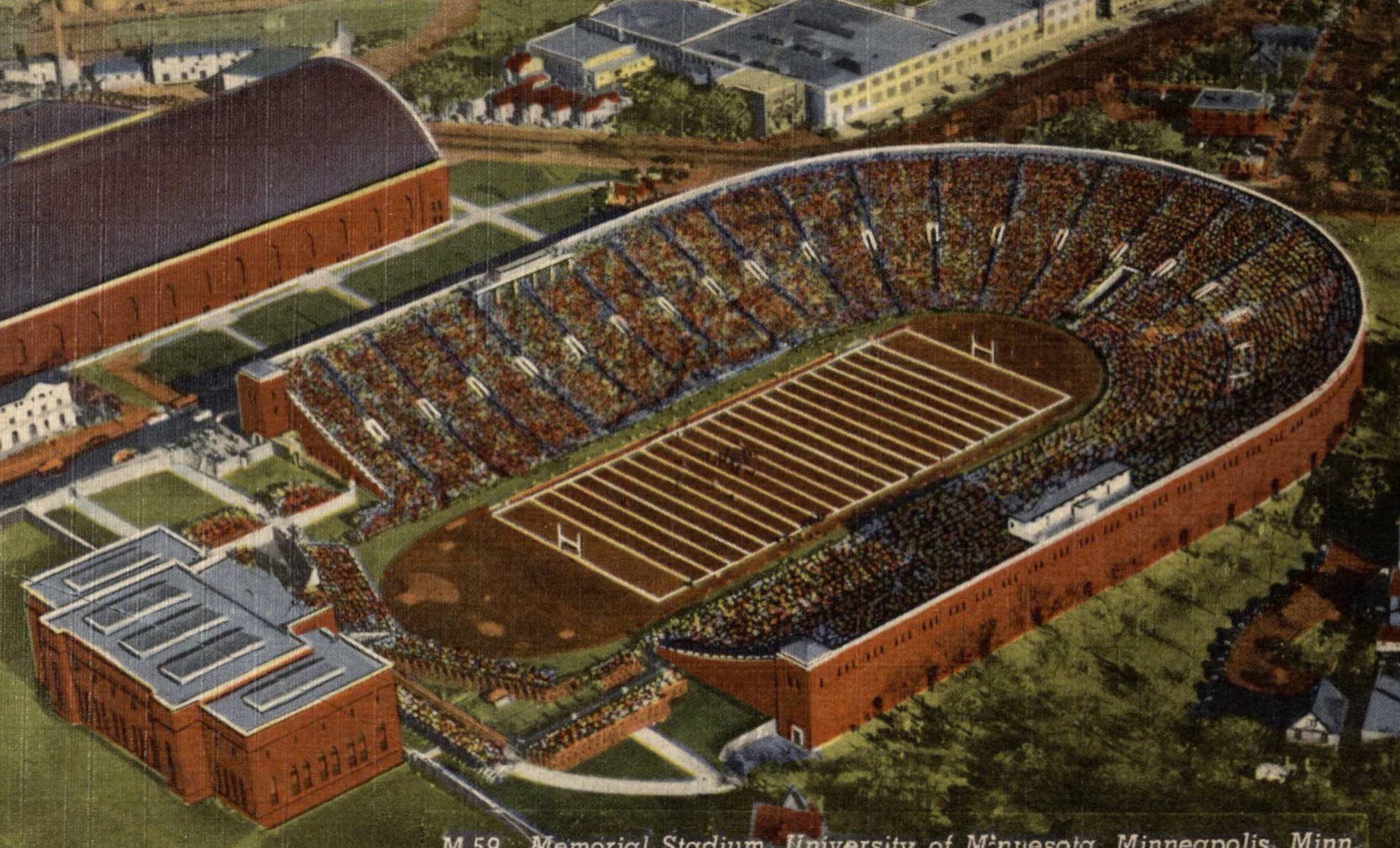
The design was in four parts. For twelve weeks, from November 19 to February 11, the men ate a control diet, about 3,500 calories a day adjusted man by man to bring each toward his ideal weight, while the laboratory measured everything it could: weight, body fat, X-rays of the heart, electrocardiograms, basal metabolism, blood, hand grip, reaction time, fitness on a treadmill, balance, hearing, vision, semen, skin and bone, and the mind, with the Minnesota Multiphasic Personality Inventory, the Rorschach and an intelligence test on which the group scored like a graduate class in statistics. Each man kept a diary and was interviewed regularly. Being a subject was a job of forty-eight hours a week: fifteen hours of laboratory work, housekeeping and laundry, twenty-two miles of walking a week out of doors and a half-hour each week on a motor-driven treadmill at three and a half miles an hour on a ten per cent grade, and about twenty-five hours of classes in languages, political science and relief administration, to fit the men for the work in Europe they hoped the experiment would earn them.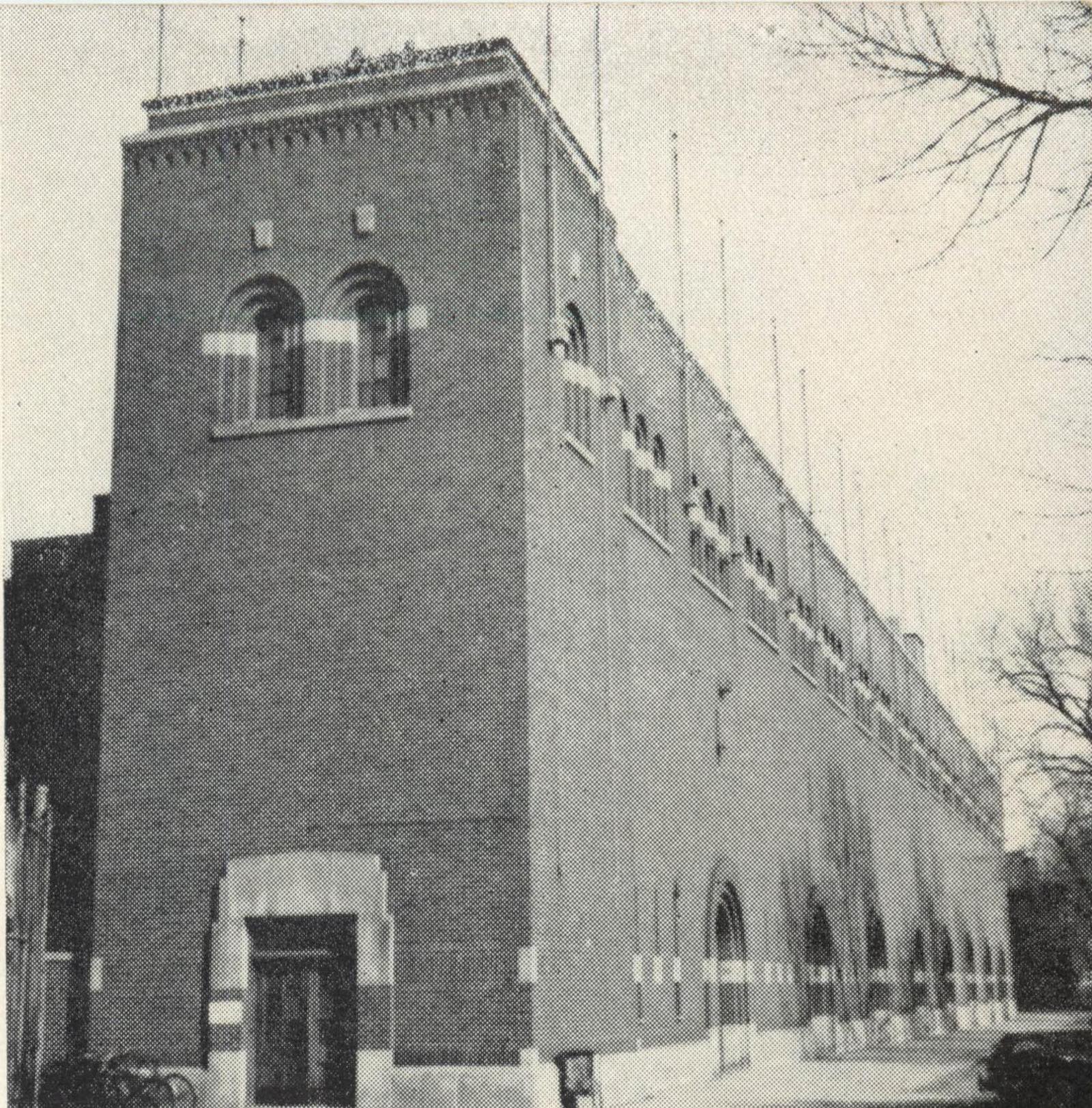
Then, for twenty-four weeks, from February 12 to July 28, semi-starvation. Two meals a day, at half past eight in the morning and five in the afternoon, from three menus served in rotation: whole-wheat bread, potatoes, cereals, turnips and cabbage, with token amounts of meat and dairy, designed, the report says, “to represent as nearly as possible the type of foods used in European famine areas.” The average was 1,570 calories a day, with about fifty grams of protein and thirty of fat. The first meal, on February 12, was a small bowl of farina, two slices of toast, a dish of fried potatoes, a dish of jelly, a little jam and a small glass of milk. Every man was given a target: a loss of between nineteen and twenty-eight per cent of his control weight, averaging twenty-four, set by his build, and a curve to lose it on, fast at first and flattening to a plateau at the twenty-fourth week. Every man was weighed, and every Friday the laboratory posted the next week’s rations, adjusted by slices of bread and portions of potato to bring each man back to his curve. Peacock remembered the list: “we dreaded seeing that list for fear that it was certainly going to reduce our rations.”
Then twelve weeks of controlled rehabilitation, from July 29 to October 20, in which the thirty-two who finished were divided into four groups of eight, each group fed the same famine foods at a different level above its starvation ration, each group split into four men who got extra protein, as casein and soy protein baked invisibly into the bread, and four who did not, and each of those pairs split again between a daily vitamin tablet and a placebo. Then eight weeks, to December 20, in which twelve of the men stayed on and ate what they liked while the laboratory weighed it. A follow-up was planned for the spring of 1946 and another for the summer.
Guetzkow and a Brethren relief worker named Paul Hoover Bowman, who had fed children in Spain’s civil war and refugees in France, ran the educational programme, and in January 1946 they would write the year up for the people the experiment was meant for.
The eighth of May
The hunger worked as designed. By March 16 Glick’s belt was at its last notch, three in from February, and he had bought braces. By April, a visiting journalist wrote, the men had “the typical starved look.” On April 16, the first day of the tenth week, the laboratory imposed what it called the buddy system: no subject left the stadium alone, or without a man of the experiment or a responsible person beside him, until September 13. Two of the thirty-six had already broken. One, in the eighth week, ate several sundaes and malted milks, confessed, tried to hold on, stole and ate raw rutabagas, and in the tenth week came apart in what the report calls a border-line psychotic episode, with weeping and talk of suicide, and went from the experiment to the psychiatric ward of the university hospital. The other, in the seventh week, suffered what he called a “complete loss of will power” in the grocery where he kept the books, ate cookies, popcorn and two overripe bananas, confessed, and then stopped losing weight though his ration was cut; in the eighteenth week he was released from the diet and stayed on to help in the kitchen. “The physical and mental stress of continuous hunger when food was available at any restaurant or store,” the report says, “was sufficient to strain the will power of the most resolute.”
On May 8, 1945, Germany surrendered. The men were in the thirteenth week of twenty-four, and the mid-starvation tests had just finished. The experiment’s reason for existing had begun to run out from underneath it, and the people it was meant to serve were being fed by others, in a hurry, on assumptions.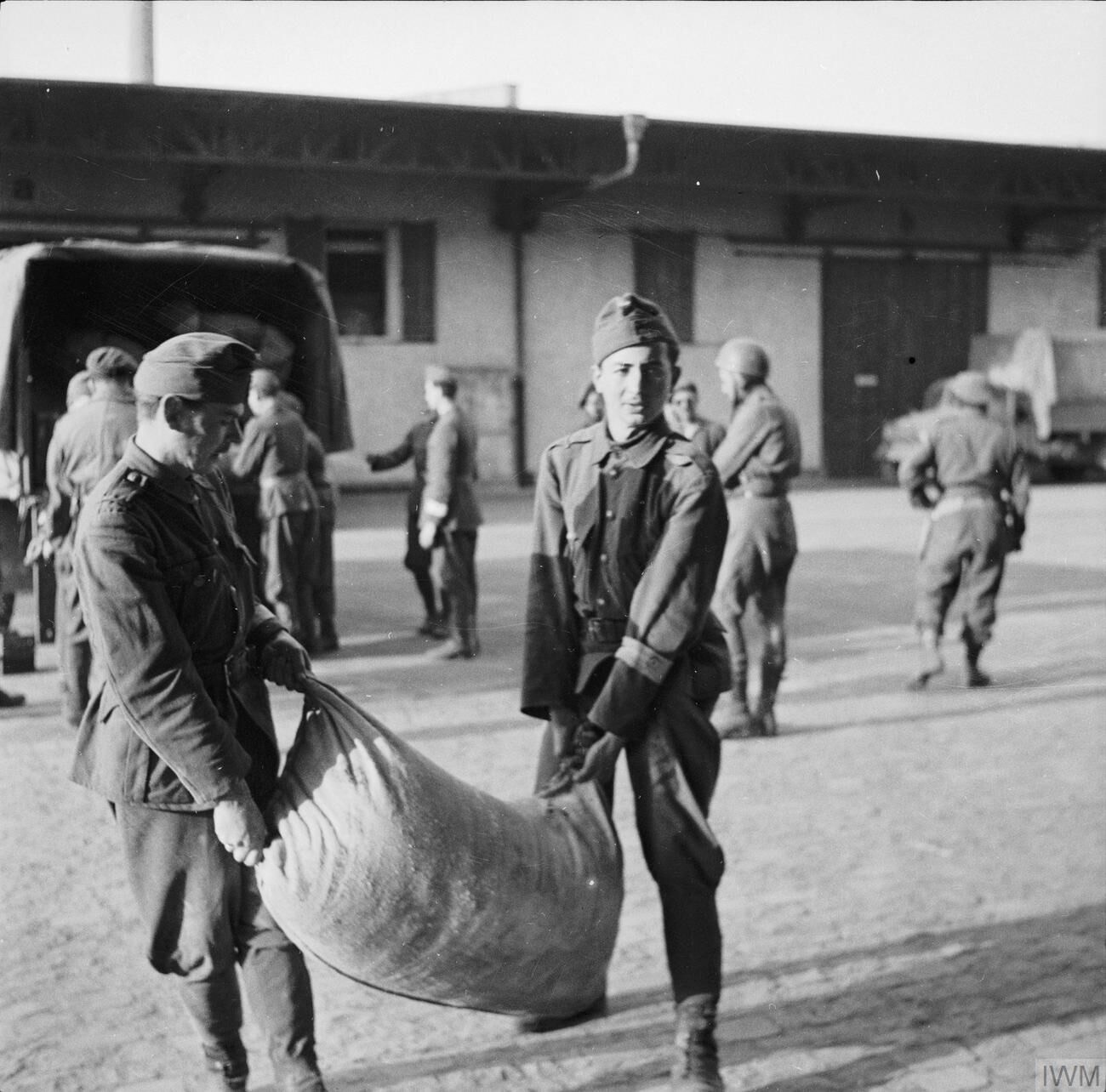
The report tells what the assumptions were, because its authors went looking afterwards. “In the dark days of early 1945 when planning was in progress for the relief of the western Netherlands and the German concentration camps it was believed that many of the famine victims would be unable to tolerate ordinary foods or even to digest any nutrients given by mouth.” On the urging of the nutrition experts at Allied headquarters, the British Ministry of Supply and the manufacturers set to work in March 1945 on apparatus and materials for intravenous feeding and feeding by tube: protein hydrolysate solutions, glucose, predigested foods. Drummond, who had sat in the cold room at Eindhoven, put it plainly in his foreword: “How misleading were not a few of our assumptions was quickly demonstrated when the plans were put into operation on the collapse of German resistance in the western Netherlands four months later.” The official Dutch report on the famine, which he edited, blamed two of them: “That patients in severe starvation states cannot swallow and digest simple foods, and that fragmentary intelligence, mostly from non-medical sources, is of real value in assessing a medical situation.” The great majority of the starving, children and adults, could eat ordinary food at once, in moderate amounts, and did. Skim milk powder and water did as well as anything brought in a bottle, and in some cases better.
Keys’s laboratory did what it could to get its results out while they could still be used. Before the experiment was over it issued a preliminary report, Experimental Starvation in Man, to the relief agencies and the services, followed in 1946 by a second on rehabilitation. In September 1945 Keys told a conference in Chicago, in words a Minneapolis paper printed, that “in an adult man no appreciable rehabilitation can take place on a diet of 2000 calories a day. The proper level is more like 4000 daily for some months. The character of the rehabilitation diet is important also, but unless calories are abundant, then extra proteins, vitamins and minerals are of little value.” Earl Heckman, one of the thirty-six, said it more shortly, fifty-eight years later: “We had hoped to have an effect on the world hunger situation following the war … the experiment was a little late.”
On August 14 the announcement of Japan’s surrender reached the men at a meal. Jasper Garner, the son of Brethren missionaries in India, remembered what they did. “This went through the group and we kept on eating. The food was the important thing. We didn’t care whether the war was over or not as long as we got our food.”
What it looked like from inside
The laboratory had a procedure for listening. The diaries were read, the interviews were coded, a list of complaints was ticked off at intervals, each man rated the others’ deterioration on a scale from nought to five, and the personality inventory was given over and over. The report’s chapters on behaviour are the result, and so is the small book that Guetzkow and Bowman finished in January 1946, Men and Hunger, dedicated “To the men who starved voluntarily in the hope that their privation might aid millions who starve involuntarily.” Its authors had expected little. “We approached the experiment skeptically, never thinking that the proposed 25% weight loss could induce a profound set of changes,” they wrote. “But we were mistaken.”
The body went first, and predictably. By the fifth week the resting pulse had fallen from the fifties to an average of 40.8 beats a minute; it bottomed at 35.3 in the thirteenth week, and one man’s heart beat twenty-seven times a minute at rest in the twenty-third. The heart itself shrank by seventeen per cent on the X-ray plates. Basal metabolism fell by thirty-nine per cent per man. Body temperature fell about a degree. The men were cold in July, walked downtown in sweaters, and begged blankets. The fitness score on the treadmill fell by seventy-two per cent; strength by about thirty. Hair came out, skin went grey, ankles and knees and faces swelled with the fluid of famine oedema, so that a man could gain weight in his last starving weeks and lose it in his first weeks of food. The men tripped on cracks in the pavement and could not open heavy doors. Garner got stuck in the revolving door of Dayton’s department store and waited for someone to push. Samuel Legg and his buddy walked in the gutter looking for driveways because the kerb was a step. One of them wrote, eight months later: “I’m hungry. I’m always hungry — not like the hunger that comes when you miss lunch but a continual cry from the body for food.”
The mind went too, and this was the part nobody had budgeted for. The report’s summary is short: “The Minnesota men exhibited symptoms of depression, irritability, ‘nervousness,’ and general emotional instability. Social withdrawal, narrowing of interests, obliteration of sexual drive, and difficulty in concentration were prominent. Food and eating became their dominant concern.” At the end of starvation 97 per cent said they tired quickly and 62 per cent that they were often downhearted, against 3 per cent before; 62 per cent were often bored with people and half preferred to be left alone, against 6 per cent for each in the control period. The tests of intelligence did not move. The will to use it did. The report’s words for the whole are “semi-starvation neurosis,” and it found that every man had some of it and six had it badly.
Food filled the space. “Although most of the men were well educated and refined, almost all of them routinely licked their dishes in order to obtain every vestige of food.” Garner: “We not only cleaned our plates, we licked them.” They “souped,” drinking the liquid off a bowl, refilling it with hot water, salting it, drinking it off again. They dawdled two hours over a meal. They made what the report calls weird and distasteful concoctions, and hated watching one another make them. When asked, nineteen of thirty-four were reading cookbooks and collecting recipes. Carlyle Frederick owned nearly a hundred by the end. One diarist stayed up until five in the morning with them. The men took to drinking fifteen cups of coffee a day until the laboratory limited them to nine, and chewing gum until one man was going through forty packets a day and the laboratory, having found two calories of sugar in a stick, limited that to two. On July 6 Glick and a friend went to a restaurant, bought black coffee and watched a woman leave half a pork chop and the crust of a coconut cream pie; the friend followed her out and lectured her on world hunger until she ran. On June 25 Glick took the lead out of a pencil and chewed the wood. “It tasted all right.”
The appetite for anything else went out. “I have no more sexual feeling than a sick oyster,” one man told the psychologists, and the report confirms it in its own vocabulary: dates stopped, and the men who kept them found the effort of holding a hand too much. Humour went. Letters went unwritten. The educational programme that was to fit them for Europe, “followed at the start with enthusiasm, in time quietly collapsed.” The group that had been “lively and responsive” in the winter became “a tired, dead group of men,” and formed, against the staff and the well-fed world, what Guetzkow calls “a tremendous in-group feeling.” They wanted, above all, to be treated as normal, and the manual’s advice to relief workers follows from that: do not ask the starving how they feel, never let them see a staff member eat, never let them wait in line, and “never forget that anything relating to food should be handled with respect and reverence.” Harold Blickenstaff said later that it was not the discomfort he had hated most. “It made food the most important thing in one’s life … And life is pretty dull if that’s the only thing. I mean, if you went to a movie, you weren’t particularly interested in the love scenes, but you noticed every time they ate and what they ate.”
What held them was not hunger’s absence. The report is clear that the men who broke did not report worse hunger pains than the men who did not. It was the thing Guetzkow heard most often from the men themselves: “the fear of letting the group down or breaking faith with the others who were going through this ordeal.” Daniel Peacock: “the experiment kind of became our religion in a way.” Dan Miller: “Damn it, it was will power! Don’t try to fuzz it up with something else.” Blickenstaff: “walking by a bakery was like walking by a bank. It might be nice to have what’s in there, but it’s out of the question.” Two more men failed in the end, not by eating in front of anyone but by failing to lose weight though their rations were cut and cut again; one of them was the man with the forty packets of gum, who admitted afterwards to a sandwich found on the ground and a student’s stolen lunch. Four out of thirty-six. The report notes that in the laboratory’s earlier vitamin experiments on objectors there had not been a single violation.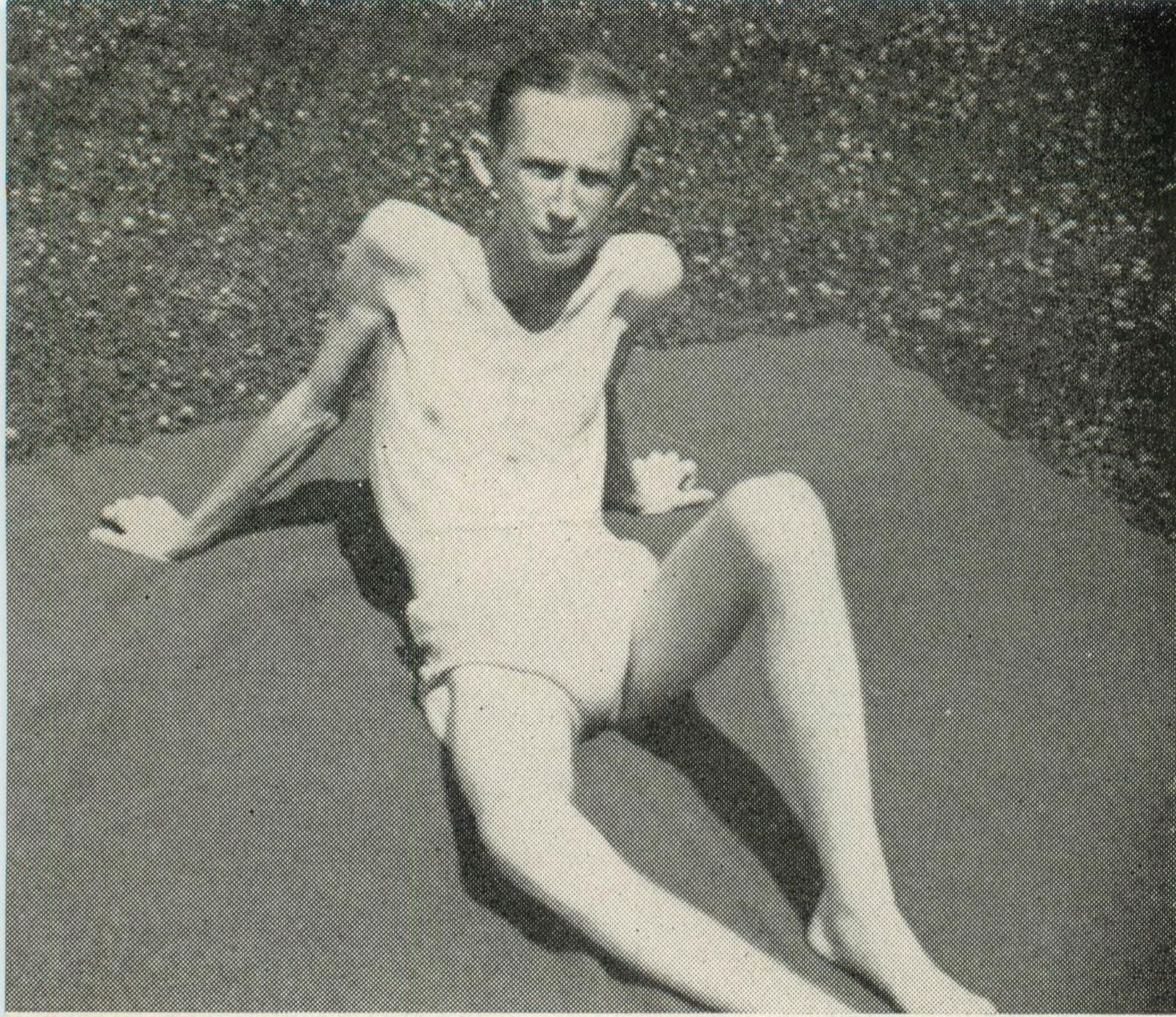
Rehabilitation was worse. For six months the men had looked to July 29 as the end. Glick’s entry for that day is three words and three exclamation marks: “FOOD! FOOD! FOOD!” The four groups were fed, on average, 1,931, 2,245, 2,675 and 2,944 calories a day for the first six weeks, less than planned, and the two lowest groups gained almost nothing; some men lost weight as the oedema drained. “Now I go away from meals hungry three times a day instead of two,” one said. The man in the lowest group whose account the report prints had gained a quarter of a pound after six weeks. Morale fell below anything in the starvation period; men turned on the staff and the experiment; the buddy system, resented since April, was kept until the sixth week of rehabilitation “when it was finally removed in the face of imminent wholesale violation.” At the seventh week every group was raised by about 800 calories, and the lowest groups began to move.
Legg was in the second-lowest group. He had come, the report says, as “the strong man who could ‘take it,’” and had watched his standing fall as his temper and table manners went. The report follows him through the diary. In the fourteenth week of starvation: “My philosophy of pushing mentally and physically is quite obviously breaking down.” Later: a thought he was ashamed to write, that it would be pleasant to catch tuberculosis “merely for the rest and food involved in its treatment.” On July 28 the ten seconds on the treadmill. In the first week of rehabilitation his car slipped off its jack onto his left hand and tore a fingertip. He let the staff think it an accident, except one, and in hospital ten days later he said it again, in words the report prints verbatim: “I decided to get rid of some fingers. Ten days ago I jacked up my car and let the car fall on these fingers. It missed them all except it crushed the end of one finger. That’s not normal. It was premeditated.” The injury was not enough to get him out. The next week he wrote of “an awful conflict that has been intense enough to make me wonder whether I am losing my mind.” His sister came to visit, with family troubles; the next evening they went to dinner at a friend’s house with Marshall Sutton, carrying their weighed food in a bag, and sat by the fire because they were always cold. Sutton remembered the rest. “The fire was getting low and Sam jumped up and said he knew where the woodpile was, and there was a hatchet out there.” Legg weighed about 113 pounds. He brought the hatchet down on his left hand and took off three fingers. “As for this,” he told the psychiatrist the next day, “I don’t know.” He spent five days in the university’s health service on the experiment’s diet, “appeared to enjoy the experience immensely,” and then, persuaded to stay, finished the remaining two months. The report classes both injuries as self-mutilation, the first deliberate and the second brought about “by more unconscious mechanisms,” and notes that two years earlier, at another camp, Legg had given first aid to a friend who lost several fingers in a buzz saw and was discharged. Legg’s own verdict, to a radio reporter fifty years on: “I admit to being crazy mixed up at the time. As of 50 years later, I am not ready to say I did it on purpose. I am not ready to say I didn’t.” The fingers, he said, “are now buried in a backyard in Minneapolis.”
What happened
At noon on Saturday, October 20, 1945, after repeated warnings, the restrictions came off, and at five o’clock the laboratory served a farewell banquet. Several men left the table with stomach pains. “The end of the meal found most of the men gazing in unbelief at the food — their food — which they could not eat.” The following week the twelve who stayed ate an average of 5,218 calories a day, some for a day or two between 7,000 and 10,000; twenty-three of twenty-eight reporting had stomach trouble, one was in hospital for several days, Henry Scholberg had his stomach pumped, and Blickenstaff was sick on the bus between meals. The men went on licking plates and picking up crumbs in the presence of unlimited food, afraid, the report says, that it might somehow be taken away. Glick’s diary records a different end: on October 19, the day before release, Taylor called him in and told him there was a tuberculous lesion at the top of his left lung. “But tonight the axe fell.” He went home to his mother’s cooking, gained seventy-nine pounds in six months, and healed.
By the spring most were nearly themselves. In March 1946 Keys and Taylor examined twenty-one of the men in hospitals in Chicago, Washington and Philadelphia; by then most had no complaint but a little shortness of breath, their hair was growing back, and eight of twelve who were asked called their sex drive normal. Recovery had followed calories. The complaint count, which had risen from 6.6 items a man to 20.5, had come two-thirds of the way back after twelve weeks of controlled feeding, and the men on the top ration recovered fastest on every measure that moved. The extra protein, twenty grams a day above a diet that already held seventy-five to a hundred, made no measurable difference, and neither did the vitamins. The report’s conclusion on the question the relief agencies had asked is one sentence it refuses to soften: “we do not wish to qualify our conclusion that the calorie intake is the single nutritional element of highest importance in rehabilitation feeding of persons starved on a European type of famine diet.” Anything that added cheap calories, grain, cereals and potatoes, would add protein and vitamins with them. The top group had eaten about 4,000 calories a day in its last two weeks, and that was the number.
Then the writing took five years. The report compares its findings, chapter by chapter, with the famine literature of six languages, and needed a subsidy from two foundations to be priced for export at all. Its preface, dated April 3, 1950, says what its authors thought of the timing: “We regret, of course, that this work was not published when the hunger of the world was more acute than now.” And in the last chapter, on diets for rehabilitation, they record something else: “We had hoped that useful field studies on rehabilitation diets would result from relief work after World War II and that these could be integrated with the experimental data. In spite of considerable effort to find such materials, extremely little useful information has come to our attention.” The relief had been done, by the hundreds of thousands, and almost nobody had measured it.
After
The thirty-six scattered into the work the experiment had been meant to train them for, late. Seven of the eighteen interviewed in 2003 had crossed the Atlantic tending cattle on the Heifer Project’s relief ships. Blickenstaff spent 1948 to 1950 on a transport team in Poland. Legg raised money for food for Germany with the Quakers and worked in France and Switzerland. Sutton went to Gaza with the American Friends Service Committee to feed refugees. William Anderson was ordained in Mozambique and spent nearly thirty years in Africa. Robert McCullagh and Robert Villwock became ministers. Kampelman, who had finished his law degree and most of a master’s in political science inside the stadium, changed his mind about pacifism on August 6, 1945, and later served two presidents as an arms negotiator with the Soviet Union; asked, half a century on, why he had starved, he said, “it was a battlefield consistent with what our conscience would tell us. But it was a battlefield. And battlefields are not supposed to be easy.” They did not qualify for veterans’ benefits. In 1991 Glick and Charles Smith organised a reunion, and sixteen of the thirty-six came.
Keys turned, in 1947, to the question of why American men were dying of heart attacks, went to Naples, built the Seven Countries Study, and was on the cover of Time in January 1961 as the man who had connected diet and cholesterol; he retired in 1972 and died in 2004, aged a hundred. Brozek became a historian of psychology at Lehigh and died the same year. Richard Mundy, one of the thirty-six, recalled what Keys’s wife had told the men about the year under the stadium: “Dr. Keys went through terrible times during the experiment as we lost weight and became gaunt and so on. And he would come home and say, ‘What am I doing to these young men? I had no idea it was going to be this hard.’”
In 2003 and 2004 a researcher from Johns Hopkins, Leah Kalm, found nineteen of the men alive and interviewed eighteen, all in their eighties. Every one said he would do it again, “if I were 24 again,” as Peacock put it. Legg, who had lost the fingers, drew the line the men all drew: “We were starving under the best possible medical conditions. And most of all, we knew the exact day on which our torture was going to end. None of that was true of people in Belgium, the Netherlands, or whatever.” A University of Minnesota psychiatrist, Elke Eckert, went back to the same men for a study published in 2018 and found that their weight and eating had gone on swinging for anything from six months to five years after they left, that eight of nineteen had been depressed during the experiment, and six had binged afterwards.
That is the audience the report found in the end. Not the relief workers of 1945, who had already learned by doing that a starving person could eat, but the clinics that treat anorexia and bulimia, where the Minnesota chapters on behaviour are read to patients to show them that the obsession with recipes, the ritual at the table, the cold, the flat affect and the hoarding are what a body does to a mind when it is starved, whoever is doing the starving. Nobody has repeated the experiment, and under the rules of consent written after the war nobody is likely to.
What it taught
The question was answered. Thirty-two men lost a quarter of themselves on three menus and were fed back on a factorial design, and the design said what the relief agencies had asked it to say: calories first, protein and vitamins afterwards, and about 4,000 calories a day for months. It reached the field as a preliminary report in the autumn of 1945 and a one-dollar manual in the winter; the volumes it belonged in came out in the spring of 1950, by which time the people it was for had fed western Holland and the camps on skim milk powder and common sense and gone home without writing much of it down.
An experiment for a moment has to be designed to the moment’s clock. The twelve weeks of control, twenty-four of starvation and twelve of refeeding were the right lengths for the science and the wrong lengths for the war. Washington’s money came late, and so did the start; by the time the men were half starved the surrender had made the relief an improvisation. The lesson is not that the experiment was too slow. It is that whoever designs a study to guide an event should decide at the outset what they will publish if the event comes first, and the Minnesota laboratory, to its credit, did: the preliminary report and the manual were the versions that could arrive in time, and they went out.
Whoever acts without the data makes the measurement anyway, and usually throws it away. Drummond’s planners in Eindhoven assumed the starving could not swallow, built the apparatus to feed them otherwise, and learned the truth in May 1945 by watching. That was an experiment too, on tens of thousands of subjects, and it produced the finding Keys’s laboratory confirmed on thirty-two. But when the laboratory went looking in the late 1940s for the field’s records, it found almost none. The relief had been fed and not counted. The report that arrived late is the only full record there is of what the relief needed to know, because the relief did not keep one.
The finding nobody designed the experiment for was the one that lasted. The factorial design was built to rank refeeding diets, and the ranking has been obsolete since the first winter it was published. The diaries, the complaint lists and the personality inventories were there to describe the subjects, not to answer a question, and what they described, the mind under hunger, is what the two volumes are read for eighty years on. The most useful thing the laboratory published, the manual of January 1946, was about the mind, written by the two men who had expected the least of it. An instrument that is only recording is still an instrument.
The experiment’s real control was the men, and it could not control them. Thirty-six men were starved in the middle of a city full of food under nothing but their own word, a buddy, and the fear of letting the others down. Four failed, and the report is honest that the laboratory’s earlier subjects had never failed at all; it was the hunger that found the limit. The weight curves were the only measure of will the design had, and two men got past them for months. Any study that depends on the honesty of its subjects should expect that honesty to be the first thing the treatment attacks.
Check the story before you learn from it. The ration is 1,570 calories in the report, 1,600 in Life, 1,560 in some retellings and 1,800 in one of the best of them. The control diet is 3,200 or 3,300 or 3,500 depending on who is counting. More than a hundred men applied according to the report, more than two hundred according to the radio, more than four hundred according to the historians, and thirty-six were taken; Time counted thirty-five. Thirty-two finished in every account, but the accounts differ on why four did not. The man who cut off his fingers is a number in the report and a name in his own telling, and the report calls the hatchet an accident “brought about by more unconscious mechanisms” while the man himself, fifty years on, would not say either way. What the record supports without argument is the weight, the pulse, the basal metabolism, the plate-licking, the calories that brought the men back, and the date on the preface. That is enough to learn from.
Sources
- Ancel Keys, Josef Brozek, Austin Henschel, Olaf Mickelsen and Henry Longstreet Taylor, The Biology of Human Starvation, two volumes, University of Minnesota Press, 1950. The design, the chronology, the diets and calories, the weight loss, the pulse, metabolism and heart measurements, the behaviour chapters, the case studies of Nos. 2, 20, 232, 233, 234 and 235, the rehabilitation findings, the Dutch report’s false assumptions, Drummond’s foreword and the preface of April 3, 1950. In copyright; quoted briefly. Full text in the scans from the Central Food Technological Research Institute, Mysore: volume I, volume II
- Harold Steere Guetzkow and Paul Hoover Bowman, Men and Hunger: A Psychological Manual for Relief Workers, Brethren Publishing House, Elgin, Illinois, 1946. The authors’ skepticism, the diary extracts, the plate-licking, the advice to relief workers, the picture section, and the forewords by Keys and M. R. Zigler. No renewal appears in the Catalog of Copyright Entries for 1972 to 1975, so the book is in the public domain. archive.org
- “Men Starve in Minnesota: Conscientious Objectors Volunteer for Strict Hunger Tests to Study Europe’s Food Problem,” Life, July 30, 1945, pp. 43–46, photographs by Wallace Kirkland. What the public saw: the 1,600 calories, the pulse of 35, the doughnuts, the cookbooks. archive.org
- “Religion: C.O.s,” Time, July 30, 1945. The South Tower, the four service committees, and the count of thirty-five. content.time.com
- Herbert S. Zim, “What Happens When People Starve,” Liberty, February 16, 1946, pp. 16–17 and 75. Harold Row, the wage of five dollars a month raised to fifteen, the gum, the body temperature. Scanned pages in the Mennonite Central Committee’s records on the Civilian Public Service Story site. civilianpublicservice.org
- Lester Glick’s diary, excerpts published with the film The Good War and Those Who Refused to Fight It, ITVS and PBS, 2000. November 19, 1944, to October 19, 1945, the seventy-nine pounds, and the 1991 reunion. web.archive.org
- Leah M. Kalm and Richard D. Semba, “They Starved So That Others Be Better Fed: Remembering Ancel Keys and the Minnesota Experiment,” Journal of Nutrition 135 (6), 1347–1352, June 2005. The brochure of May 27, 1944, the four hundred applications, the first meal, Shevlin Hall, and the 2003–2004 interviews with eighteen of the men: Peacock, Blickenstaff, Frederick, Sutton, Legg, Heckman, Mundy, Miller, Kampelman and the others. Also the source, at second hand, for Keys’s words at the Chicago conference, reported in the Minneapolis Star-Journal of September 26, 1945. doi:10.1093/jn/135.6.1347, full text at web.archive.org
- American RadioWorks, “Battles of Belief,” American Public Media, 2002, parts one and two. Garner, Scholberg, Legg, Willoughby, Sutton and Kampelman in their own voices: the licked plates, the surrender at a meal, the hatchet, the buried fingers, and the battlefield.
- The Civilian Public Service Story, Mennonite Central Committee, “CPS Unit Number 115-18, University of Minnesota,” with the roster of the unit and the Swarthmore and Brethren photographs. civilianpublicservice.org
- Brethren Historical Library and Archives, “The Minnesota Experiment,” with the Heckman treadmill photograph of February 28, 1945, and the date of the laboratory’s preliminary report, October 15, 1945. brethren.org
- Henry Blackburn, “Keys, Ancel,” biographical sketch, Heart Attack Prevention: A History of Cardiovascular Disease Epidemiology, University of Minnesota School of Public Health. Keys’s life to 1939, the laboratory’s founding, the K ration, Naples and the Seven Countries Study. epi.umn.edu
- Phil Anderson, “Starvation Experiment of Dr. Ancel Keys, 1944–1945,” MNopedia, Minnesota Historical Society, 2013. Dates for Keys and Kampelman. mnhs.org
- David B. Baker and Natacha Keramidas, “The Psychology of Hunger,” Monitor on Psychology 44 (9), American Psychological Association, October 2013. Brozek’s career and the manual as the laboratory’s answer to V-E Day. apa.org
- Bella Dally-Steele, “Decades-old starvation study bolsters eating disorder research,” Minnesota Daily, September 24, 2018, on Elke D. Eckert, Irving I. Gottesman, Susan E. Swigart and Regina C. Casper, “A 57-Year Follow-Up Investigation and Review of the Minnesota Study on Human Starvation and its Relevance to Eating Disorders,” Archives of Psychology 2 (3), 2018. mndaily.com
- G. C. E. Burger, J. C. Drummond and H. R. Sandstead, editors, Malnutrition and Starvation in Western Netherlands, September 1944–July 1945, General State Printing Office, The Hague, 1948. The two false assumptions, as quoted in the 1950 report.
- Catalog of Copyright Entries, Third Series, Part 1, Books and Pamphlets, renewal registrations for 1972 to 1975, Library of Congress, on archive.org, searched for the manual’s title and authors. 1974, January to June
- The stadium postcard is from the Hennepin County Library’s collection through the Digital Public Library of America and Wikimedia Commons; the Belsen photograph is Imperial War Museums BU 4046. commons.wikimedia.org, commons.wikimedia.org

