At six o’clock on the evening of Friday 30 November 1900, in an open field about a mile from the town of Quemados, west of Havana, three young Americans walked into a wooden hut fourteen feet by twenty and shut the door behind them. The hut had been heated through the day to between 92 and 95 degrees Fahrenheit. Its two small windows faced south and were screened, glazed and shuttered, so that no air moved and no sunlight entered. Inside were three beds and three large boxes, locked for the past two weeks. The men unpacked the boxes. They held sheets, pillow slips and blankets from the beds of yellow fever patients, living and dead, at Las Animas Hospital in Havana and at Columbia Barracks, and a dirty quilt and a pair of blankets from a sickbed in Quemados. “Many of them had been purposely soiled with a liberal quantity of black vomit, urine, and fecal matter,” the official report says. The men shook each article out, “in order to disseminate through the air of the room the specific agent of yellow fever, if contained in these fomites,” made up their beds with the sheets, hung the rest about the walls, and went to sleep.
They slept there for twenty nights. Each morning they packed the things back into the boxes; each evening they unpacked them again. On 12 December a fourth box arrived from Las Animas, soiled with the bloody stools of a fatal case and packed for days, and when they opened it “the odor was so offensive as to compel them to retreat from the house. They pluckily returned, however, within a short time and spent the night as usual.”
The building was called Building No. 1. Seventy-five yards away across a small valley was Building No. 2, the same size, with a wire screen down the middle. Between them, over the next sixty-three days, two questions that had been argued for a hundred years were answered at once, and the answer that changed what every port in the world did about yellow fever came from the hut in which nothing happened.
Who ran it
The United States Army’s Yellow Fever Board was made by Special Orders No. 122 of 24 May 1900, “for the purpose of pursuing scientific investigations with reference to the infectious diseases prevalent on the Island of Cuba.” It had four members. Major Walter Reed, forty-eight, born in Gloucester County, Virginia, a doctor at seventeen, had been an Army surgeon since 1875 and was curator of the Army Medical Museum in Washington. Acting Assistant Surgeon James Carroll, in his forties, had risen from the ranks of the Hospital Corps, studied medicine while a private, and been Reed’s assistant for years. Acting Assistant Surgeon Aristides Agramonte, thirty-one, had been born in Cuba during the Ten Years’ War, taken to New York as a child after his father was killed fighting the Spanish, and trained at the College of Physicians and Surgeons; he ran the laboratory of the Division of Cuba at Military Hospital No. 1 in Havana. He was counted immune, though he wrote later that his immunity “could not be sustained on scientific grounds.” Acting Assistant Surgeon Jesse W. Lazear, thirty-four, born in Baltimore, had been at the Johns Hopkins Hospital, had worked on the malaria parasite and the mosquito, and had been in charge of the laboratory at Columbia Barracks since early in the year. Agramonte and Lazear had been classmates, graduating together in 1892.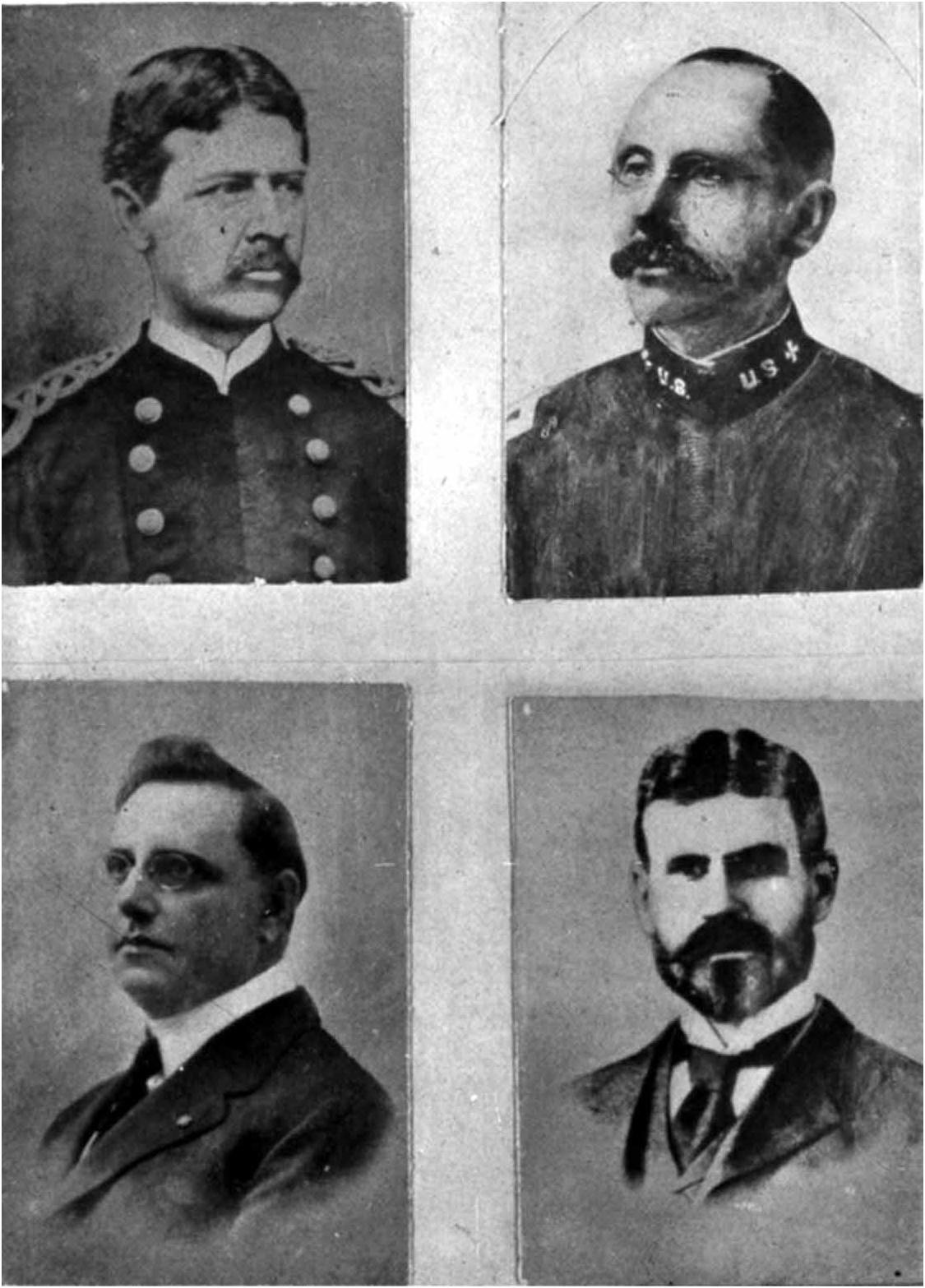
The Surgeon General who appointed them, George M. Sternberg, had looked for the germ of yellow fever himself in the 1880s and had disproved other men’s claims to have found it. The man whose idea they were to test, Dr Carlos Finlay of Havana, had told the Royal Academy of Sciences there in 1881 that a mosquito carried the disease, had begun inoculating people with mosquitoes on 30 June of that year, and in nineteen years had not produced one case that anyone else accepted. The man who would act on their result, Major William C. Gorgas, was chief sanitary officer of Havana, where yellow fever had been present every month since 1762. The man who paid was Brigadier General Leonard Wood, the military governor of Cuba, who was a doctor.
The others who ran it were the people the experiment was run on. John R. Kissinger, a private of the Hospital Corps from Ohio who had enlisted for the war with Spain in an Indiana regiment, and John J. Moran, a civilian clerk at General Fitzhugh Lee’s headquarters in Quemados, who was also from Ohio, were the first to volunteer. Dr Robert P. Cooke, an acting assistant surgeon, and four young Americans, Levi E. Folk, Warren G. Jernegan, James L. Hanberry and Edward Weatherwalks, took the bedding. The rest were Spanish immigrants off the ships at Havana: Antonio Benigno, Nicanor Fernandez and José Martinez among them.
They met for the first time as a board on the afternoon of 25 June 1900, on the veranda of the officers’ quarters at Columbia Barracks, and agreed, Agramonte wrote, that “whatever the result of our investigation should turn out to be, it was to be considered as the work of the board as a body, and never as the outcome of any individual effort.”
What they were trying to find out
Yellow fever came into the United States first in 1693. In Philadelphia in 1793 it killed more than one person in ten. In 1878 it entered 132 towns of the Mississippi valley and killed 15,932 people out of more than 74,000 cases, and Gorgas put the cost of that one summer at a hundred million dollars. Nobody knew what caused it, and nobody could say how it travelled.
What everyone believed was that it travelled in things. The Board’s own paper of February 1901 sets out the belief it was about to test. “The origin of epidemics, devastating in their course, has been frequently attributed to the unpacking of trunks and boxes that contained supposedly infected clothing; and hence the efforts of health authorities, both state and national, are being constantly directed to the thorough disinfection of all clothing and bedding shipped from ports where yellow fever prevails.” Reed and Carroll wrote later that “the doctrine of the spread of yellow fever by fomites and by filth had taken such hold on the professional mind as completely to overshadow all other views, and to direct into false channels the work of those who were engaged in the investigation of this disease.”
Fomites is the old word for the things: clothes, bedding, merchandise, anything a sick person had touched. The belief rested on stories that could not be checked, a trunk opened in Florida, a lawn at Bay Ridge, and a century of quarantine law had been built on them. The companion piece “The trunk and the lawn” sets the stories out, with what Reed found when he went looking for the records.
The Board was sent to Cuba to find the germ. Its first task was to test the Italian bacteriologist Giuseppe Sanarelli’s claim to have found it; the Board took blood from eighteen living patients and cultures from eleven dead ones, and found his bacillus in none. That done, in July, at an outbreak among the troops at Pinar del Río that the local surgeons had not recognised, Reed and Agramonte talked for the first time about mosquitoes.
They had two reasons. In 1898 Henry Rose Carter of the Marine Hospital Service, watching yellow fever go through two small towns in Mississippi, had noticed that after the first case arrived in a house, a fortnight or more passed before anyone else in it fell ill, a gap too long for a disease passed by contact and about right for a parasite that had to grow in something else first. And Ronald Ross had just shown that malaria passed through the mosquito.
So the hypothesis had two halves, and the Board said so. The first was that a mosquito, Culex fasciatus, now Aedes aegypti, which bites by day and breeds in the water jars of houses, took the agent from a patient in the first days of his illness, kept it for some days, and gave it to the next person it bit. The second was the thing nobody had ever tried to prove or disprove: that the sheets, the shirts and the black vomit carried nothing at all. “Although the literature contains many references to the failure of such contaminated articles to cause the disease,” the Board wrote, “we have considered it advisable to test, by actual experiment on non-immune human beings, the theory of the conveyance of yellow fever by fomites, since we know of no other way in which this question can ever be finally determined.”
There was no animal that caught yellow fever. The instrument would have to be people.
What they built
The first instrument was a test tube. Lazear bred mosquitoes and carried them in tubes stoppered with cotton to the wards at Las Animas and the yellow fever ward at Columbia Barracks. He turned a tube over on a patient’s abdomen and let the insect feed, wrote down the day of the patient’s illness, and kept the insect. Then he applied the same tube to the forearm of a volunteer, usually a soldier who thought it a joke. Lazear applied one to himself on 16 August, a mosquito that had fed ten days earlier on a mild case, and nothing happened. Through August nine men were bitten and none fell ill.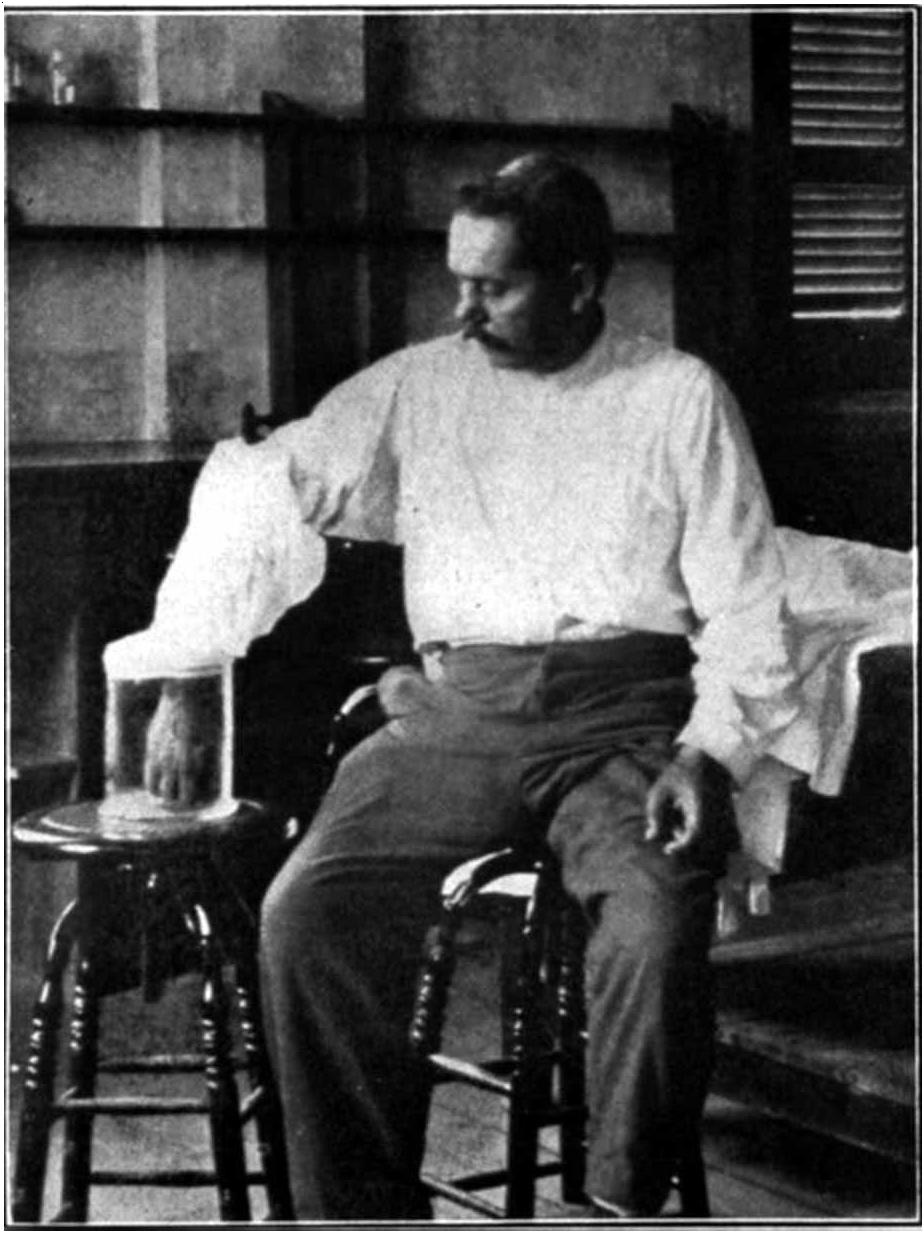
On 27 August, at two in the afternoon, Carroll held a tube on his own arm. The mosquito in it had fed on a severe case twelve days before and on three others since. On the 29th he felt tired; on the 30th he took a sea bath; on the 31st he had a fever, and the next day he was carried to the yellow fever ward, where it became a severe attack with jaundice. That morning, while Lazear and Agramonte were looking at Carroll’s blood for malaria and finding none, a soldier of the Seventh Cavalry, William H. Dean, stopped at the laboratory door. “‘You still fooling with mosquitoes, Doctor?’ ‘Yes,’ returned Lazear, ‘will you take a bite?’ ‘Sure I ain’t scared of ‘em,’ responded the man.” Dean had not left the reservation for nearly two months. Four mosquitoes fed on him, one of them the one that had bitten Carroll. “The conditions for a test case were quite ideal.” Five days later he was dizzy, on the seventh day his temperature was 102.8, and the surgeon who treated him, Roger P. Ames, who had not been told how he came by it, called it “well pronounced yellow fever.”
Carroll’s case was not clean. He had been in a dirty autopsy room on the 24th and at Las Animas on the 29th, and the Board wrote that it did not wish “to lay too much emphasis upon the exclusion in this case of other sources of infection than the mosquito.” Dean’s case was clean, and it was one.
On Thursday 13 September, at Las Animas, Lazear was bitten. On the evening of the 18th he felt, in his words, “out of sorts,” and had a chill. On the 19th at noon his temperature was 102.4 and his eyes were injected. Jaundice came on the third day, and black vomit after it. Carroll, just out of his own bed, wrote later: “I shall never forget the expression of alarm in his eyes when I last saw him alive in the third or fourth day of his illness.” Lazear died on the evening of Tuesday 25 September 1900. He was thirty-four. His wife Mabel was in the United States with their daughter, and he never saw their second child.
Reed had been in Washington since early August, finishing a report on typhoid in the Army camps of 1898. He came back early in October, and read a Preliminary Note for the Board to the American Public Health Association at Indianapolis in the last week of the month. It put Carroll and Dean on the record, mentioned Lazear’s death as “accidental infection,” and ended: “The mosquito serves as the intermediate host for the parasite of yellow fever, and it is highly probable that the disease is only propagated through the bite of this insect.” “We fully realized that three cases, two experimental and one accidental, were not sufficient proof,” Agramonte wrote.
So the second instrument was a camp. Wood gave the money. Agramonte found the ground, on a farm called San José belonging to a friend of his, Dr Ignacio Rojas, a short way off the road to Marianao and about a mile from Quemados, where yellow fever was present. Asked why not farther away, Reed answered that a mile was enough: “My own experience on the island of Cuba had already taught me that yellow fever could be easily kept out of a military garrison, although prevailing in epidemic form in a town less than 1 mile distant.” The camp opened on 20 November 1900 and was named Camp Lazear. It had seven floored hospital tents twenty feet apart, and a dozen men chosen for their records and their interest in the work, with Ames, who was immune, in charge. From that day it was quarantined. Nobody left or entered except the three immunes and the members of the Board. The temperature and pulse of every non-immune in the camp were written down three times a day, so that anyone who had brought the disease in with him would show it before he could be used, and no one was inoculated who had not first sat out the full incubation period inside the fence.
Then the two buildings, each fourteen by twenty feet and 2,800 cubic feet, on opposite sides of a small valley, eighty yards apart and seventy-five from the tents.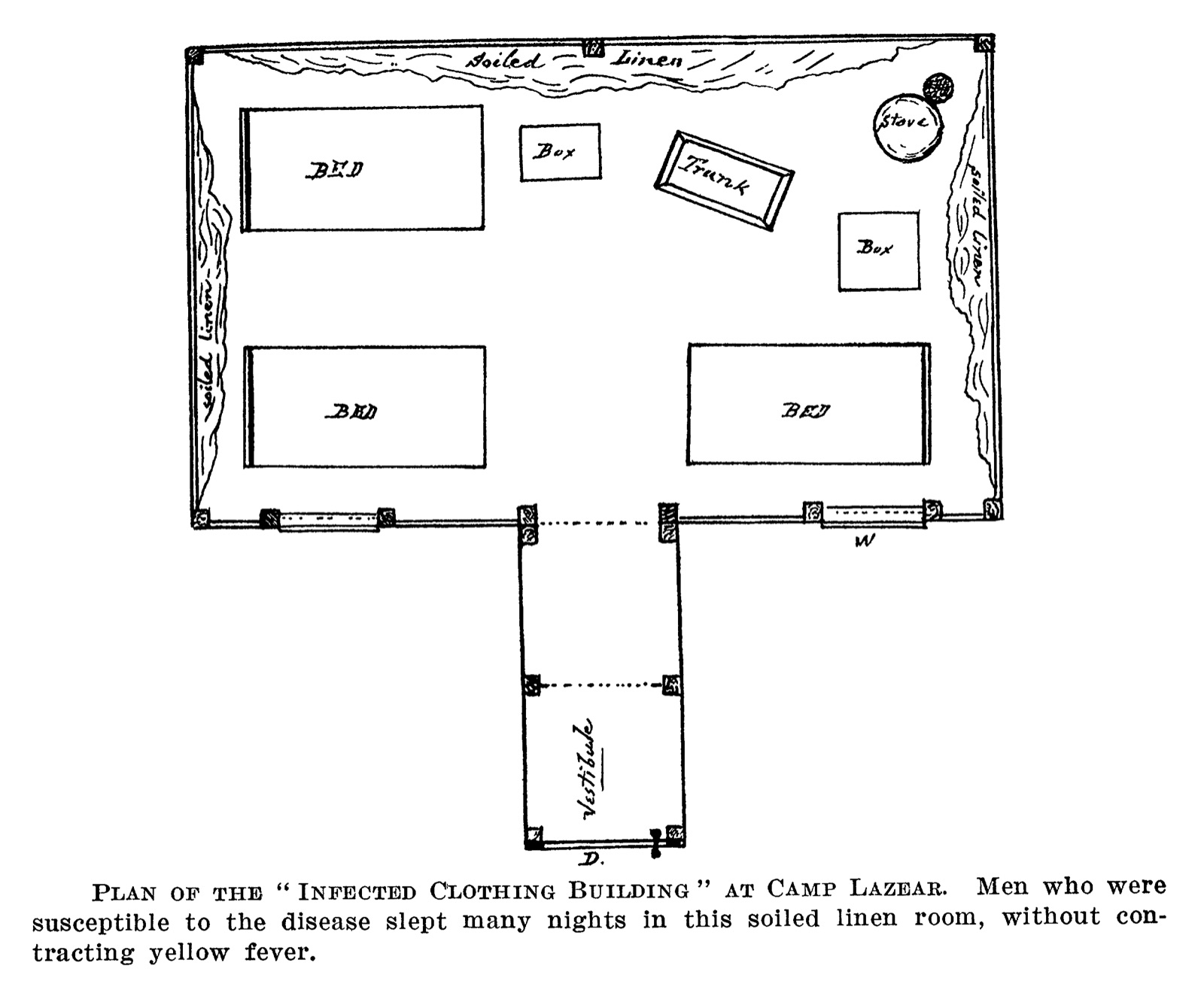
Building No. 1 was made to give the fomites every chance. It was ceiled inside with tongued-and-grooved boards and battened outside. Its two windows, each 26 by 34 inches, were both on the south wall “the purpose being to prevent, as much as possible, any thorough circulation of the air within the house”; they had wire screens of half a millimetre mesh, sliding glass behind and wooden shutters outside, the shutters because “it was not deemed desirable that the disinfecting qualities of sunlight, direct or diffused, should at any time be exerted on the articles of clothing contained within this room.” The door opened through a vestibule three feet by five with a screen door in the middle on spring hinges and a second screen door inside, so that no mosquito could follow a man in. A stove kept it hot by day and a pan kept it damp. Over sixty-three days its average temperature was 76.2 degrees.
Building No. 2 was the same box with the opposite intention. Its door and windows were on opposite sides to let the air through, and a wire screen from floor to ceiling divided it into a room twelve feet by fourteen and a room eight by fourteen. Everything that went into Building No. 1 had been soiled by a yellow fever patient. Everything that went into Building No. 2, beds, bedding and all, was first disinfected with steam.
Last there were the subjects, and a piece of paper. When the Board let it be known at Columbia Barracks that men were wanted, Kissinger and Moran came forward. Reed explained the danger and the suffering, and then offered them money; both refused it, and made the refusal their one condition. Kelly’s life of Reed says that Reed touched his cap and said, “Gentlemen, I salute you.” Reed’s own words, in print within the year, were that Kissinger had volunteered “solely in the interest of humanity and the cause of science,” and that “in my opinion this exhibition of moral courage has never been surpassed in the annals of the Army of the United States.”
But there were not enough Kissingers. “Although several men had expressed a willingness to be inoculated,” Agramonte wrote, “when the time came, they all preferred the ‘infected clothing’ experiment to the stings of our mosquitoes.” So he went to Tiscornia, the immigration station across the bay from Havana, each time a ship came in, and hired eight or ten newly landed Spaniards as day labourers. At the camp they were fed, housed under tents, slept under mosquito nets and spent eight hours a day picking stones off the field. While the days of observation passed he questioned them, and dropped any who had lived in the tropics before, who were under age, or who had a family depending on them. Then the experiment was put to them. They were paid a hundred dollars for the bite and a hundred more if the fever followed. “Needless to say, no reference was made to any possible funeral expenses. A written consent was obtained from each one, so that our moral responsibility was to a certain extent lessened. Of course, only the healthiest specimens were experimented upon.”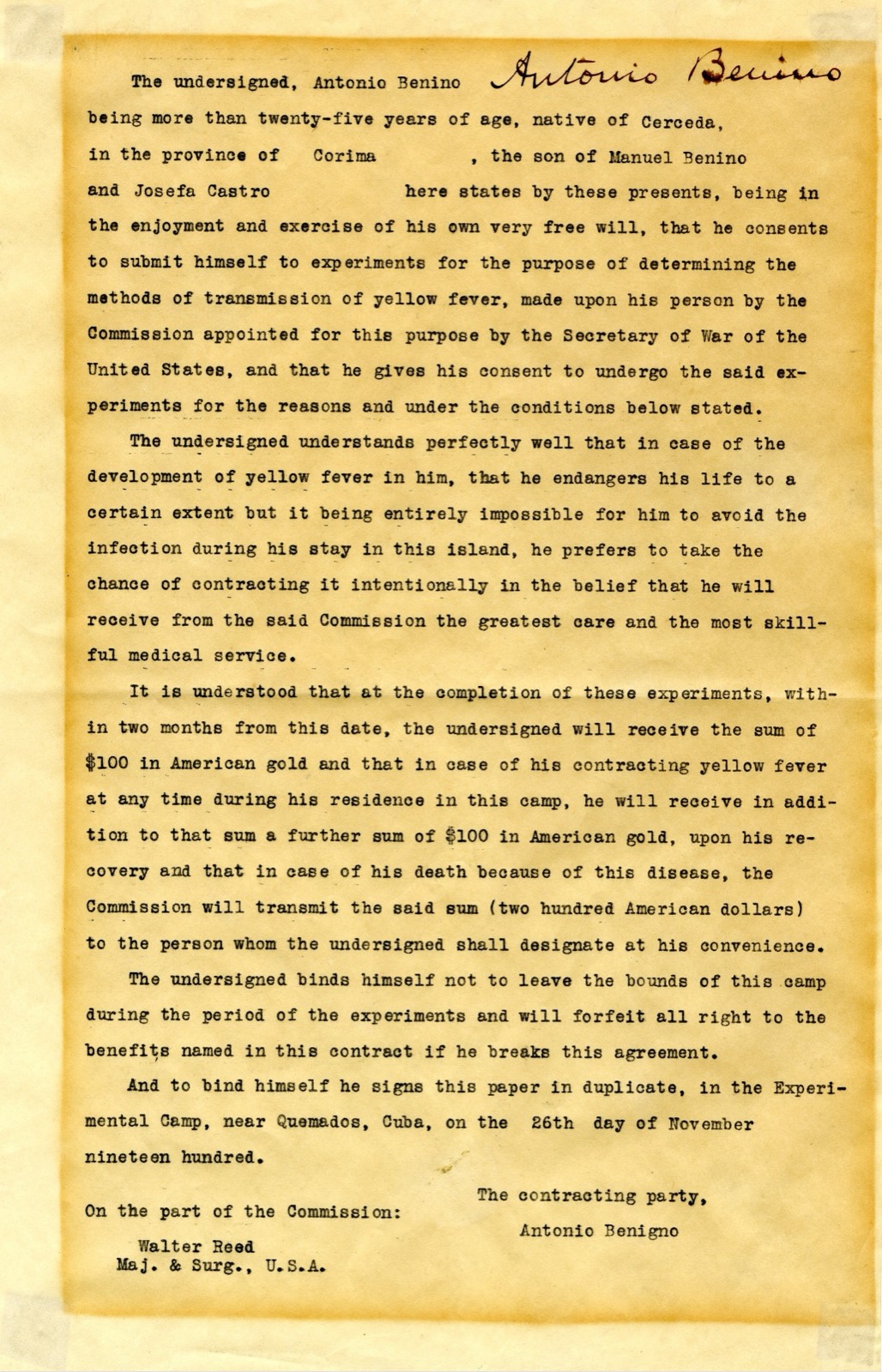
The paper survives. Antonio Benigno’s contract, typed in Spanish and in English and signed on 26 November 1900, says that he is more than twenty-five years old, a native of Cerceda, the son of Manuel Benigno and Josefa Castro, and that “being in the enjoyment and exercise of his own very free will,” he consents “to submit himself to experiments for the purpose of determining the methods of transmission of yellow fever.” The second paragraph is the one that matters. “The undersigned understands perfectly well that in case of the development of yellow fever in him, that he endangers his life to a certain extent but it being entirely impossible for him to avoid the infection during his stay in this island, he prefers to take the chance of contracting it intentionally in the belief that he will receive from the said Commission the greatest care and the most skillful medical service.” He is to receive $100 in American gold within two months, and a further $100 if he contracts the disease, on his recovery, “and that in case of his death because of this disease, the Commission will transmit the said sum (two hundred American dollars) to the person whom the undersigned shall designate at his convenience.” He binds himself not to leave the camp, and forfeits everything if he does. Reed signed for the Commission.
Count what the design held. Two arms, bedding and mosquitoes, run in the same field in the same weeks under the same quarantine. Inside the mosquito arm, two more: the men in the room with the insects, and the men on the other side of the screen breathing the same air. Diagnosis by a board of Havana experts, Finlay, Juan Guiteras and Diaz Albertini, who saw the patients before they were told how the patients had been infected. And a check on the negative arm that few experiments then or since have had: men who had slept in the fomites and stayed well were afterwards bitten, to prove that they could catch the disease at all. Count also what it did not hold. Seven men in one hut and seven under the mosquitoes; no lots drawn; and a hypothesis whose negative half could be proved only by the people who were paid, or not paid, to sleep in it.
Sixty-three days
The first fortnight went badly. From 20 November to 4 December four men were bitten, two of them twice and two three times, with insects kept ten to eighteen days after feeding, and nothing happened. The weather was cool and the mosquitoes had been kept at room temperature. On the fifteenth day, at two in the afternoon on 5 December, they “concentrated our insects, so to speak,” on Kissinger: five mosquitoes, contaminated fifteen, nineteen and twenty-one days before. He had been in quarantine fifteen days. At about half past eleven on the night of the 8th, three days and nine and a half hours after the bite, he had a chill, and by morning a temperature of 102 and violent headache. The next day Reed wrote to his wife: “the case is as clear as the sun at noon-day, and sustains brilliantly and conclusively our conclusions.” And: “Rejoice with me, sweetheart, as, aside from the antitoxin of diphtheria and Koch’s discovery of the tubercle bacillus, it will be regarded as the most important piece of work, scientifically, during the 19th century.” He added that he would have the Havana experts out the next afternoon: “I shan’t tell them how the infection was acquired until after they have satisfied themselves concerning the character of the case.”
On 8 December, at four in the afternoon, three of Kissinger’s mosquitoes and one older one were applied to a Spaniard; on the 9th, Sunday, at half past ten in the morning, the best of them, which had fed on a fatal case nineteen days before, to a second; on the 11th the same four insects to a third. The second fell ill on the 12th, the first on the 13th, the third on the 15th. Benigno, who had signed his paper on 26 November, was among them; the Army’s list gives 13 December as the day he fell ill. Within a week there were four cases of yellow fever in a camp of twelve non-immunes, every one of them in a man who had been bitten and none in a man who had not.
Reed described what that did to the rest. “Several of our good-natured Spanish friends who had jokingly compared our mosquitoes to ‘the little flies that buzzed harmlessly about their tables,’ suddenly appeared to lose all interest in the progress of science, and, forgetting for the moment even their own personal aggrandizement, incontinently severed their connection with Camp Lazear. Personally, while lamenting to some extent their departure, I could not but feel that in placing themselves beyond our control they were exercising the soundest judgment.” Agramonte, who had to go back to Tiscornia for more, put it as a panic that followed the fourth man out of the gate on the stretcher. And the same week changed the faces in Building No. 1, where Cooke, Folk and Jernegan had by then spent fifteen nights. Their countenances, Reed said, “which had before borne the serious aspect of those who were bravely facing an unseen foe, suddenly took on the glad expression of ‘schoolboys let out for a holiday,’ and from this time their contempt for ‘fomites’ could not find sufficient expression.”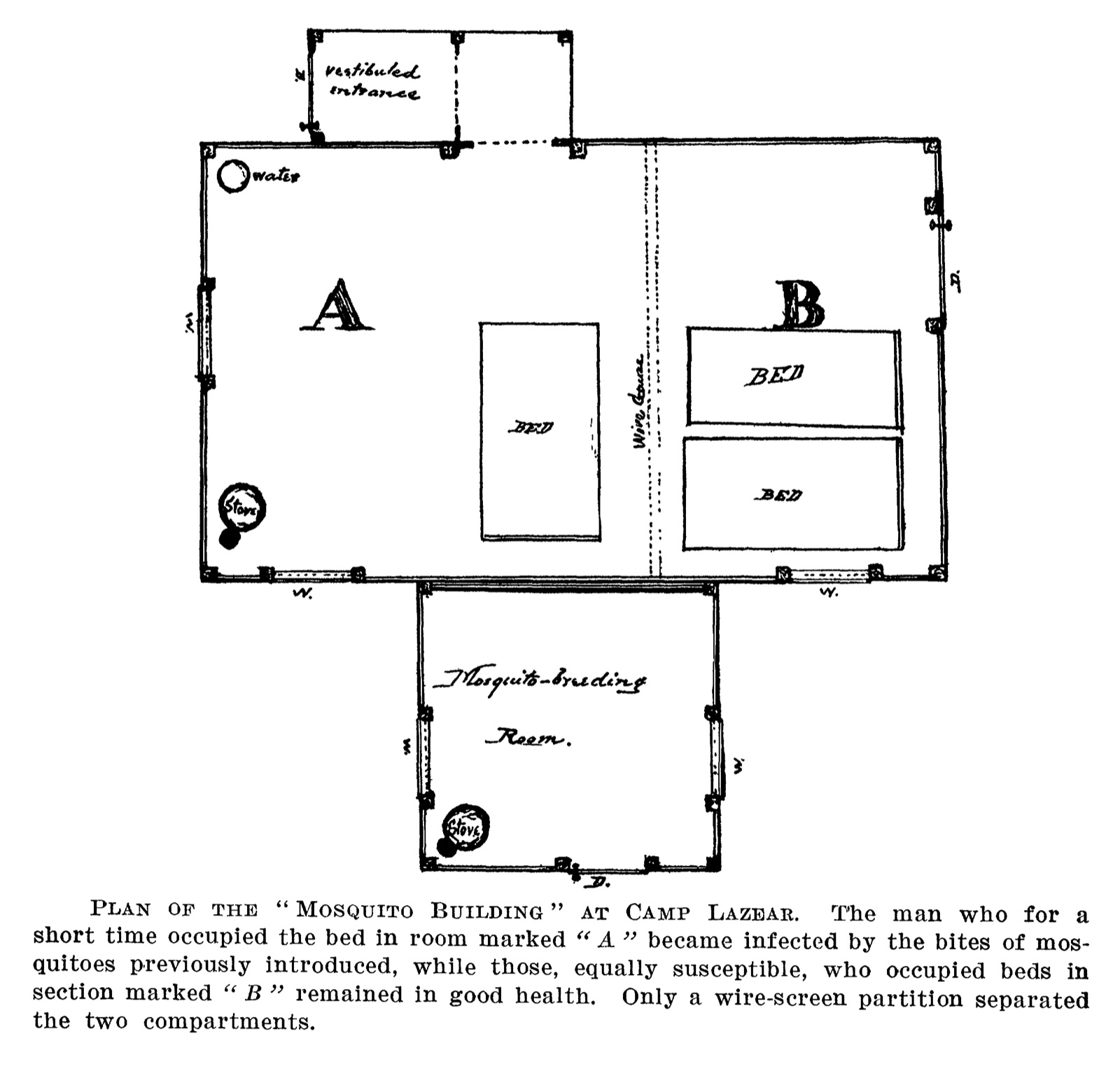
The three came out of Building No. 1 on 19 December into five days’ quarantine, in perfect health. On the 21st, at a quarter to twelve, fifteen mosquitoes were set free in the larger room of Building No. 2: one that had fed on a severe case twenty-four days before, three twelve days old, four eight days old, seven five days old. Only the first was thought likely to be dangerous. At noon Moran, who had been bitten twice in November without effect and had now been thirty-two days in quarantine, walked in “clad only in his nightshirt, and fresh from a bath,” lay down on the bed, and within two minutes was being bitten about the face and hands. Seven fed on him in half an hour. He came back at half past four and five more fed; at half past four the next afternoon, three more. On the far side of the screen, during each visit, two non-immunes and one other man sat and watched, and Agramonte says the other man was Reed. The two sat there eighteen nights running. On 25 December, Christmas morning, Moran woke with a headache and by one o’clock had a temperature of 101.2 and the flushed face and injected eyes of the disease. “There was no other possible source for his infection,” the report says, “as he had been strictly quarantined at Camp Lazear for a period of thirty-two days prior to his exposure in the mosquito building.” The two men behind the screen stayed well.
Building No. 1 was refilled the same day. From 21 December to 10 January two more Americans slept in it, this time in the very nightshirts, pyjamas and undershirts the patients had worn through their whole attacks, which had been kept unchanged on purpose; one of the two was Hanberry. From 11 to 31 January two more slept in the beds and shirts of the sick and, for the last fourteen nights, with towels on their pillows soaked in blood drawn on the first day of a well-marked case. At the end of it the Board wrote the sentence this entry is named for: “The attempt which we have therefore made to infect ‘Building No. 1,’ and its seven non-immune occupants, during a period of sixty-three days, has proved an absolute failure.”
The mosquitoes meanwhile answered the question of time. José Martinez was bitten on 17 December by fourteen insects four days old, on the 24th by seven of them at eleven days, and on the 30th by the last four at seventeen days; only the last bite took, and on 3 January he had yellow fever. The same five insects that had bitten Kissinger were kept alive on sugar and water and used again: at thirty-nine days they infected Folk, who had slept twenty-one nights among the fomites and then waited thirty days more, and who fell ill on 23 January; at fifty-seven days they gave Hanberry, another of the bedding men, an attack so severe that “the subject’s life hung in the balance for several days.” Jernegan, a third bedding man, was given two cubic centimetres of a patient’s blood under the skin on 4 January and had the disease in under four days. The last mosquito case, Charles Sonntag, fell ill at noon on 10 February 1901, and on 1 March the camp closed.
Reed sat up on the last night of the year with the book that had said, half a century before, that fomites did not carry yellow fever. “Only ten minutes of the old century remain,” he wrote to his wife at ten to midnight. “Here have I been sitting, reading that most wonderful book, ‘La Roche on Yellow Fever,’ written in 1853.” And then: “The prayer that has been mine for twenty years, that I might be permitted in some way or at some time to do something to alleviate human suffering has been granted!”
What it looked like from inside
From Havana the camp looked like a scandal, for a day. On 21 November, the day after it opened, a Spanish newspaper came out “with flaring headlines,” Agramonte wrote, accusing the American doctors of taking advantage of poor immigrants and calling on the Spanish consul to protect his subjects. The three members of the Board went to see the consul the next day. He looked at the signed contracts and told them to go ahead. The contracts were signed four days later.
From inside, the thing that looked hardest was not the bedding. Cooke took no money for it, Agramonte wrote, and the other six were each given a hundred dollars. “Two other soldiers are now occupying the house and sleeping not only in the same beds and between the same sheets on which our yellow fever patients have rested during their attacks, but they sleep in the very shirts that our patients wore throughout their entire illness! If anything should give them the disease this should succeed! Don’t you think so? Infected clothing and bedding have been a horrible nightmare during the past 300 years, but, methinks, it will die out very early in the next century!” In the same letter: “I thank God that I did not accept anybody’s opinion on this subject, but determined to put it to a thorough test with human beings in order to see what would happen.”
The mosquito side looked different depending on who was being asked to walk in. Nobody on the Board was bitten again. After Dean, Agramonte wrote, “we had agreed not to tempt fate by trying any more upon ourselves,” and when Reed arrived in October they impressed it on him, “and for this reason he was never bitten by infected mosquitoes.” Inside Building No. 2 the red ants ate the insects; by the end of December one of the fifteen was alive.
The hardest thing to see from inside was the death that gave the camp its name, and the Board’s own accounts of it do not agree. The Preliminary Note of October 1900 says that on 13 September, at Las Animas, while collecting blood from patients, Lazear “was bitten by a Culex mosquito (variety undetermined),” and that because an earlier bite had done him no harm “he deliberately allowed this particular mosquito, which had settled on the back of his hand, to remain until it had satisfied its hunger”; it calls this “accidental infection” and leaves it out of the count. Agramonte in 1915 gave the version Lazear told on his sickbed, that “some other insect which was flying about the room rested upon his hand” while he held a tube on a patient, and records that “Lazear assured us that he had not experimented upon himself.” Carroll, through Kelly, says Lazear handed him his notes and told him of “his personal experience concerning which there was no record.” The notebook in which Lazear kept those attempts went missing after Reed’s death and was found later at the New York Academy of Medicine. It holds an entry in September for a subject written down only as “Guinea Pig No. 1.” The University of Virginia, which has the Board’s papers, puts it carefully: “It has been widely believed that ‘Guinea Pig No. 1’ was in fact Lazear himself,” and “for over 100 years, historians have debated the circumstances that led to Lazear’s death.” The record does not close.
What his colleagues saw was the six days. “How can I describe the agony of suspense which racked our souls during those six days?” Agramonte wrote. “It seemed to us as though a life was being offered in sacrifice for the thousands which it was to contribute in saving.”
What happened
On 6 February 1901 Reed read the Board’s paper to the Pan-American Medical Congress in Havana. “The hall was crowded and even the doors packed with listeners,” he wrote home that night. It appeared in the Journal of the American Medical Association ten days later as “The Etiology of Yellow Fever: An Additional Note,” and it put the two huts side by side. “Nothing can be more striking or instructive as bearing upon the cause of house infection in yellow fever, than when we contrast the results obtained in our attempts to infect Buildings No. 1 and No. 2; for whereas, in the former all of seven non-immunes escaped the infection, although exposed to the most intimate contact with the fomites for an average period of twenty-one nights each; in the latter, an exposure, reckoned by as many minutes, was quite sufficient to give an attack of yellow fever to one out of two persons who entered the building.” Six of seven bitten at the camp had the disease, 85.71 per cent; by the time the camp closed it was ten of thirteen, and Reed wrote to Carroll that “10 successes out of 13 attempts is a pretty good record.” Two of the eleven conclusions did the work. The eighth: “Yellow fever is not conveyed by fomites, and hence disinfection of articles of clothing, bedding, or merchandise, supposedly contaminated by contact with those sick with this disease, is unnecessary.” The ninth: “A house may be said to be infected with yellow fever only when there are present within its walls contaminated mosquitoes capable of conveying the parasite of this disease.”
Gorgas had seen the camp and believed the first half. He was not sure the mosquito was the only way, or even the usual one. “But all ordinary sanitary measures for the preceding two years had been flat failures,” he wrote in his final report. Havana in 1900 had been as clean as labour could make it and had had some 1,400 cases. On 4 February 1901, two days before Reed read the paper, Gorgas started on the mosquitoes. On 15 February the regulations changed: every patient’s room was screened at once, and the rooms around it fumigated. The deaths from yellow fever in Havana ran: January, seven; February, five; March, one; April, May and June, none; July, one; August, two; September, two; “and for the nine months following September, 1901, not a single case nor a death has occurred from this disease.” In a hundred and fifty years, Gorgas said, there had probably been no year with fewer than a hundred deaths.
Reed and Carroll drew the other consequence in September 1901, for the association that had heard the first note. Baggage, they wrote, “may be dismissed as harmless.” “With our present knowledge of its propagation, personal baggage should no longer be subjected to disinfection.” It was the hut in which nothing happened that let them write that sentence.
After
The work was repeated at scale almost at once, and not without cost. In 1901 Guiteras opened an inoculation station at Las Animas to give immigrants a mild attack under control. Of seventeen people bitten by mosquitoes that had fed on sure cases, eight fell ill and three died. Reed reported the deaths and the confirmation in the same paragraph, and added: “in the hands of Guitéras fomites failed to exert any effect on non-immunes.” Carroll went back that August and showed that blood passed through a Berkefeld filter, which holds back every bacterium, still gave the disease: the agent was something smaller than any germ then known. At the camp itself no one had died.
Reed died of appendicitis in Washington on 23 November 1902, aged fifty-one. Carroll died in 1907. Kissinger was promoted acting hospital steward and discharged in November 1901; his health failed, a disease of the spine left him unable to walk, and by 1910 he was, in the Surgeon General’s words, “entirely dependent upon the labor of his wife for support,” on a pension of twelve dollars a month that the office called “quite inadequate.” A bill to raise it to a hundred and twenty-five passed the Senate in February 1910 and was stopped in the House. Moran refused the two hundred dollars he was offered, studied at the University of Virginia, and went to work for the Isthmian Canal Commission in Panama. The Spaniards took their money, and the Army’s 1910 account says of them that “they passed from the scene and nothing further is known concerning them.” Agramonte was by then the only member of the Board alive, professor of bacteriology at Havana, and had received no reward of any kind; he set out the facts in 1915 and said it was not for him to comment.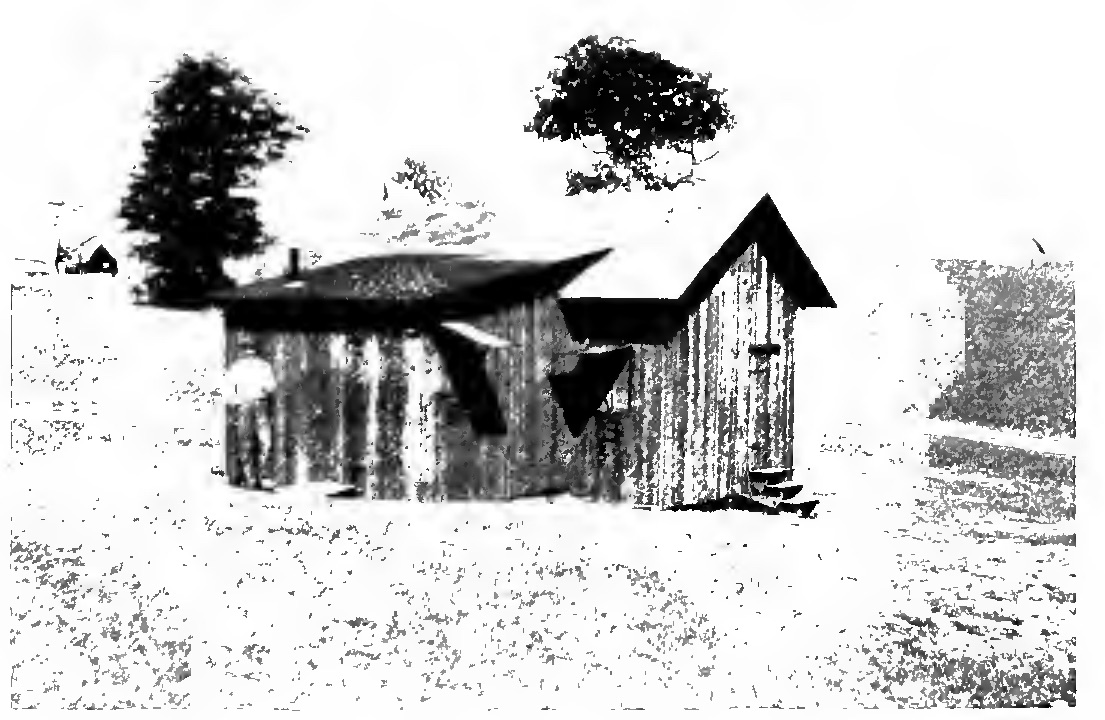
The experiments, Agramonte wrote in 1915, “served to revolutionize all standard methods of sanitation with regard to yellow fever.” New Orleans had its last epidemic in 1905 and ended it the Havana way. The canal was dug. Building No. 1 stood on in the field at Quemados; the Hench collection holds the papers of its rediscovery in 1940. Benigno’s two sheets of paper, the Spanish and the English, are in the same collection, and are now read as among the first written consents in medicine.
What it taught
A rule a century old may never have been tested. Every port in the Americas burned mattresses and fumigated trunks because of stories like the one about Colonel Prince’s lawn, and La Roche had said in 1855 that the stories did not hold. Nobody ran the test, because the test meant putting healthy people in the sheets of the dead, and the belief that made the test necessary was the belief that made it unthinkable.
The negative arm was the instrument. Building No. 2 showed what carried yellow fever, and the mosquito half of the result got the applause, the banquet for Finlay and the sentence about the nineteenth century. But Building No. 1 is the half that changed what governments did. Kelly saw this in 1906: “it was nearly as important to establish the fact that yellow fever could not be conveyed in this way as to prove that it could be transmitted by the mosquito.” A positive result adds a cause. Only a negative one paired with it lets you take the old cause away, and it was the old cause that the quarantine laws were built on.
A negative result is worth only what its controls are worth. Seven men staying well proves nothing unless they could have fallen ill, so the Board bit Folk and Hanberry afterwards, and both fell ill, one nearly fatally. The two men behind the screen in Building No. 2 proved that it was the insects and not the air. Reed’s rule that no one was inoculated until he had sat out the incubation period inside the fence is what made Moran’s thirty-two days mean anything. Together they are the reason the paper was believed by a profession that had laughed at Finlay for nineteen years.
The paper the subjects signed was built on the premise the experiment overturned. Benigno consented because it was “entirely impossible for him to avoid the infection during his stay in this island.” That was true on 26 November 1900 and false by the following September, when Gorgas had made Havana safe for a newly landed Spaniard for the first time since 1762. The consent was honest, the risk was explained, the money was stated, and the men who signed could and did walk out when they saw the fourth stretcher. But the reason the volunteers accepted the risk was the state of knowledge the experiment was about to end, and that is a kind of consent no form can make whole.
The complication is that the experiment was small, and that the number that mattered to the people who ran it was the number the paper could not use. Seven men in one hut and seven under the mosquitoes. What turned fourteen men into a conclusion the world acted on was not the camp but Havana: a city of a hundred and fifty years’ infection with no deaths for nine months, which was the same test run on a whole city by a man who had doubted it. And the case that decided the people who were there was Lazear’s, the one bite that could not be counted, that the Board never used, and that nobody has been able to explain since.
Sources
- Walter Reed, James Carroll, A. Agramonte and Jesse W. Lazear, “The Etiology of Yellow Fever: A Preliminary Note,” The Philadelphia Medical Journal, 27 October 1900, pages 790 to 796, read at the American Public Health Association at Indianapolis, 22 to 26 October 1900. The Board’s instructions, the Sanarelli cultures, Carroll’s case and the doubt about it, X. Y. (Dean) and his fifty-seven days, the 1,400 non-immunes at Columbia Barracks and the bichloride disinfection there, Lazear’s bite “deliberately allowed” and “accidental infection,” and the conclusion on the intermediate host. archive.org
- Walter Reed, James Carroll and Aristides Agramonte, “The Etiology of Yellow Fever: An Additional Note,” Journal of the American Medical Association, 16 February 1901, pages 431 to 440, read at the Pan-American Medical Congress, Havana, 4 to 7 February 1901. Camp Lazear, its personnel, tents and quarantine; the cases of Kissinger, Moran and the Spaniards; the fomites belief and the baggage rule; Building No. 1 in every dimension and its sixty-three days; Building No. 2, the fifteen mosquitoes, Moran’s visits and the two men behind the screen; La Roche; the percentages; and the eleven conclusions. archive.org
- Yellow Fever: A Compilation of Various Publications. Results of the Work of Maj. Walter Reed, Medical Corps, United States Army, and the Yellow Fever Commission, Senate Document No. 822, 61st Congress, 3rd session, Washington, 1911. Reprints in full the Preliminary and Additional Notes; Reed’s “The Propagation of Yellow Fever: Observations Based on Recent Researches” (Medical Record, 1901), with the mile from Quemados, “concentrated our insects,” Kissinger’s “moral courage,” the Spaniards who “incontinently severed their connection with Camp Lazear,” the “schoolboys let out for a holiday,” Moran “clad only in his nightshirt,” Christmas morning, Martinez, the thirty-nine-, fifty-one- and fifty-seven-day mosquitoes, the “pesthouse,” Harvey Brown’s trunk and Bay Ridge; Reed and Carroll’s “The Prevention of Yellow Fever” (Medical Record, September 1901), with “the doctrine of the spread of yellow fever by fomites and by filth,” baggage “dismissed as harmless,” and the quarantine recommendations; Surgeon General O’Reilly’s letter of 1906 with the list of volunteers and Moran as “a civilian clerk”; Senate Document 520 of 1910 with Agramonte’s statement, the $200, Kissinger’s pension and Moran’s later life; and Gorgas’s report of 12 July 1902 with the monthly deaths of 1901 and “not a single case nor a death.” archive.org
- Walter Reed, “Recent Researches Concerning the Etiology, Propagation and Prevention of Yellow Fever, by the United States Army Commission,” Journal of Hygiene 2 (1902), pages 101 to 119. The camp “continuously occupied until March 1st, 1901”; Folk and Hanberry bitten after their twenty-one nights “solely for the purpose of testing their immunity”; Guiteras’s seventeen cases and three deaths; and “fomites failed to exert any effect on non-immunes.” archive.org
- Howard A. Kelly, Walter Reed and Yellow Fever, New York: McClure, Phillips, 1906. Reed’s letters to his wife of 9, 11 and 23 December 1900, 31 December 1900 and 6 February 1901, and to Carroll of 26 February 1901; Kissinger and Moran, “Gentlemen, I salute you”; Carroll’s account of Lazear’s bite, “a common, ordinary brown mosquito,” and the notes “concerning which there was no record”; Carroll’s and Thayer’s tributes; “nearly as important to establish the fact that yellow fever could not be conveyed in this way”; the risk “absolutely nil”; Jeremiah Tomlinson’s contract of 1901; and the photograph of Building No. 1. Kelly prints the letter on the fomites house under 9 December and later refers to it as the letter of 23 December; its contents fit the 23rd. archive.org
- Aristides Agramonte, “The Inside History of a Great Medical Discovery,” The Scientific Monthly, December 1915, pages 209 to 237. The Board’s first meeting and its agreement; Lazear’s mosquitoes and the August trials; Dean at the laboratory door; Carroll’s illness; Lazear’s sickbed account, his assurance that he had not experimented on himself, and his death; the three cases “not sufficient proof”; the San José farm; Wood’s money; Tiscornia, the stone-picking, the hundred dollars, “no reference was made to any possible funeral expenses,” and the written consent; the newspaper of 21 November and the consul; Cooke unpaid and the six paid; the buggy and the steam roller; Reed behind the screen; the ants; and the four plans and photographs reproduced here. archive.org
- Informed consent agreement between Antonio Benigno and Walter Reed, 26 November 1900, English copy, Philip S. Hench Walter Reed Yellow Fever Collection, University of Virginia Library, reproduced on Wikimedia Commons. Quoted here from the document itself. The Spanish original is beside it in the same collection. Wikimedia Commons
- Philip S. Hench Walter Reed Yellow Fever Collection, University of Virginia, finding aid. The catalogue entries for Reed’s letter to his wife of 22 November 1900 on the newspaper controversy and the consent forms; the consent contracts of 26 November 1900; and the material on the rediscovery of the Camp Lazear buildings in October 1940. The collection’s own exhibition site could not be reached while this entry was written. archives.lib.virginia.edu
- Dan Cavanaugh, “Walter Reed and the Scourge of Yellow Fever,” UVA Today, 13 November 2019. The notebook entry for “Guinea Pig No. 1,” “widely believed” to be Lazear himself, and the century of debate. A secondary source, used only for that. archive.news.virginia.edu
