On Monday 19 December 1904, at the annual public session of the Académie des sciences in Paris, Henri Poincaré reported for the commission that had been asked to award the Prix Leconte, 50,000 francs, given once in three years for “new and capital discoveries”. The commission had chosen René Blondlot, professor of physics at Nancy, “for the whole of his work”. The report ran through that work for two pages: the polarisation capacity of 1881, the passage of electricity through hot gases, the instantaneity of the Kerr effect, the waves along wires that confirmed Maxwell, the rotating mirror that had given the speed of electric waves as the speed of light. “These remarkable researches,” it said, “would amply suffice to justify the choice of the Commission.”
Then it turned to the thing everyone in the room knew it had to turn to. “In recent times, M. Blondlot has studied curious actions which he attributes to a new radiation, to which he has given the name of N rays. Not all the properties of these new rays are yet well known, and circumstances have not allowed all the members of the Commission to acquire, on these questions, the conviction that only personal observation can give.” The commission did not wish, “without prejudging the significance and the scope of these new discoveries”, to put off a reward long deserved; and it wished “at the same time to affirm its confidence in the experimenter, and to give him support in the midst of difficulties which may count among the greatest that physicists have ever encountered.”
Three months earlier an American physicist had spent an evening in the laboratory at Nancy, and in the dark, while the measurements went on, had taken away the aluminium prism that was supposed to be making them. The measurements had not changed. The sentence about personal observation was the Academy’s answer to that, and it is the subject of this entry: what an experiment is when the only instrument in it is the observer, and what happens when nobody thinks to test the observer.
Who ran it
René Blondlot was born in Nancy in 1849. His first papers, on electricity and magnetism, go back to 1876, and by 1904 he had long been one of the two professors of physics in the faculty of sciences at Nancy, where the other, Ernest Bichat, was the dean and had worked with him for years. The Academy had made him one of its Correspondants, the rank it gave to distinguished men who did not live in Paris. The prize report of 1904 is the fairest summary of what he had done, and it was written by people with every reason to be careful. His measurement of the speed of electric waves along wires, made in 1893 with a rotating mirror and two sparks, “led to attributing to the propagation of the waves a velocity practically equal to that of light”. “The sagacity with which the author chose his experimenta crucis,” the report said, “the ingenuity of the experimental arrangements he adopted, the tact which allowed him to foresee and to avoid errors, seem to us equally worthy of praise.” He was in his mid-fifties when the rays were announced, and the point of the sentence is that he was exactly the kind of experimenter who does not make this kind of mistake.
The people who confirmed him were mostly at Nancy or connected to it. Augustin Charpentier held the chair of medical physics in the faculty of medicine there and had published on the eye for years. Camille Gutton was Blondlot’s junior colleague in physics. In Paris, the physician and physicist Arsène d’Arsonval presented Charpentier’s notes to the Academy and defended them; Jean Becquerel, the son of Henri Becquerel who had found the rays of uranium, took the subject up; and Éleuthère Mascart, the senior member of the Academy’s section of general physics, who sat on the prize commission, was said to have seen the effects himself. The Academy’s weekly Comptes rendus printed everything.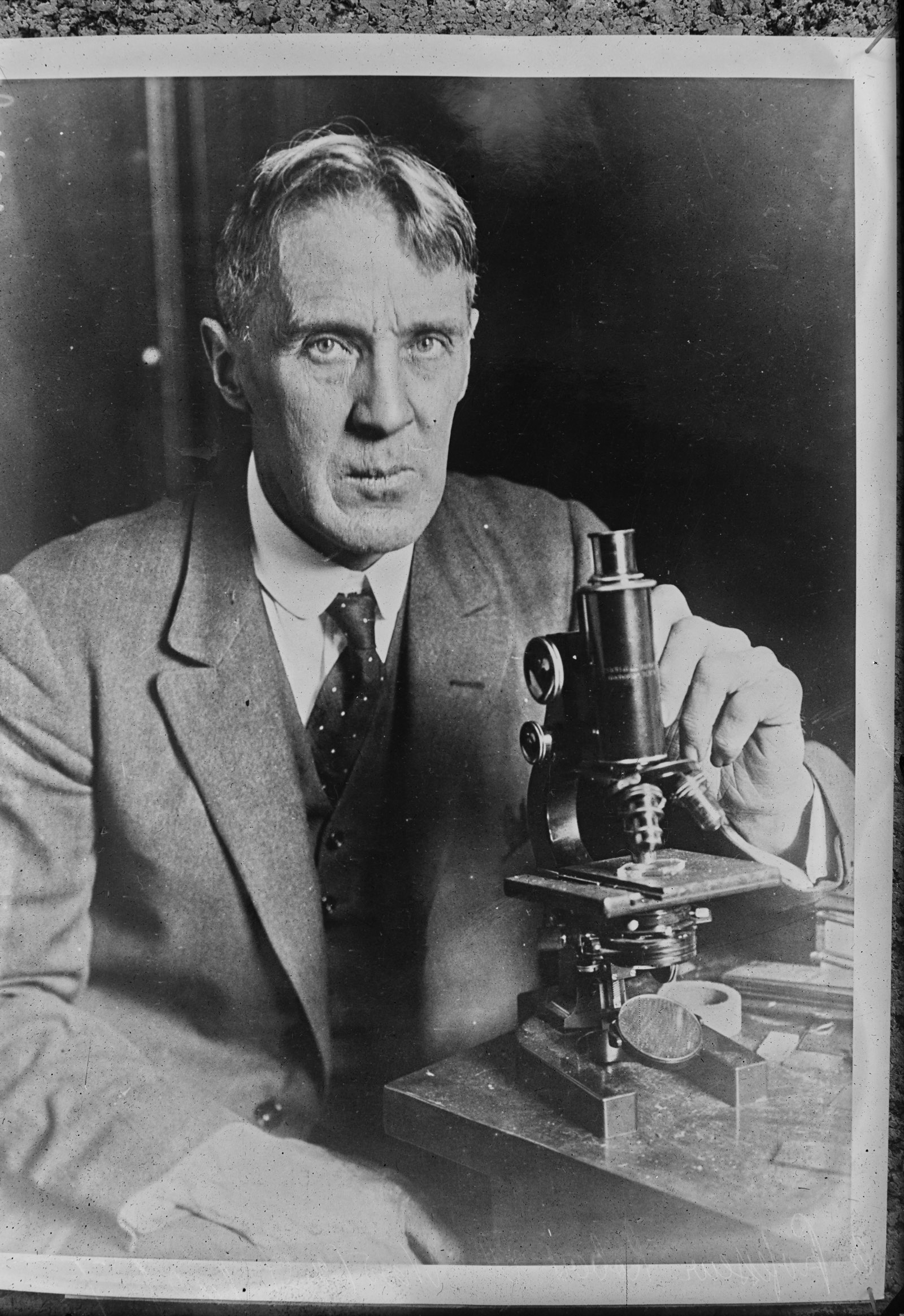
The man who tested them was Robert Williams Wood, born at Concord, Massachusetts, on 2 May 1868. He had taken his degree at Harvard in 1891, studied at Johns Hopkins, Chicago and Berlin, where he had known Heinrich Rubens, taught at Wisconsin, and since 1901 had been professor of experimental physics at Johns Hopkins in Baltimore. He was thirty-six, his subject was light, and he had already tried the experiments once at home and failed, as had Rubens and Otto Lummer in Berlin, John Butler Burke at the Cavendish and John G. McKendrick at Glasgow. None of them had been to Nancy.
What they were trying to find out
The rays began as a question about X-rays. Röntgen’s radiation had resisted every attempt to polarise it, and in a note of 2 February 1903 Blondlot asked whether the rays from a focus tube might be polarised from the moment they were made, since each X-ray is born from a cathode ray and the two define a plane. His detector was a small electric spark, which he had used before in measuring how fast the rays travelled; he supposed that a spark, having a length, might serve as an analyser, brighter when set one way across the beam and fainter when set the other. It did, he reported: the spark went from a maximum when horizontal to a minimum when vertical, “similar to those observed when a pencil of polarized rays traverses a rotating Nicol’s prism, the small spark playing the part of analyzer.”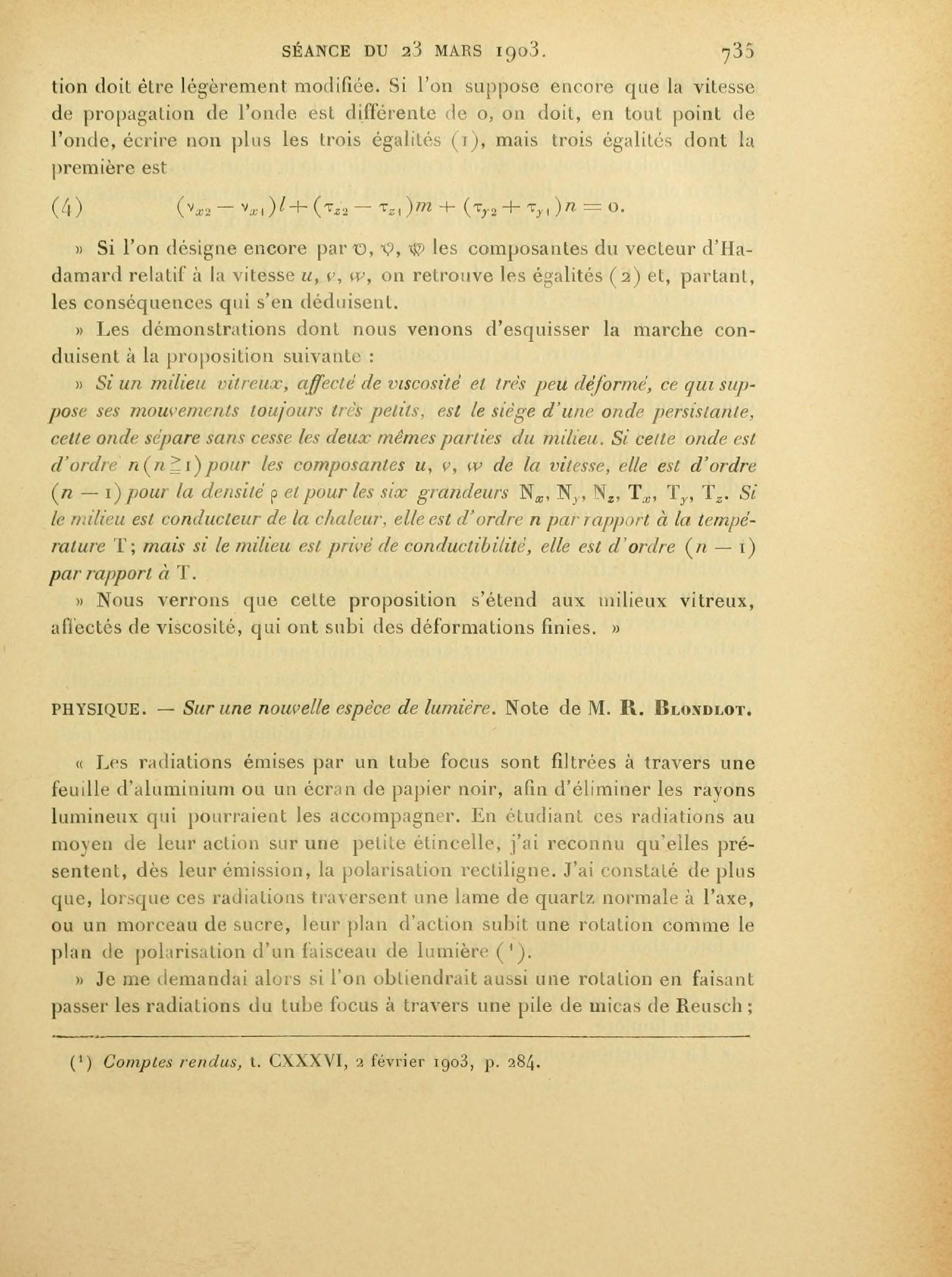
Seven weeks later, on 23 March 1903, the question had answered itself into something else. A sheet of mica turned the polarisation elliptical, as it would for light; if mica was doubly refracting for these rays, it must refract them simply; and so he put a quartz prism in the beam and found the spark brighten on the side towards the base of the prism. A quartz lens made an image of the anticathode. A polished glass plate reflected the beam, a ground one scattered it. Röntgen rays do none of these things. “In fact, the little spark reveals a new species of radiations emitted by the focus tube, which traverse aluminium, black paper, wood, etc. These are plane-polarized from the moment of their emission, are susceptible of rotatory and elliptic polarization, are refracted, reflected, diffused, but produce neither fluorescence nor photographic action.” He had been studying the polarisation of X-rays, he said, and “it was only after making this observation that I could with certainty conclude that I was not dealing with Röntgen rays, but with a new species of light.”
By May he had found the same rays in the light of an Auer gas mantle, measured their refractive index in quartz at 2.93, and then found three more species at 2.62, 2.44 and 2.29. On 25 May he found them in a gas flame and a sheet of red-hot iron, and gave them a name: “For shortness, I will henceforward designate these rays by the name of ‘N’ rays,” with the footnote, “From the name of the town of Nancy, these researches having been made at the Nancy University.” On 15 June he found them in sunlight, through a closed oak shutter fifteen millimetres thick, and wrote the sentence that set the year going: “The extreme simplicity of this experiment will incite many persons, I hope, to repeat it.”
So the hypothesis, by midsummer 1903, was two claims, and the second carried the first. The first was that there exists a radiation, given off by focus tubes, gas mantles, flames, hot metal and the sun, which passes through metal, wood and black paper, is stopped by the thinnest film of water, and behaves in every optical respect like light. The second was that this radiation can be detected by the brightening of something faint: a small spark, a small blue flame, a dab of phosphorescent calcium sulphide, a strip of white paper lit from the side, or, as it would turn out, the retina itself. Everything that was ever known about N rays was known through the second claim. The experiment that would have tested the first claim without the second was tried, and it is the part of the record nobody read.
What they built
The apparatus was simple and Blondlot described it so that others could build it. A Nernst lamp stood inside a lantern of sheet iron with a window closed by aluminium foil, so that no light came out and only N rays did. The rays were “sifted” through a deal board two centimetres thick, a second sheet of aluminium and two leaves of black paper, “so as to eliminate radiations foreign to ‘N’ rays”. A screen of wet cardboard with a slit five millimetres wide gave a defined beam, since water stops the rays and cardboard does not. Lenses and prisms were of aluminium, “a substance which does not absorb their rays”. The detector was a slit one millimetre wide in a card, packed with calcium sulphide that had been exposed to the sun, and moved across the beam to find where it brightened.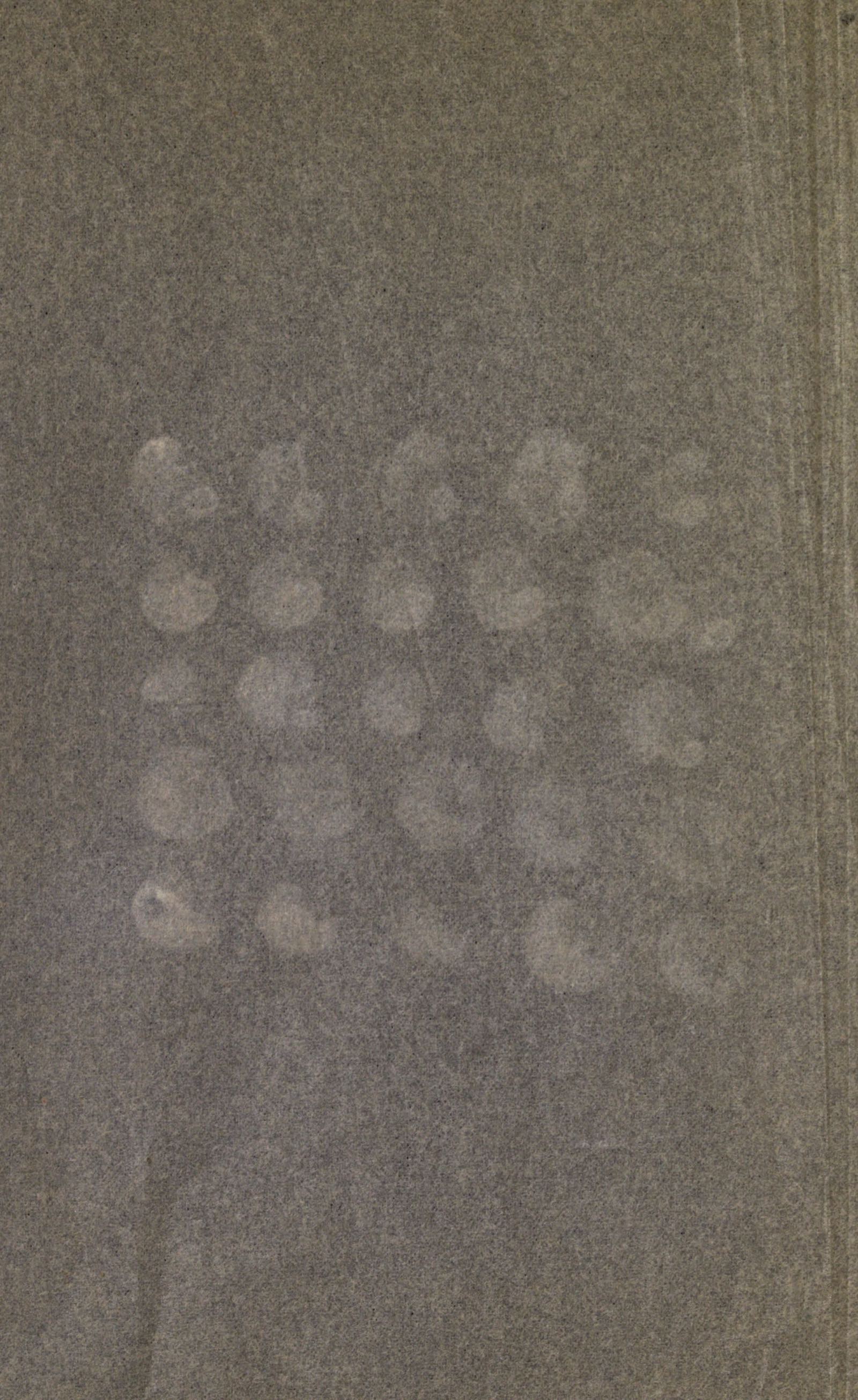
With this he measured. The note of 18 January 1904 reported that an aluminium prism of 27 degrees 15 minutes spread the beam from the lamp into separate pencils with refractive indices of 1.04, 1.19, 1.29, 1.36, 1.40, 1.48, 1.68 and 1.85, confirmed by an aluminium lens and by a second prism of 60 degrees. A grating of 200 lines to the millimetre, explored with a phosphorescent slit a few hundredths of a millimetre wide on the arm of a goniometer, gave diffraction fringes, “just as with light, only these fringes are much closer together”; the wavelengths came out between 0.0081 and 0.0176 thousandths of a millimetre, between thirty and seventy times shorter than yellow light, and Newton’s rings gave nearly the same numbers. “I believe,” he wrote, “that the relative errors do not exceed 4 per cent.” On 29 February 1904 a second family of rays, which darkened the screen instead of brightening it, was found in the least deviated part of the spectrum and named N1.
He also built the objective proof. From the beginning he had known that an effect seen only by eye in the dark would be doubted, and his answer was the photographic plate. The rays themselves did nothing to a plate “after an hour’s exposure”, but the spark did, and a spark could be photographed with the rays falling on it and again with them cut off. The method of 22 February 1904 put the spark in a box open on one side, so that it exposed one half of a plate thirteen centimetres wide; a lead screen wrapped in wet paper was fixed to the frame, so that when the frame was shifted sideways by half its length the other half of the plate came under the spark and the screen moved out of the beam. Five seconds in one position, five in the other, “and the double operation just described is repeated several times”, to a metronome, with “an arrangement of guides and buffer-stops” so that the shift could be made “with perfect certainty and regularity, in spite of the darkness.” He made about forty such experiments. One failed, which he put down to a badly regulated spark. “Several eminent physicists, who have been good enough to visit my laboratory, have witnessed them.”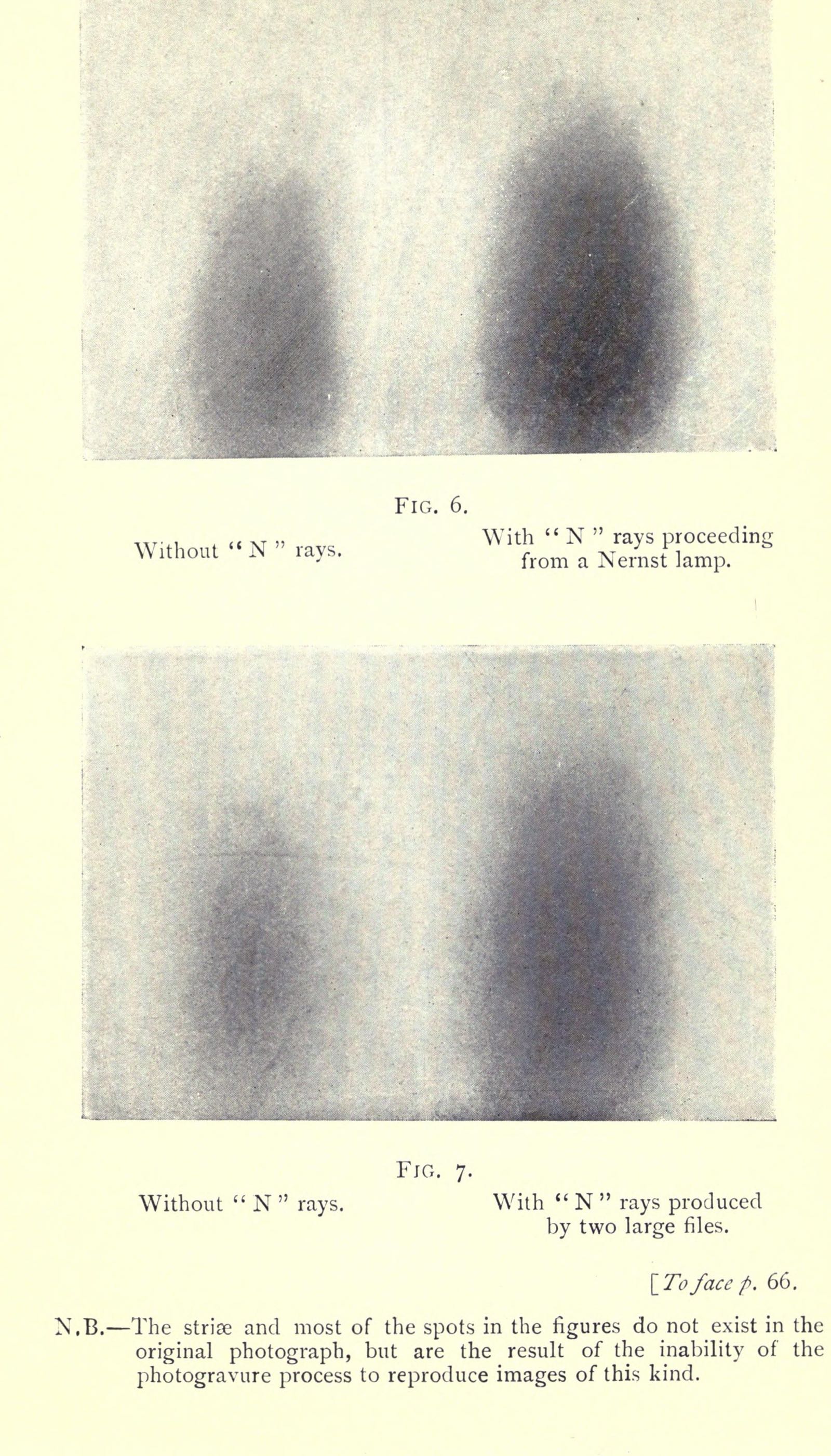
And he built the one test that did not depend on an eye. In July 1903 he put a Rubens thermopile and a galvanometer in the beam, an arrangement sensitive enough that “a candle placed 12 metres away from the thermopile gave a deflection of about 0.5 mm. on the scale.” The rays gave “absolutely nil”. He then stretched a platinum wire at dull red heat between the terminals of a capillary electrometer, so that a rise of a sixtieth of a degree in the wire would have moved the meniscus, and turned the rays on it. “Now, with ‘N’ rays playing on the wire, no deviation of the meniscus was observed. The interposition of a lead or wet-paper screen remained without effect on the electrometer, though the wire underwent the usual variations in brightness.” From this he concluded: “It is thus superabundantly established that the increase in glow produced by the rays is not due to a rise in temperature.”
Read the other way, the same paragraph says that two instruments which do not have eyes found nothing where the eye found a change. Blondlot read it the first way, and so did everyone who confirmed him.
What the design did not contain is as plain as what it did. In none of the published notes is there an observer who did not know whether the rays were on. The person who moved the lead screen, or the hand, or the wet paper, was in the room with the person watching the screen, and was often the same person. There is no count of trials, no tally of right and wrong calls, no run with the lamp cold. The hand that moved the plate every five seconds belonged to someone who knew which half was which.
The prism
Wood had spent the summer of 1904 in Brittany, and in August he went to the British Association’s meeting at Cambridge. What was said there he set down thirty-five years later, in the account his biographer William Seabrook printed in 1941: Rubens, who had been commanded by the Kaiser to demonstrate the rays at Potsdam and had failed for two weeks, would not go to Nancy himself because Blondlot had answered all his letters politely, and told Wood, “you are an American, and you Americans can do anything”. That account is a recollection, in copyright, and wrong in at least two particulars, since it puts the Cambridge meeting in September and the prize at 20,000 francs under another name; it is drawn on here only where it adds to the letter, which was written within days and is the record.
Wood went to Nancy in September, by appointment, in the early evening, and spoke German with his host so that host and assistant could speak freely to each other in French. His letter to Nature is dated from Brussels on 22 September and was printed on the twenty-ninth. It names neither the laboratory nor the man.
“The inability of a large number of skilful experimental physicists to obtain any evidence whatever of the existence of the n-rays, and the continued publication of papers announcing new and still more remarkable properties of the rays, prompted me to pay a visit to one of the laboratories in which the apparently peculiar conditions necessary for the manifestation of this most elusive form of radiation appear to exist. I went, I must confess, in a doubting frame of mind, but with the hope that I might be convinced of the reality of the phenomena, the accounts of which have been read with so much scepticism. After spending three hours or more in witnessing various experiments, I am not only unable to report a single observation which appeared to indicate the existence of the rays, but left with a very firm conviction that the few experimenters who have obtained positive results have been in some way deluded.”
The first experiment was the brightening of the spark, seen through ground glass, when the rays were focused on it by an aluminium lens and the hand was put in and out of the beam. “It was claimed that this was most distinctly noticeable, yet I was unable to detect the slightest change. This was explained as due to a lack of sensitiveness of my eyes, and to test the matter I suggested that the attempt be made to announce the exact moments at which I introduced my hand into the path of the rays, by observing the screen. In no case was a correct answer given, the screen being announced as bright and dark in alternation when my hand was held motionless in the path of the rays, while the fluctuations observed when I moved my hand bore no relation whatever to its movements.”
He was shown the photographs, and a plate was exposed in his presence, and he did the arithmetic on them that nobody at Nancy had done. The spark’s brightness “fluctuates all the time by an amount which I estimated at 25 per cent., which alone would make accurate work impossible.” As for the alternating five-second exposures, “it is quite possible that the difference in the brilliancy of the images is due to a cumulative favouring of the exposure of one of the images, which may be quite unconscious, but may be governed by the previous knowledge of the disposition of the apparatus.” Shifting the screens about did not help, “but it must be remembered that the experimenter is aware of the change, and may be unconsciously influenced to hold the plate holder a fraction of a second longer on one side than on the other.”
Then the spectrum. The lens was taken away and the wet cardboard with its slit, “about 3 mm. wide”, put in its place; before the slit stood the prism; the positions of the deviated rays were found with “a narrow vertical line of phosphorescent paint, perhaps 0.5 mm. wide”, moved by a screw. “It was claimed that a movement of the screw corresponding to a motion of less than 0.1 of a millimetre was sufficient to cause the phosphorescent line to change in luminosity when it was moved across the n-ray spectrum, and this with a slit 2 or 3 mm. wide. I expressed surprise that a ray bundle 3 mm. in width could be split up into a spectrum with maxima and minima less than 0.1 of a millimetre apart, and was told that this was one of the inexplicable and astounding properties of the rays.”
Then: “I was unable to see any change whatever in the brilliancy of the phosphorescent line as I moved it along, and I subsequently found that the removal of the prism (we were in a dark room) did not seem to interfere in any way with the location of the maxima and minima in the deviated (!) ray bundle.”
Then, with the prism back: “I then suggested that an attempt be made to determine by means of the phosphorescent screen whether I had placed the prism with its refracting edge to the right or the left, but neither the experimenter nor his assistant determined the position correctly in a single case (three trials were made). This failure was attributed to fatigue.”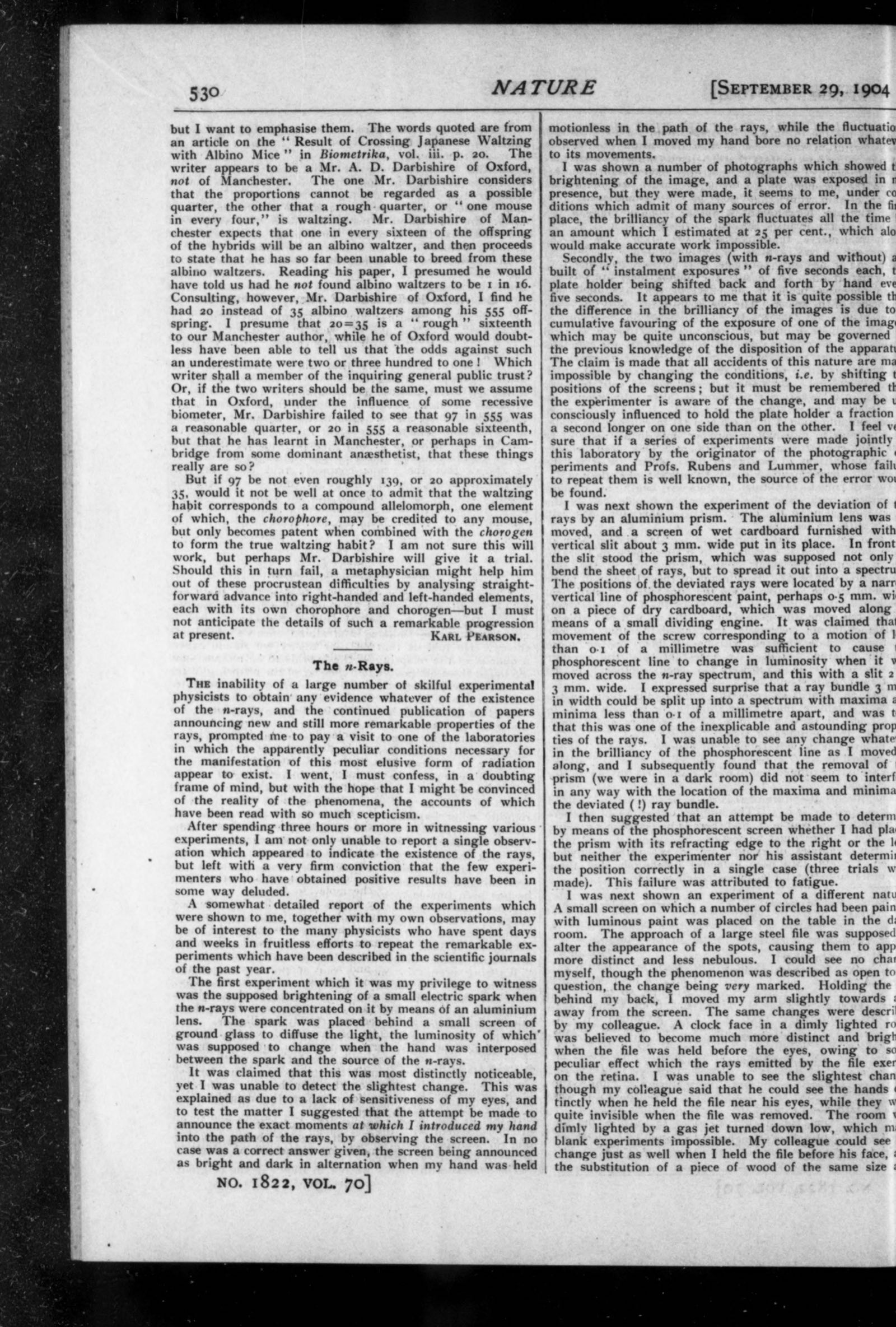
The last experiments were the spotted screen, the steel file and the clock. “A small screen on which a number of circles had been painted with luminous paint was placed on the table in the dark room. The approach of a large steel file was supposed to alter the appearance of the spots, causing them to appear more distinct and less nebulous. I could see no change myself, though the phenomenon was described as open to no question, the change being very marked. Holding the file behind my back, I moved my arm slightly towards and away from the screen. The same changes were described by my colleague.” The clock face in the dimly lit room “was believed to become much more distinct and brighter when the file was held before the eyes”; Wood could see no change, “though my colleague said that he could see the hands distinctly when he held the file near his eyes, while they were quite invisible when the file was removed.” The room was lit by a gas jet turned low, “which made blank experiments impossible”. So Wood made one. “My colleague could see the change just as well when I held the file before his face, and the substitution of a piece of wood of the same size and shape as the file in no way interfered with the experiment. The substitution was of course unknown to the observer.”
The recollection of 1941 adds a ruler noticed on the desk, the prism lifted off its stand while Blondlot read the same numbers off the wheel as before, and a coda in which the suspicious assistant repeats the reading, Wood walks towards the prism with audible footsteps without touching it, and the assistant announces that there is no spectrum. Wood kept that out of the letter, he said. What the letter and the recollection agree on is the thing that matters: three blind tests, one with the hand, one with the prism, one with the wood, and in none of them could the observers tell whether the rays were there. The letter is given whole in the companion piece, “The letter”.
What it looked like from inside
Blondlot did not think he was deceiving himself, and the record of why is in his own instructions. The general remark in the note of 2 November 1903 is the first. “The aptitude for catching small variations in luminous intensity is very different in different persons; some see from the outset, and without any difficulty, the reinforcing action produced by ‘N’ rays on the brightness of a small luminous source; for others, these phenomena lie almost at the limit of what they are able to discern, and it is only after a certain amount of practice that they succeed in catching them easily, and in observing them with complete certainty. The smallness of the effects and the delicacy of their observation must not deter us from a study which puts us in possession of radiations hitherto unknown.”
By 1905, when his papers were collected in English, the remark had grown into a page headed “How the Action of ‘N’ Rays should be observed”. “It is indispensable in these experiments to avoid all strain on the eye, all effort, whether visual or for eye accommodation, and in no way to try to fix the eye upon the luminous source, whose variations in glow one wishes to ascertain. On the contrary, one must, so to say, see the source without looking at it, and even direct one’s glance vaguely in a neighbouring direction. The observer must play an absolutely passive part, under penalty of seeing nothing. Silence should be observed as much as possible. Any smoke, and especially tobacco smoke, must be carefully avoided.” The observer “should accustom himself to look at the screen just as a painter, and in particular an ‘impressionist’ painter, would look at a landscape. To attain this requires some practice, and is not an easy task. Some people, in fact, never succeed.”
Every word of that is a true description of how to see a faint light in the dark, and every word of it is a reason the experiment could not fail. An observer who saw the change was sensitive; one who did not was unpractised, or strained, or looking straight at it; and the one who never succeeded was one of the people who never succeed. The note of 2 February 1904 added that the screen brightened only when viewed face on and darkened when viewed obliquely, “which explains the fact, observed in all ‘N’ ray experiments, that only the observer placed exactly in front of the sensitive screen perceives the effect of these rays. It also shows how illusory it would be to try to make an audience witness these experiments.”
The rays then did what a thing seen only at the edge of vision does: they turned up wherever anyone looked for them. In November 1903 Blondlot found that a quartz lens went on emitting them for twenty minutes after the lamp was out, that pebbles picked up in the yard emitted them for four days, and that a sun-warmed brick held near the eyes made a dimly lit strip of paper brighten, so that “the observer’s eye behaves like an accumulator of ‘N’ rays”. In December he found that a bent cane held before the eyes whitened the dial of a clock four metres away, that hardened steel emitted them and soft steel did not, and that a knife from a Merovingian grave “emits ‘N’ rays just like a modern knife”, so that the emission “has thus persisted for more than twelve centuries, and does not appear to have abated.” On 14 December Charpentier told the Academy that a small phosphorescent object brightened when brought near the body, more near a muscle, and more again when the muscle was contracted, and likewise near a nerve, so that with care one could “recognise the presence of a superficial nerve and follow it”; after nine hours in complete darkness the effect was the same, so the body was emitting the rays and not merely storing daylight. “It seems to me therefore demonstrated from now on,” he wrote, “that the human body emits N rays.” Nature’s digest said “a new field of studies in physiology and medicine is thus opened up.”
In 1904 Charpentier conducted the rays along wires and found them in the sense of smell and of hearing. Jean Becquerel found that ether and chloroform put out the rays from the nerve centres and then from metals, and gave the Academy a note “On the anaesthesia of metals”. Others found them in plants, in a tuning fork, in a corpse. The claims of priority arrived with the discoveries: a Carl Huter wrote to say he had already found “luminous rays of the human body”, a Paul Audollent “the emission of radiations by the generality of the bodies of nature”. D’Arsonval answered them for Charpentier on 11 April 1904 in a sentence that reads differently now than it did then. The idea that the body gives off some unknown radiation, he said, “is in fact several centuries old, and is to be found notably in the pictures of the mystical painters, in the fluid of the magnetisers, in the od of Reichenbach, etc., without speaking of our contemporaries.”
The physiologists outside France were saying what was wrong, in Nature, from the start. Lummer read a paper to the Berlin Physical Society on 27 November 1903 that Nature translated in February. Rubens and others, he reported, had failed to see the effects, and he could imitate a whole class of Blondlot’s experiments “without employing any source of illumination whatever”, because of “the contest between the rods and cones of the retina in seeing in the dark”. A faint small object in the dark is seen by the rods at the edge of the retina, and fades and reddens when one looks straight at it with the cones; an observer who puts a hand in the beam and then stares to see the change will see the glow dim, and will see it return when the hand is removed and the gaze relaxes, and both take time, as Blondlot had said his effects did. McKendrick in Glasgow tried it with seven observers, who called out “bright” and “dim” at a phosphorescent screen while nothing was being done to it, and who, told to look into the distance beyond the spot, “reported without exception that the brightness of the screens was constant”. Burke at the Cavendish had met nobody “who, on severe cross-examination in the dark, did not satisfy me that the variations in brightness which he had observed were altogether subjective”. What they said, and in their own words, is in the companion piece, “The rods and the cones”. Blondlot’s instruction to see without looking was the one these men would have given, and it is the condition under which the rods produce the effect for nothing.
Blondlot’s only observer-free instruments, the thermopile and the electrometer, had said there was no energy in the beam. The response, inside Nancy and inside the Academy, was to conclude that N rays were a form of light which does not heat, so that the one thing a physical radiation must do, carry energy, was something these rays did so little that only a retina could notice.
What happened
Wood’s letter went round the world in a month. The Revue scientifique in Paris printed a translation on 22 October and began what it called an inquiry, asking French physicists what they had seen. Its pages for that autumn are the one source this entry could not reach, so what they contain is reported at second hand, from Nature’s digest of 15 December: “Nearly all the physicists who have been approached hitherto by the Revue Scientifique in the course of its inquiries as to the existence of the n-rays have unequivocally stated their inability to observe the effects which these rays are alleged to produce. It is therefore particularly interesting to note in the Revue for November 26 that M. D’Arsonval has been able to reproduce these effects in many instances, and to show that they are not due merely to thermal causes. M. Mascart is stated jointly to have observed with him the same phenomena.” Wood’s recollection is that about forty letters were printed and half a dozen backed Blondlot, and that the chemist Le Bel asked what a spectacle it was for French science when one of its savants measured the position of spectral lines while the prism reposed in the pocket of his American colleague. The pocket is Le Bel’s; the letter says only that the prism was removed.
In December Wood put his letter into German in the Physikalische Zeitschrift, repeating his suggestion, as Nature noted, “that those experimenters who obtain positive and those who obtain negative results should arrange to make a series of joint experiments”. That suggestion had been the end of the letter, and it is the part that was never taken up. He had described the experiment that would settle it: two screens, identical outside, one of aluminium sheets with wet paper sealed between them and one with dry, a dozen or more photographs taken with the observer “ignorant of which screen was used in each case”, two observers, one to change the screens and keep the record and one to expose the plates. “I feel very sure that a day spent on some such experiment as this would show that the variations in the density on the photographic plate had no connection with the screen used.”
On 19 December the Academy gave Blondlot the prize, with the sentences this entry opened with; the whole passage is in the companion piece, “The citation”. The same month the Academy heard G. Weiss and L. Bull on the registration of the rays by photography, with three squares on a plate of which “the two outer squares should have been darker if an increase of the light intensity had been produced”, and in January 1905 Chanoz and Perrigot on a “supposed” photographic demonstration by Bordier. The French photographic evidence, tried by people who were not the originator, went the way of the German and the English.
In 1905 Longmans in London brought out the collected notes in English, with a sample of the spotted screen bound in so that readers could try for themselves. Nature gave it to McKendrick to review. The phenomena, he wrote, “have been observed chiefly in France by Prof. Blondlot and others of his school, while many experienced observers in Germany, America, and England have wholly failed to obtain a satisfactory demonstration even of their existence. The reason is that the so-called proof of their existence depends, not on objective phenomena that can be critically examined, but on a subjective impression on the mind of the experimenter, who sees, or imagines he sees, or imagines he does not see, a slight change in the degree of luminosity of a phosphorescing screen.” Of the instruction to keep the eye in the dark for a long time, the mind free and the attention on the observation, he wrote: “These seem to be admirable arrangements for obtaining an illusive subjective impression!”
Nancy did not stop. On 15 January 1906 Gutton gave the Academy an experiment in which rays from a Nernst lamp, falling on a spark in a primary circuit, were said to dim a second spark induced in a secondary circuit, which would have been an effect on electricity and not on an eye. Campbell Swinton in London repeated it “with much care” and measured the energy in the secondary with a Duddell thermo-galvanometer that “shows no variation whatever”, having by then tried most of Blondlot’s own experiments “in all cases with absolutely negative results, provided proper precautions were taken to avoid effects due to temperature and other extraneous causes of disturbance.” That letter, of 1 March 1906, is the last word on the rays in Nature’s indexes for 1905 and the spring of 1906.
After
Blondlot lived until 1930. The Academy announced his death at its session of 1 December that year, and he was still its Correspondant for general physics when it did. Wood’s biographer wrote in 1941 that “the tragic exposure eventually led to Blondlot’s madness and death”, and the sentence has been repeated ever since; nothing in the record used here supports it, and the dates do not. What the record shows is a physicist of real distinction who kept his chair, and a commission of the Academy that had tied its name to his in the one sentence it would most have liked to take back.
Wood went on to a long career in physical optics at Johns Hopkins and died in 1955. The letter of 22 September 1904 is among the shortest things in his bibliography and the thing he is best remembered for. The experiment he proposed at the end of it was never run at Nancy.
What it taught
Blondlot did most things right, and that is what makes the case worth keeping. He built a detector and then a second, third and fourth, and showed that they agreed. He measured indices by two methods and wavelengths by three, and gave his errors. He foresaw the objection that the effect was subjective and spent a year building a photographic method to meet it. He put instruments without eyes in the beam and printed their nulls. He wrote down exactly how the observing was to be done. None of that saved the result, and the reasons it did not are the lesson.
When the detector is a person, every control has to be blind, and none was. Every observation at Nancy was made by someone who knew whether the rays were on. The lead screen, the hand, the wet paper, the prism’s edge, the plate holder: all of them were moved by the observer or in the observer’s sight. Wood’s three experiments in September 1904 were the first blind trials the rays had met. The hand produced alternations when it was still; the prism’s edge was called wrong three times in three; the wood passed for the file. The result was not that N rays do not exist. It was that the instrument that had reported them could not tell whether they were there, and once that is known nothing it has reported can be used.
A null from an instrument you trust is a finding, not a property of the rays. The thermopile that could see a candle at twelve metres saw nothing. The electrometer that could feel a sixtieth of a degree felt nothing. Blondlot’s reading was that the increase in glow “is not due to a rise in temperature”; the reading he did not take was that nothing measurable was arriving. A detector sensitive enough to answer the question that answers no is the strongest result in the whole record, and it was published as a detail about heating.
A method that explains its own failures cannot be tested by its own method. “Some people, in fact, never succeed.” The sentence was true, and it meant that no observer’s failure could count, because failure was a fact about the observer. The replications were replications of the method, by people who had learnt it from the same instructions, with the same detector, under the same rule that seeing required not looking. Dozens of papers in a year, all by the same kind of eye, are one experiment repeated, not many. Lummer, Burke and McKendrick said this in print before the prize, and the Academy’s answer was that its commissioners had not had the chance of personal observation.
When a claimed precision exceeds what the apparatus can give, suspect the apparatus. A slit three millimetres wide cannot yield a spectrum with lines a tenth of a millimetre apart, and Wood “expressed surprise”. He was told it was “one of the inexplicable and astounding properties of the rays”. An instrument that reports more than it can resolve is reporting something other than the signal; here it was reporting the observer. The same test could have been applied to the wavelengths and the four per cent errors by anyone who asked what the eye’s own resolution in the dark was.
Institutions read the man, not the measurement. The prize report praised Blondlot’s “tact which allowed him to foresee and to avoid errors” on one page and awarded him for the whole of his work on the next, with the rays hedged into a paragraph. Mascart and d’Arsonval, who had seen the effects, were the Academy’s physicists, and their seeing was the reason the rays were believed in Paris. Reputation was offered where a blind trial was needed, and reputation is exactly the thing a blind trial is designed to leave out of the room.
The complication is that the people who believed were not fools, and the man who ended it did not run a proper experiment either. Blondlot’s optics were correct as optics; the rods-and-cones account that undid him was itself new physiology in 1903, and Lummer had to teach it to physicists. The photographs were a genuine attempt at objectivity that failed for a reason Wood could only see because he had stood in the room and watched the plate holder move. D’Arsonval and Mascart were going on what they had seen with their own eyes, which is what observers had always been asked to do. And Wood’s method was a trick in the dark, performed on a host who had not agreed to it, which is why Nancy could answer that its guest had been rude rather than that he had been right. The proper experiment, the one with two sealed screens and an observer who did not know which was which, was written out at the end of his letter in a dozen lines. It was never done, by either side, and so the rays were not refuted in the laboratory where they were found; they were abandoned everywhere else, which is a different and slower thing, and it took until 1906.
Sources
- R. Blondlot, “N” Rays: A Collection of Papers Communicated to the Academy of Sciences, with Additional Notes and Instructions for the Construction of Phosphorescent Screens, translated by J. Garcin, London: Longmans, Green, 1905. The sixteen notes of 2 February 1903 to 14 March 1904 as reprinted in English: the spark as analyser, the “new species of light”, the naming after Nancy, the sun through the oak shutter and “the extreme simplicity of this experiment”, the thermopile and the electrometer, the general remark on observers, the storing of the rays, the brick and the clock dial, the Merovingian knife, the dispersion and wavelength measurements, the photographic method and its forty experiments, the oblique-viewing peculiarity and “how illusory it would be to try to make an audience witness these experiments”, and the instructions on how the rays should be observed. The phosphorescent screen bound into this copy is the third figure; the spark photographs facing page 66 are the fourth. archive.org
- R. Blondlot, Rayons “N”: recueil des communications faites à l’Académie des Sciences, Paris: Gauthier-Villars, 1904. The French edition of the same notes, with the footnote on the name. archive.org
- Comptes rendus hebdomadaires des séances de l’Académie des sciences, tome 136 (January to June 1903): “Sur une nouvelle espèce de lumière”, séance du 23 mars 1903, page 735, which is the second figure. archive.org
- Comptes rendus, tome 137 (July to December 1903): Blondlot’s notes of 2 and 9 November and 7 December; Augustin Charpentier, “Émission de rayons n (rayons de Blondlot) par l’organisme humain, spécialement par les muscles et par les nerfs”, presented by d’Arsonval, séance du 14 décembre 1903, pages 1049 to 1050 (“suivre un nerf superficiel”, the nine hours of darkness, “il me semble donc démontré dès maintenant que le corps humain émet des rayons n”), translated here by the author of this entry; Paul Audollent’s claim of priority, 28 December 1903, page 1227; and the programme of prizes for 1904, séance du 21 décembre 1903, page 1183, with the Prix Leconte at 50,000 francs, “en un seul prix, tous les trois ans, sans préférence de nationalité”, for “découvertes nouvelles et capitales”. archive.org
- Comptes rendus, tome 138 (January to June 1904): Blondlot’s notes on dispersion and wavelength (pages 125 to 129, with the wavelengths in thousandths of a millimetre), photographic registration, the N1 rays, and the dimly lighted surface; Charpentier’s notes, among them the conduction along wires, smell and hearing; Jean Becquerel’s, among them “Sur l’anesthésie des métaux” (page 1415); Carl Huter’s claim of priority (page 198); and d’Arsonval, “Remarques à propos des Communications de M. A. Charpentier et des revendications de priorité auxquelles elles ont donné lieu”, séance du 11 avril 1904, pages 884 to 885: “Cette idée est, en effet, vieille de plusieurs siècles et se retrouve notamment dans les tableaux des peintres mystiques, dans le fluide des magnétiseurs, dans l’od de Reichenbach, etc., sans parler des contemporains.” Translated here by the author of this entry. archive.org
- Comptes rendus, tome 139 (July to December 1904): Blondlot’s and Becquerel’s later notes, Charpentier’s “Ondes stationnaires observées au voisinage du corps humain” (page 135), the list of the Academy’s members with Mascart at the head of the section of general physics, and the report of the Commission for the Prix Leconte, Poincaré rapporteur, séance publique annuelle du 19 décembre 1904, pages 1120 to 1122: “pour l’ensemble de ses travaux”; “La sagacité avec laquelle l’auteur a choisi les experimenta crucis, l’ingéniosité des dispositions expérimentales qu’il a adoptées, le tact qui lui a permis de prévoir et d’éviter les erreurs nous paraissent également dignes d’éloges”; “Ces remarquables travaux suffiraient amplement pour justifier le choix de la Commission”; “les circonstances n’ont pas permis à tous les membres de la Commission d’acquérir sur ces questions la conviction que peut seule donner l’observation personnelle”; “affirmer sa confiance dans l’expérimentateur et lui donner un appui au milieu de difficultés qui peuvent compter parmi les plus grandes que les physiciens aient jamais rencontrées.” Translated here by the author of this entry; the French is given in full in the companion piece, “The citation”. archive.org
- R. W. Wood, “The n-Rays,” Nature, vol. 70 no. 1822 (29 September 1904), pages 530 to 531, dated Brussels, 22 September. Every quotation from the visit; the letter is given in full in the companion piece, “The letter”. Page 530 is the fifth figure. archive.org, doi:10.1038/070530a0
- O. Lummer, “M. Blondlot’s n-Ray Experiments,” Nature, vol. 69 (18 February 1904), pages 378 to 380, a translation of his paper read to the German Physical Society on 27 November 1903; and John Butler Burke, “The Blondlot n-Rays,” same issue, page 365. The rods and cones, Rubens’s failure, “does not state with what visual apparatus one ought to observe”, and “a radiation to which some men are blind and others not so”; quoted at length in the companion piece, “The rods and the cones”. archive.org
- S. G. Brown, “M. Blondlot’s n-Ray Experiments,” Nature, vol. 69 (28 January 1904), page 296: the zinc sulphide screen and the jar of warm water. archive.org
- John G. McKendrick and Walter Colquhoun, “The Blondlot or n-Rays,” Nature, vol. 69 (7 April 1904), page 534: the seven observers, the relaxed accommodation, the warmed screens. archive.org
- John Butler Burke, “The Blondlot n-Rays,” Nature, vol. 70 (30 June 1904), page 198: “severe cross-examination in the dark”, and the lead screen damping the spark. archive.org
- Nature, vol. 69 (24 December 1903), page 182: the note on the rays and on Charpentier’s “new field of studies in physiology and medicine”. archive.org
- Nature, vol. 70 (18 August 1904): the British Association’s meeting at Cambridge that week. archive.org
- Nature, vol. 71 (15 December 1904), page 157: the Revue scientifique inquiry, d’Arsonval’s reply of 26 November and Mascart; and (22 December 1904), pages 185 and 191: Wood’s paper in the Physikalische Zeitschrift and Weiss and Bull on photographic registration. 15 December, 22 December
- John G. McKendrick, “The ‘N’ Rays,” review of the Garcin translation, Nature, vol. 72 (29 June 1905), page 195: “who sees, or imagines he sees, or imagines he does not see”, and “admirable arrangements for obtaining an illusive subjective impression”. archive.org
- A. A. Campbell Swinton, “The Blondlot n-Rays,” Nature, vol. 73 (1 March 1906), page 413: Gutton’s experiment of 15 January 1906 and the thermo-galvanometer. archive.org
- Nature, vol. 127 (17 January 1931): the Paris Academy of 1 December 1930, at which the president announced the death of René Blondlot, Correspondant for the Section of General Physics. archive.org
- William Seabrook, Doctor Wood, Modern Wizard of the Laboratory, New York: Harcourt, Brace, 1941, chapter seventeen, which prints Wood’s own account of the visit. The Cambridge meeting, Rubens and the Kaiser, “you Americans can do anything”, the German conversation, the ruler, the wheel, the assistant, the night train, the forty letters, Le Bel’s pocket, “for his life work, taken as a whole”, and “the tragic exposure eventually led to Blondlot’s madness and death”. The copyright was renewed in 1968 (renewal R451196), so the book is quoted only briefly and the entry is built on the letter. Stanford copyright renewals
- American Men of Science: A Biographical Directory, third edition, edited by J. McKeen Cattell, 1921, entry for Wood, Prof. R(obert) W(illiams): birth at Concord, Massachusetts, 2 May 1868, Harvard, Hopkins, Chicago, Berlin, Wisconsin, and professor of experimental physics at Johns Hopkins from 1901. archive.org
- Minerva: Jahrbuch der gelehrten Welt, 1904 to 1905, Nancy: the faculty of sciences with Bichat as dean and professor of physics, Blondlot professor of physics and Gutton maître de conférences, and the faculty of medicine with Charpentier in medical physics. archive.org
- IdRef, the French academic authority file: René Blondlot (1849 to 1930) and Robert Williams Wood (1868 to 1955). Blondlot, Wood
- Mary Jo Nye, “N-Rays: An Episode in the History and Psychology of Science,” Historical Studies in the Physical Sciences, vol. 11 no. 1 (1980), pages 125 to 156, and Malcolm Ashmore, “The Theatre of the Blind,” Social Studies of Science, vol. 23 no. 1 (1993), pages 67 to 106. The standard later accounts, both in copyright and neither read in full for this entry; Nye’s count, as summarised in library catalogues, is of about 300 papers by some 100 scientists, and Ashmore’s abstract dates the Revue scientifique’s translation of Wood’s letter to 22 October 1904 and argues that the inquiry it began did more than the letter to end the rays in France. doi:10.2307/27757473, doi:10.1177/030631293023001003
- The Revue scientifique, 5th series, vol. 2 (July to December 1904), which carried the translation, the inquiry and d’Arsonval’s reply, is on Gallica, which could not be read for this entry; what it says is taken from the Nature note of 15 December 1904 and from Wood’s recollection, and is marked as second hand where it appears.