On the evening of Tuesday 29 May 1928 the wireless cabin of the Italian naval auxiliary Città di Milano, moored to the fjord ice at Kings Bay on the north-west coast of Spitsbergen, was doing what it had done for four days. It was sending. The ship was the base of General Umberto Nobile’s airship expedition, and the airship Italia had been silent since half past ten on the morning of Friday 25 May, somewhere to the north-east on her way home from the North Pole. The operators were sending the despatches of the journalists on board, the private telegrams of two hundred officers and men, and, every two hours at the fifty-fifth minute, a message to nobody who answered: “We believe you to be near the north coast of Svalbard, between the fifteenth and twentieth meridians east of Greenwich. Have confidence. We are organising help.”
Between transmissions a warrant officer named Ettore Pedretti was listening. He was one of the expedition’s two radio operators, and he had been left behind on the last flight. At five or seven minutes to the hour, he could never afterwards remember which, he heard a word in Morse: Italia. Then, a little later: Rispondete via Ido 32 K. “Ido” was the call sign of the naval station of San Paolo at Rome; thirty-two was a wavelength in metres; K was the operator’s sign for “go ahead”. Pedretti grabbed the arm of the chief operator beside him, Captain Baccarani. It’s the Italia calling, he said.
“No,” Baccarani answered, as Nobile reported the exchange two years later. “It can’t be. It’ll be Mogadishu.” The station in Italian Somaliland called San Paolo every day. Nobody telegraphed Mogadishu to ask. “Without the smallest hesitation,” Nobile wrote, “the hypothesis that it could be us was rejected.”
Two hundred and fifty kilometres to the north-east, on a drifting floe, that call had been going out every two hours since the afternoon of the crash, from a reserve transmitter the size of a suitcase. It would go out for ten days more before anyone who could act on it heard it. When Nobile’s wife in Rome was told on the evening of 4 June that a Russian amateur had picked up her husband’s signal, the Undersecretary of State for the Navy told her why the expedition’s own ship had not. The private traffic through its station had been heavy. On the day before there had been four hundred telegrams.
Who ran it
Umberto Nobile was born at Lauro, in the hills east of Naples, on 21 January 1885, and trained as an engineer. By the end of the war he was running the state airship works at Rome, where the Italian school of semi-rigid design, a fabric envelope stiffened along its underside by a metal keel, was made. His N-1 was the ship that Roald Amundsen and Lincoln Ellsworth bought in 1926, renamed Norge, and flew with Nobile as her pilot from Kings Bay over the Pole to Teller in Alaska, the first crossing of the polar sea. Nobile was a colonel when he left Spitsbergen and a general when he reached Rome. What followed was a quarrel with Amundsen about whose expedition it had been, carried on in newspapers and then in Amundsen’s memoirs of 1927, in which, as the New York Times put it, “such was the violence of his invective that it was plain he and Nobile would not speak if they were to meet again.”
Nobile’s answer was to go back on his own account. He put a programme to Mussolini with Italo Balbo, the Undersecretary for Air, in the room, and asked for a second airship of the Norge’s size. Balbo, who wanted aeroplanes and not airships, gave the ship and little else, and told Nobile the air force could not give a penny for the expedition. The Royal Italian Geographical Society took it under its name, and the money was raised in Milan, whose name the base ship already bore. The base ship, the Città di Milano, carried two hundred men and two radio operators lent by the navy. The expedition’s weather would come from the Geophysical Institute at Tromsø, relayed by the ship, and from the one man aboard who could read it.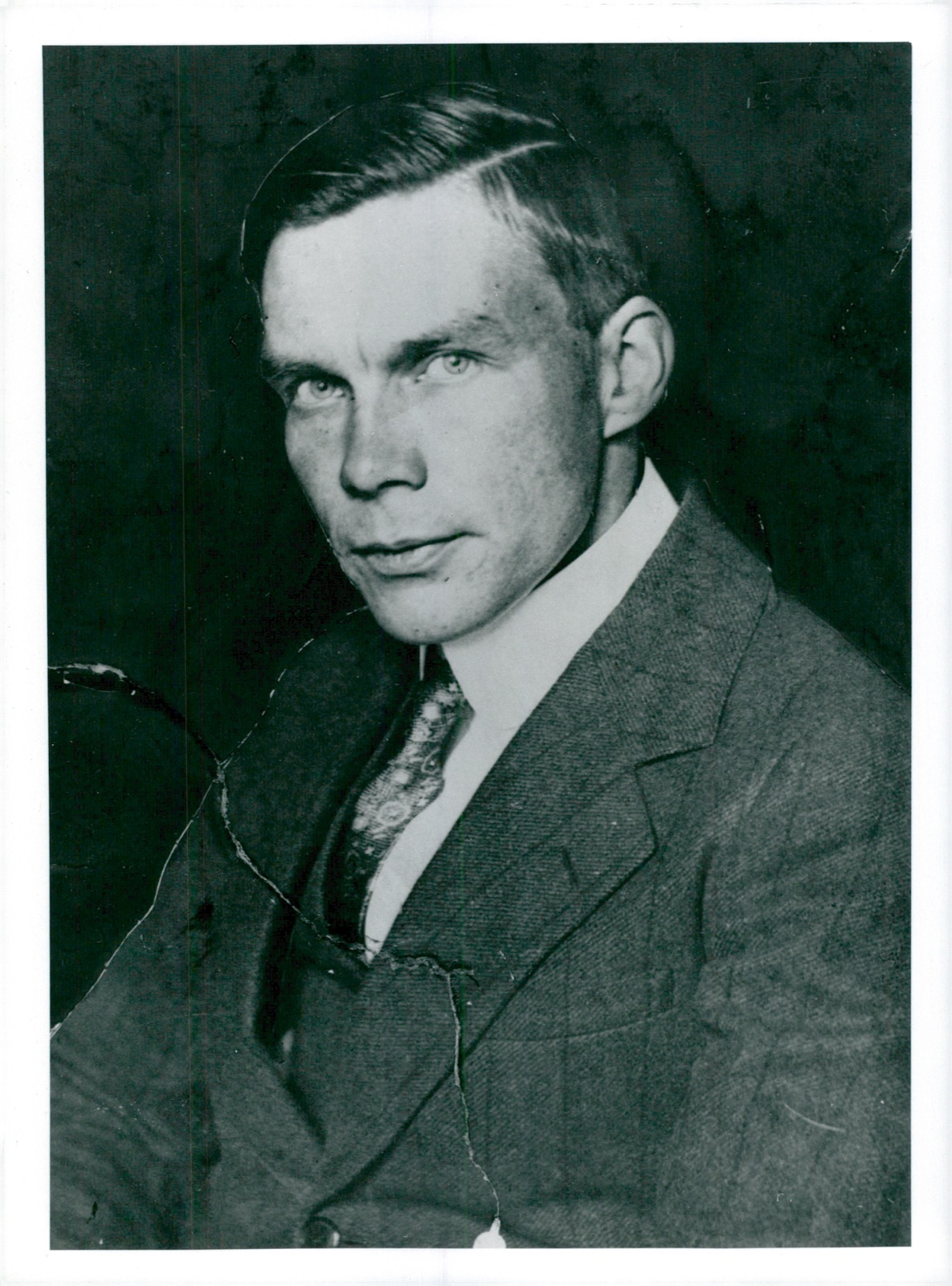
Finn Malmgren was a Swede, born in 1895, a docent at Uppsala who had spent three winters in the ice north of Siberia aboard Amundsen’s Maud and had flown on the Norge as her meteorologist. He was engaged to be married, and had agreed to make the Pole flight and one more before going home. He was, the Norwegian journalist Odd Arnesen wrote from Kings Bay, “the only one among them who knew the polar ice.” The other scientists were Aldo Pontremoli, professor of physics at Milan, and František Běhounek, director of the radium institute at Prague. The rest of the sixteen who flew to the Pole were three naval officers to navigate, Adalberto Mariano, Filippo Zappi and Alfredo Viglieri; an engineer, Felice Trojani; the chief rigger Natale Cecioni; the chief mechanic Ettore Arduino and the mechanics Attilio Caratti, Vincenzo Pomella and Calisto Ciocca; the rigger Renato Alessandrini; the radio operator Giuseppe Biagi; and Ugo Lago, a journalist from Mussolini’s own paper. Pedretti and a second journalist stayed at Kings Bay to lighten the ship.
What they were trying to find out
Nobile said what the expedition was for in an address to the Geographical Society at Milan just before the start, which Arnesen quoted from Mussolini’s paper. The flight of 1926, he said, had been “merely a beginning of a new era in polar exploration.” There were “four million square kilometres of unexplored polar tracts,” and he meant to look for land in them. “We have foreseen everything, even the possibility that we may have no luck, even the possibility of disaster.” And he named the thing he feared most, which was not the ice. If the expedition failed, “maybe someone or other from those northern countries would say, ‘There you see. We warned you beforehand. Your race does not breed polar explorers.’ And that seems to me to be almost the greatest danger we have to face.”
So the hypothesis had two parts. The first was about the machine: that a semi-rigid airship of the Norge’s size, housed in Amundsen’s hangar at Kings Bay and served by a ship, could make repeated exploring flights of two or three days over sea nobody had seen, and could put men down on the ice to work. Three flights were planned: east to Nicholas II Land, the islands north of Siberia that a Russian had sighted in 1913 and nobody had charted, to land scientists on them; to the Pole, to anchor there while a pneumatic basket lowered Malmgren to sound the sea and bring up water from two thousand metres and Pontremoli to measure the earth’s magnetism; and west along the north coast of Greenland, to settle whether Crocker Land existed.
The second part of the hypothesis was about weather. An airship could not fight a gale, so an airship expedition was an experiment in forecasting: whether, from reports gathered at Tromsø and read by Malmgren aboard the ship, one could choose a window long enough for a flight of fifty or sixty hours and get home before it closed. When the journalists asked Malmgren when the next flight would be, he told them: “You get us three or four days of high pressure in the polar regions, and then we’ll vamoose, to the great joy of you journalists.”
Nobile had worked out what the weather would cost if the forecast was wrong. In 1926 the Norge had been free to land wherever the wind took her. This time every flight had to end at the only hangar in the Arctic, so that, as he wrote afterwards, “if a strong wind opposed our return to Svalbard, it would have to be faced and overcome.” He loaded seven thousand kilograms of petrol, enough for about eighty-five hours at eighty kilometres an hour, as a reserve against headwinds. The plan, in other words, assumed that the way to deal with a wrong forecast was to fly into it.
What they built
The Italia was the Norge’s twin: 18,500 cubic metres of hydrogen, three Maybach engines of 750 horsepower together, a top speed of 115 kilometres an hour, and an empty weight that Nobile brought down to about 10,500 kilograms, thirteen hundred less than the Norge. For an emergency there was a heavy chain to be dropped as ballast, a reserve short-wave transmitter and receiver that could be worked from batteries, and, for measuring height when the altimeter could not be trusted, glass balls to be dropped from the window and timed with a stopwatch.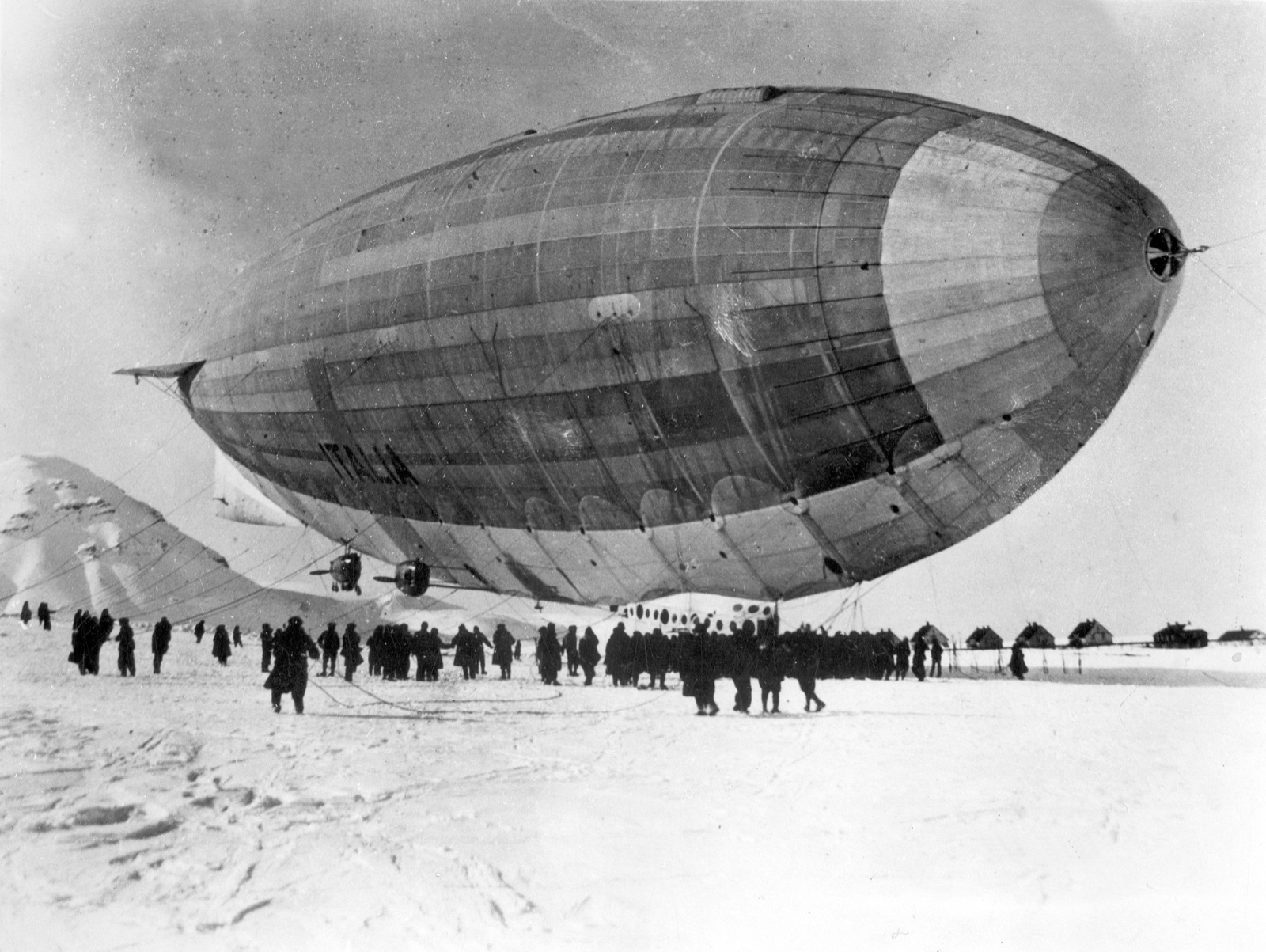
She left Milan before dawn on 15 April 1928, flew through hail and lightning to Stolp in Pomerania, then over Stockholm to the mooring mast at Vadsø in the far north of Norway, and on 6 May, after fighting a head wind up the coast, to Kings Bay, where the Italians took seven hours to walk her into Amundsen’s hangar, a timber frame a hundred metres long with canvas shutters for walls and no roof. The first flight, on Friday 11 May, lasted eight hours: fog north of Spitsbergen, and back. The second left on 15 May for Nicholas II Land and stayed up sixty-nine hours. She flew east over frozen sea to within an hour or two of the coast she was looking for, and turned back, after Nobile had consulted Malmgren, when fog and a north wind made the landing impossible and the fuel reserve began to look thin; she found her way home across Novaya Zemlya by radio bearings from the ship. When the General came out of the hangar he told Arnesen what he thought of his ship. “Practically speaking, nothing can happen to it. Everything possible has been done to strengthen it. All dangers have been foreseen, and she is as strong as any airship can be.”
In the days between the flights the hangar’s lack of a roof made its own experiment. Wet snow fell on the envelope, ten tons of it, and sailors, Alpini and Norwegian miners cleared it with brooms from planks ninety feet up. A rent in the envelope at the stern was patched on the day before the Pole flight, and another behind the control cabin just before the start. Arnesen, who watched the man prodding the patch “until it quivered”, wrote a year later that it was “not improbable that this rent was the cause of the disaster two days later.” In the hangar a foreman named Rosetti, who had been there with the Norge, gave the journalists his comparison of the two expeditions in the little Norwegian he had learned: “King’s Bay ‘26—good—very good, King’s Bay ‘28 no good—no eat—no sleep—work, only work.”
Twenty-six hours
The Pole flight was to have left on the evening of 22 May. It left at twenty-eight minutes past four on the morning of Wednesday the 23rd, by Nobile’s log, after a night of loading in the hangar. The high pressure Malmgren wanted had not come. A friend who had studied Arctic weather for decades asked him whether he would really start in weather like this, and he said: “The weather is not of the best, but one hasn’t the face to keep walking the decks of the Città when one has already donned one’s flying-kit. I fear the nor’-wester and a lot of other trouble as well.”
The ship went north-west to the coast of Greenland and then north along it with a south wind behind her. By evening the wind that was carrying them was blowing at a strength that made Nobile wonder, he wrote, about the way back. At Cape Bridgman, the last point of Greenland, he turned for the Pole: 706 kilometres, which the Italia covered in six hours and fifty-one minutes at 103 kilometres an hour. Twenty minutes after midnight on 24 May the officers at the sextant called “Ci siamo”: we are there. They could not land. The fog that had hidden the Pole from the Norge in 1926 hid it again, a wall of cloud to a thousand metres. Nobile went down under it to 150 metres above the ice, let fall the Italian flag, the banner of Milan and the cross blessed by Pius XI, and sent messages to Mussolini, the King and the Pope. The ship stayed over the Pole for two hours.
The question of where to go next had been in Nobile’s mind for hours, and he wrote down the argument. The wind was strong from the south. To go home meant to fly into it, perhaps for a day, perhaps in fog; the thought, he wrote, “repelled” him. He had brought charts and sailing directions for the Mackenzie River, where the Canadian forecasts promised fog but calm air. He put it to Malmgren. Malmgren advised against. “It will be better to go back to Kings Bay,” he said. “That way we can complete our programme of scientific research.” Nobile said what he feared, a long fight against a strong wind. “No,” Malmgren told him, “this wind will not last long. Once we are on the way back it will drop after a few hours, and we shall have north-west winds instead.” Malmgren held to his forecast, and Nobile gave in. At twenty past two the Italia turned south for Spitsbergen.
The wind did not drop. From twenty past ten that morning to twenty past six in the evening the ship made good forty-seven kilometres an hour over the ice, which meant a head wind of about thirty-five and often fifty. Malmgren, Nobile wrote, was annoyed; his prediction had failed, and the wind seemed if anything to be strengthening. “Let us get out of this zone quickly,” he said. “Afterwards things will improve.” Nobile agreed. He ran the two engines he normally used up to 1,300 revolutions and started the third. The airspeed rose to about a hundred kilometres an hour, and the ground speed, between seven in the evening and twenty-five past three the next morning, to sixty-two. For fifteen kilometres an hour the ship was being driven at close to her limit through fog, snow and ice. The log for a quarter to ten to midnight says: nebbia neve e ghiaccio. Ice formed on the envelope, the rigging and the aerial, and when pieces of it flew off the propellers they struck the fabric with a crack like a gunshot and tore small holes, which were found and patched as they happened. The men were quiet. Nobile had not slept since the hangar. There was no second-in-command and no second pilot; the inquiry would make a point of both.
By the morning of 25 May they had been flying for more than fifty hours, and dead reckoning put them north of Moffen Island, within a few hours of home. They were in fact well over a hundred kilometres further east, over the sea north of North-East Land, where the wind had pushed them. At a quarter past nine the elevator jammed with the ship pointing down. Nobile stopped the engines, and the Italia, still lighter than air, rose through the fog into sunshine at 1,100 metres. At five to ten two engines were restarted and the ship went down under the fog again, to three hundred metres. The wind had dropped: with two engines, Nobile reckoned, they would make Kings Bay between three and four that afternoon. Half an hour after the elevator had jammed, Malmgren had come aft to Běhounek’s instruments looking worried. “We could come down on the ice at any moment,” he said. “We are flying only with the help of the engines and the elevator. The airship is heavy.” Běhounek looked at the altimeter, which was steady, and did not believe him.
At half past ten Nobile went forward to the right-hand window, between the rudder and the elevator, to drop a glass ball and time its fall. While he waited with the stopwatch Cecioni, at the elevator, said: Siamo pesanti. We are heavy.
The inclinometer showed the stern eight degrees down, and the variometer a descent of more than half a metre a second, with the pack ice close beneath. Nobile ordered the two engines to full power and the third started, to lift the ship on her way like an aeroplane, and sent Alessandrini up inside the envelope to look at the gas valves in the stern. The ship tilted to fifteen or twenty degrees and went on falling, faster. Nobile saw that nothing would hold her, and ordered what was left: engines stopped, so that there should be no fire, and the ballast chain dropped. Cecioni could not untie the hemp rope that held it. Nobile shouted at the port engine, which was still running, to stop, looked out, and saw the stern gondola a few tens of metres above the ice. He came back inside to find Malmgren letting go of the rudder wheel and turning towards him “with an astonished face”, and took the wheel himself, thinking of steering for a patch of snow. It was too late. “The pack was there, a few metres beneath us, terribly broken up. The blocks of ice grew larger, came nearer and nearer. An instant later we struck.” He formed, he wrote, with perfect clarity, the thought: Tutto è finito. Everything is over.
It was 10.33 on 25 May. Between Cecioni’s two words and the ice, by Nobile’s reckoning, two or three minutes had passed. Běhounek, standing by Cecioni at the chain, had seen the ice “fly towards us” and shut his eyes with the same thought. The stern gondola struck first and Pomella, alone in it, was killed. Then the control cabin hit, broke open along its floor and was torn off the keel. Nine men were left in the snow among its pieces. Above them the Italia, lightened by the weight of a cabin and ten men, rose stern-up into the fog and drifted away to the east with Arduino, Caratti, Ciocca, Alessandrini, Lago and Pontremoli still aboard. Arduino was seen throwing out stores as she went. Twenty minutes later some of the men on the ice saw a column of smoke in the east. Nothing of the ship or the six was ever found.
What it looked like from inside
The first voice Běhounek heard when he dug himself out of the snow was Mariano’s: “All right, all right, siamo tutti.” They were not quite all. Nobile had a broken right leg and arm; Cecioni both bones of his right leg; Malmgren his left arm, which he carried in a sling made from a towel. They were on pack ice about 250 kilometres north-east of Kings Bay, and the laws of chance, as the Geographical Journal remarked the next year, “do not run in the polar regions.” Scattered round the wreckage, thrown out by Arduino or fallen with the cabin, were a tent, two months of food on short rations, petrol, matches, a pistol with ammunition, the navigation instruments, and the reserve wireless set, so little damaged that Biagi had it working the same evening. In the first week Malmgren shot a bear with the Colt, and knew how to butcher it. Biagi painted stripes on the silk tent with aniline dye from the stores, so that it could be seen from the air. That was the red tent.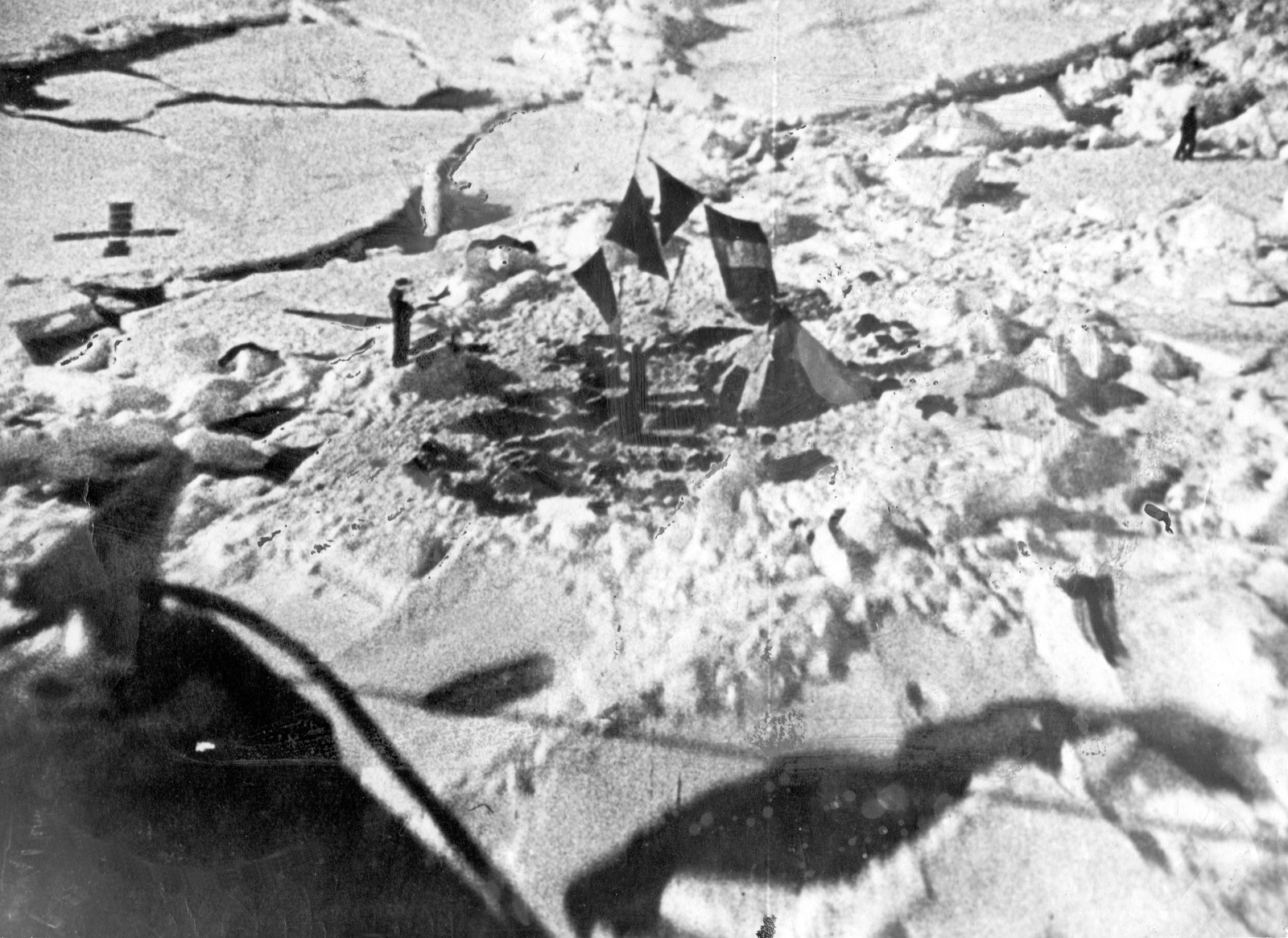
What Biagi sent, every two hours and especially at eight in the evening by Greenwich time, when every station in Europe listened for the time signal from the Eiffel Tower on thirty-two metres, was this: “S.O.S. Italia, Nobile. On the ice near Foyn Island, north-east Spitsbergen, latitude 80 degrees 37 minutes, longitude 26 degrees 50 minutes. Impossible to move, having no sledges and two injured. Airship lost in another place. Answer via Ido 32.” What he heard, because the little set received far better than it sent, was everything: the ship’s press reports and private telegrams, the bulletins from San Paolo every evening, and the ship’s own message to them at the fifty-fifth minute, placing them more than a hundred kilometres west of where they were. “Vox clamantis in deserto,” Nobile wrote: a voice crying in the wilderness. “We noted with bitterness that on the Città di Milano they must evidently take us for dead, since they devoted most of their time to transmitting reports for newspapers and private telegrams.” Why she did not hear them was a question Nobile put to her captain, Commander Giuseppe Romagna Manoja, on the day he came aboard a month later. The answer, which the companion piece “The twelve days” gives in full, was that the ship’s officers had reasoned from the absence of an SOS to the death of the operator, and from the death of the operator to the uselessness of listening. “And so,” Nobile wrote, “for twelve days running, nobody on the Città di Milano listened to our call for help.”
On the ice they could not know the reasoning, only the result. On the fifth day Mariano and Zappi proposed to walk to the coast of North-East Land, to the south-west, where the hunters’ huts were, and Malmgren, the only man who knew ice, said he would go with them. Nobile wanted everyone to stay and wait for the radio. On 30 May he gave way. Malmgren shook his hand. “Very well, General. In any case, remember that most lost expeditions have been saved at the last moment.” They took about fifty kilograms of pemmican and chocolate, an axe, two knives, no tent, no sledge and no boat, and went off towards Foyn Island, a rock on the horizon eighteen miles away. Nobile wrote afterwards that none of the three would have gone if the ship had heard them. “Yes, be convinced of it: the three would not have left, if they had not been persuaded that our appeals for help would never be heard.”
On the evening of 3 June, at Vokhma, a village in the forests of the northern Dvina more than two thousand kilometres from the tent, a young radio amateur named Nikolai Schmidt picked up fragments of the call on a home-built receiver and wired Moscow. Moscow passed them to Rome, Rome passed them to Kings Bay with an order to stop the private traffic and listen, and a shore station was set up. On the morning of 7 June the Città di Milano heard “S.O.S. … Francesco …”. On the 8th, at twenty-three minutes past seven in the evening by Greenwich, she heard the whole message, and Nobile answered that night: “We confirm longitude twenty-eight east, latitude eighty and thirty north. Giuseppe Biagi 86891. We receive only on short wave.” On the ship, Arnesen watched the operator on duty leap from his chair “like a perfect maniac” and gasp, “It is Nobile! It is the Italia!”
From then on the camp could be found, and could not be reached. Two Norwegian naval flying boats, flown by Finn Lützow-Holm and Hjalmar Riiser-Larsen, who had flown the Norge, circled the camp’s reported position on 17 and 18 June; the men on the ice saw them pass within two kilometres and lit fires and waved, and were not seen. “There were millions of tents to be seen on the ice,” Riiser-Larsen said afterwards, “millions of vessels, millions of aircraft, and everything else one might wish for.” He told the ship that only an aeroplane carrying a short-wave set, steered from the ice by Biagi, could find the tent. On 20 June the Italian pilot Umberto Maddalena flew it that way, with Biagi tapping out “Slightly to the right … Slightly to the left … Now you are right above us”, saw five men jumping on the ice, and dropped six hundred pounds of supplies, among them a new battery for the set.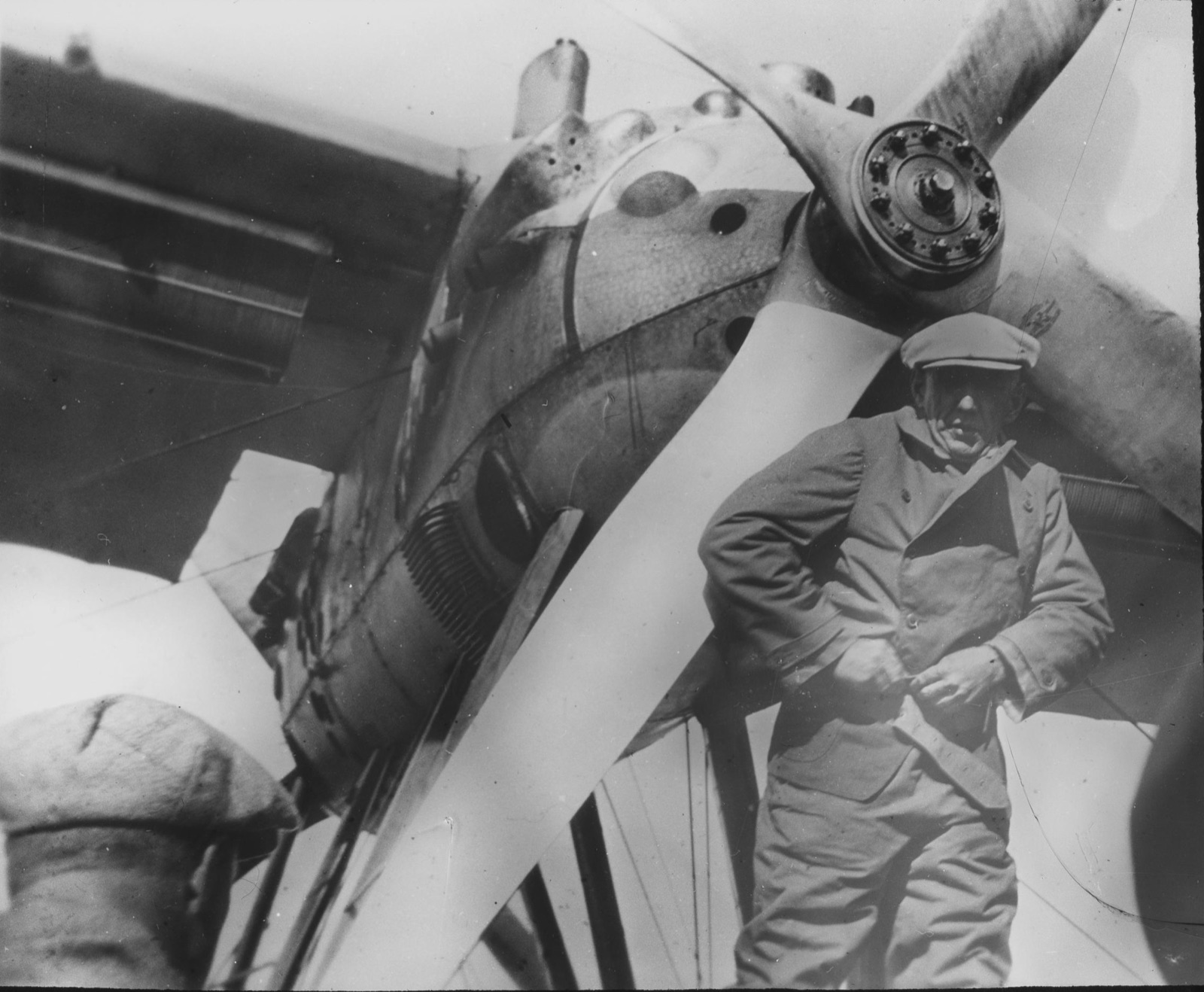
Two days before that, in the afternoon of 18 June, a French naval flying boat, a Latham 47 flown by Commander René Guilbaud, had taken off from Tromsø for Spitsbergen with Roald Amundsen and his old pilot Leif Dietrichson aboard, and three Frenchmen: Albert de Cuverville, Émile Valette and Gilbert Brazy. When the news of the crash had reached Oslo and Amundsen was asked whether he would go to the rescue of the man he was not on speaking terms with, he had answered, “Instantly.” He had told a friend that it was the six who had gone with the envelope, not the men at the tent with their wireless, who most needed help. The Latham asked a coastal station about the ice off Bear Island and was never heard again. On 31 August a fishing sloop found one of her floats off the Norwegian coast. Nothing of the six men has been found.
The Swedes had come north with a ship, two seaplanes, a big Junkers and one small Fokker on skis. Just before midnight on 23 June its pilot, Lieutenant Einar Lundborg, landed on the floe beside the camp and asked the General to be the first to come. Nobile pointed to Cecioni and said: “I have decided on another sequence. First Cecioni, then Behounek, Trojani, Viglieri, Biagi, and finally myself.” Lundborg answered that his orders were to bring the General first, that Nobile was needed on the ship to direct the rescue, and that he would be back within the hour for two at a time. The others agreed, Cecioni began to cry, and Nobile went, with the ship’s logbooks. Lundborg went back alone at half past four that morning, his engine missed over the floe, and the Fokker stood on its nose in the slush. There were now six men in the camp and the only aeroplane that could land on it was wrecked; Lundborg was taken off on 6 July in a de Havilland Moth, and nobody else. On the Città di Milano, Arnesen reported, Romagna’s greeting to the Swedish pilot had been: “Why did you save the General first? He is nothing but a trouble to us.” The companion piece “Midsummer Eve” gives both landings as Lundborg told them.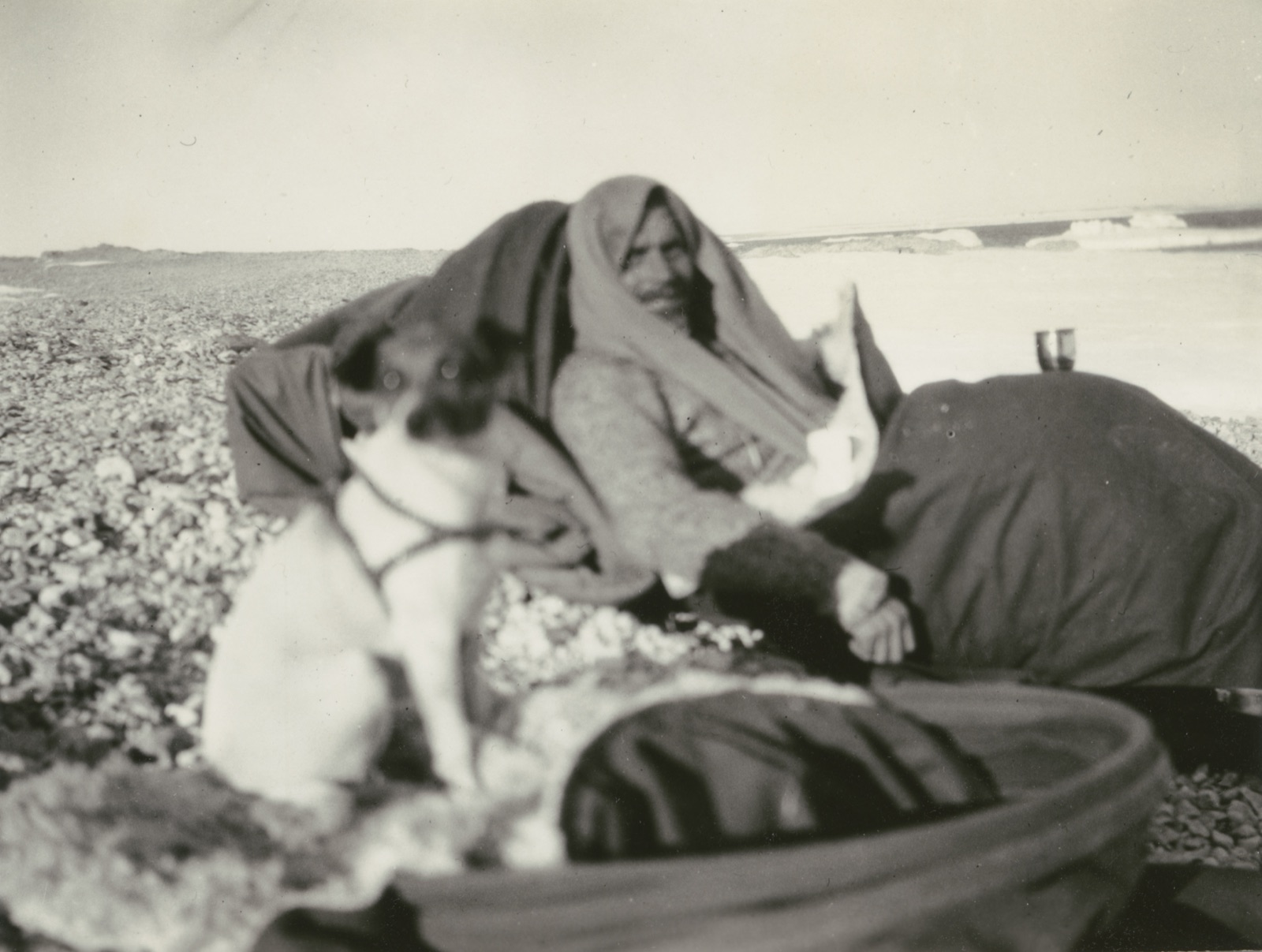
What happened
The ice-breaker Krassin had been laid up at Leningrad for two years. She sailed in the middle of June under the geologist Rudolf Samoilovich with a hundred and thirty-eight men and a three-engined Junkers on her deck, and went north round the top of Spitsbergen. At Cape Platen on 3 July she lost a blade of a propeller and damaged her rudder in ice six feet thick, and lay four days against a floe. On 10 July her pilot, Boris Chukhnovsky, flew east in gathering fog, saw men on a floe north-west of Broch Island and wired their position, could not find the ship again, and put down on North-East Land, breaking his undercarriage. He asked that the men on the ice be picked up before him. At ten to eleven on the morning of the 11th the Krassin put her engines to full power and went into the ice. At five the next morning the officer of the watch saw two men on a floe a few yards across; by seven the ship was alongside. They were Zappi, walking, and Mariano, lying with frozen feet, roped to him. The Russian who reached them asked in German where Malmgren was. Zappi pointed at the ice and the water. “Malmgren is at Broch Island,” he said at first; then, “Malmgren is not there either. He remained on the ice.”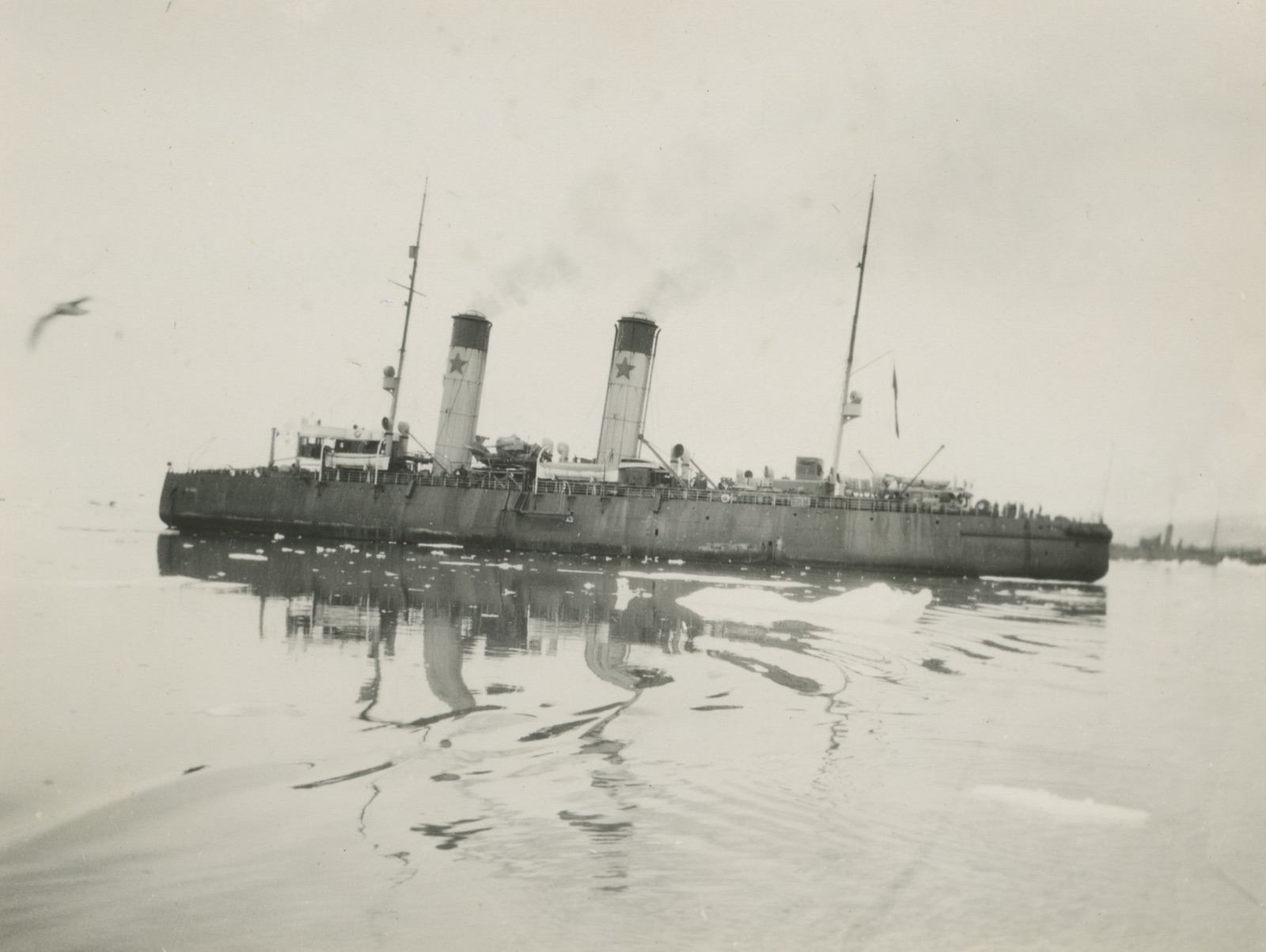
Zappi’s account was that Malmgren had broken down about a fortnight out, with both feet frozen and his arm useless, somewhere south-east of Broch Island, and had asked to be left with a trench dug for him in the ice, and had given them his compass for his mother. They waited within a hundred yards for a day. “When Malmgren saw this he called: ‘Go on, go on! You can save the others by leaving me to die.’” Zappi gave the date as 16 June in one telling and said in another that neither man had kept a diary and that he could not say for certain it was the 12th. Mariano’s foot was amputated on the voyage home. The Krassin searched the ice around for Malmgren’s body and found only his flying-suit, which the airmen had taken for a third man.
The same evening, in fog, with the men at the tent firing shots and lighting smoke bombs at the sound of her siren, the Krassin came to the red tent. Viglieri, Běhounek, Trojani, Biagi and Cecioni, forty-nine days on the ice, walked or were carried across the planks. The Krassin asked the Italian ship where she should look for the six men of the envelope and was told, Arnesen reported, that there was no need, since the column of smoke had settled it; and Rome wanted the survivors brought to Kings Bay. The ship came in on the morning of 19 July. On 29 September, over the Rhône near Valence, the Italian flying boat of Commander Luigi Penzo, flying home from the search for Amundsen, struck a power line in a storm and went into the river; Penzo, Lieutenant Crosio and Sergeant Della Gatta were drowned.
The dead were seventeen. Pomella in the crash; Malmgren on the ice; Arduino, Caratti, Ciocca, Alessandrini, Lago and Pontremoli in the envelope; Amundsen, Dietrichson, Guilbaud, de Cuverville, Valette and Brazy in the Latham; Penzo, Crosio and Della Gatta on the way home. Eight of the Italia’s sixteen came home.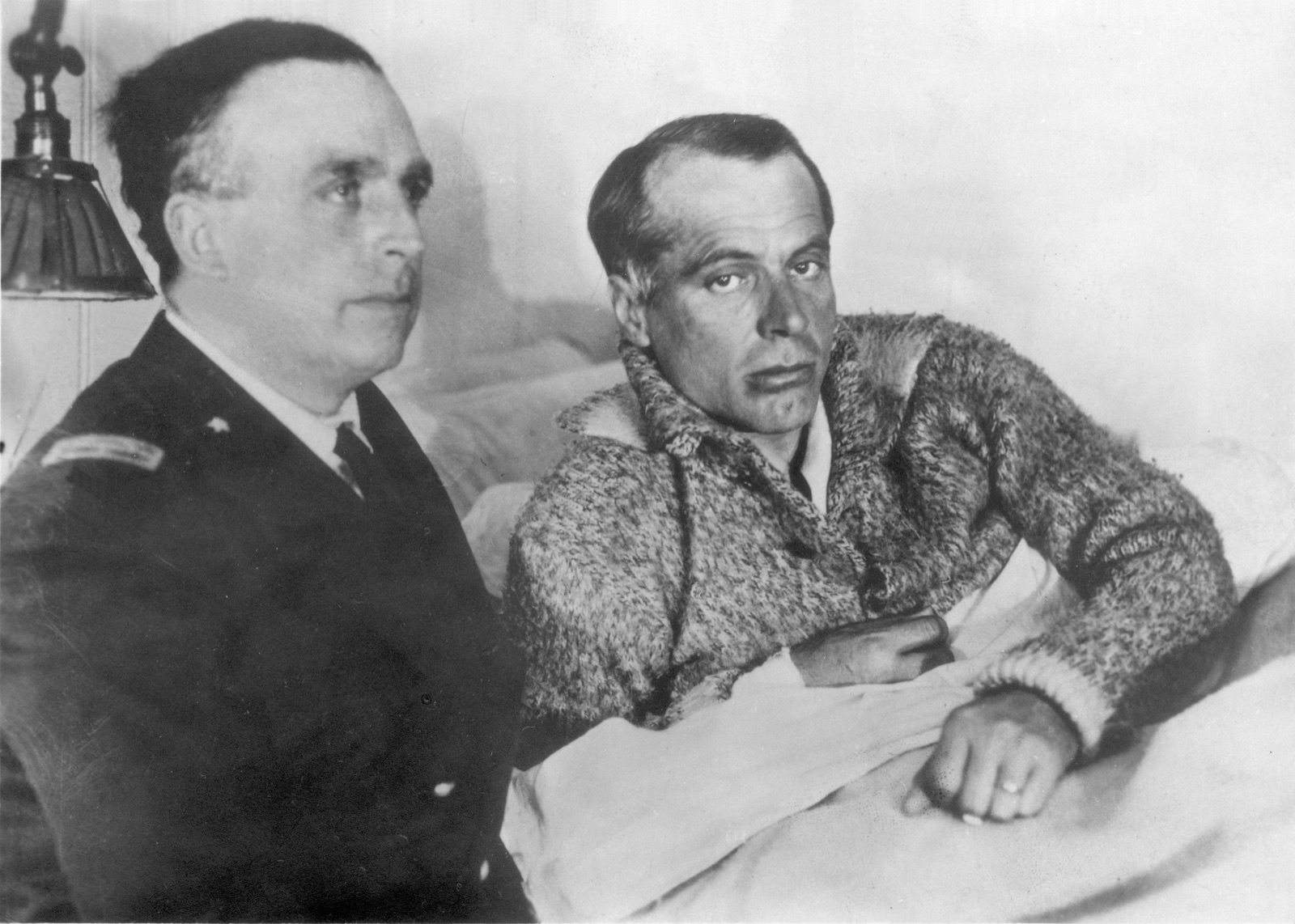
After
The argument had begun before the rescue was over. Lundborg found Nobile on the ship “quite depressed, not the least because of all the adverse criticism that had been directed against him and his Italia venture from practically the whole world.” The Italian government, on 12 September, called off the search for the six.
In the autumn Mussolini appointed a commission of inquiry under Admiral Umberto Cagni, with four generals, an admiral and a senator. It sat sixty times between 12 November 1928 and 27 February 1929, heard every survivor, read the logbooks and the telegrams, and took a technical opinion from General Gaetano Arturo Crocco, the aeronautical scientist. Its report went to Mussolini on 3 March 1929 and to the newspapers the same day. On the loss of the ship the commission “finds unanimously that there is a precise responsibility of the Commander for an erroneous manoeuvre”, and on the whole of the expedition that “General Nobile has shown that he has limited technical qualities as a pilot and a negative capacity for command.” Nobile’s leaving the ice before his companions was “contrary to the traditions and the laws of military honour” and “finds no plausible justification”. The rescue, with its foreign collaboration, “constitutes a wonderful example of human solidarity, culminating in the ice-breaker Krassin’s fortunate exploit and the chivalrous and generous sacrifice of Roald Amundsen.” Crocco’s treatise, printed with the report in 1930, ended by saying that if one went back from the immediate causes of the catastrophe, “moreover indeterminable”, to the ultimate ones, they lay “in the structural composition of the crew and in the uncertain distribution of tasks and responsibilities among its members. Above all, a skilled pilot, possessing that trained capacity acquired only by a long course in navigation, was lacking on board.” The companion piece “The inquiry” sets out the findings, and what has been made of them since.
Nobile resigned his commission in the air force. He went to the Soviet Union in 1931 to build airships, and to the United States in 1939, and in 1945, when the regime that had judged him was gone, he was reinstated with his rank. He died in 1978. In 2019 two authors in Polar Research, one of them a flight surgeon, went through the commission’s findings again and concluded that the manoeuvres it said he should have made were ones he had made, except for keeping the bow to the wind, which a ship falling stern-first could not do; that the most probable cause of the fall was gas lost through a tear in the stern of an envelope that had been shovelled and patched; and that the ultimate cause Crocco had named was the right one. The commander had been awake for more than two days, and there was nobody whose job it was to take over.
The six in the envelope were looked for longest, and by the most unlikely people. On 9 July 1930 Captain Theodor Grodahl of Tromsø landed from the sealer Hanseat on the south-west point of White Island, the dome of ice east of Spitsbergen, “to look for traces of Nobile’s balloon party”, as the Swedish Society that later published the Andrée diaries recorded his account. He and two men searched the strip of bare ground between the shore and the ice-cap and found, a hundred and fifty yards from the beach, a rusted sheet-iron box and a wooden peg “evidently formed by human hands”. He sent five more men ashore to look for eggs and “if possible, to find some remains of Nobile’s balloon party. I never thought a minute of Andrée; when he went on his expedition I was quite young.” They were driven off by the pack ice after four or five hours. Four weeks later, on 6 August, two sailors from another sealer walked up the same beach and found the canvas boat, the diaries and the bodies of the three men who had left Danes Island by balloon in 1897, where Grodahl had stood. That story is told in “Sixty-Five Hours”. The six of the Italia left no diaries to find. The last trace of them is the column of smoke.
What it taught
The expedition tested both halves of its hypothesis, and both reported. The machine did what Nobile had said it would. It stayed up sixty-nine hours on one flight, found its way home by radio, and reached the Pole against the fog. The forecasting, which was the other half, failed on the one occasion that mattered, and the design of the experiment had no way of noticing.
The forecast was read, and then the reading was not revisited. Malmgren read hundreds of weather reports, and his advice at the Pole was a forecast: the south wind would drop in a few hours and come round to the north-west. It was wrong within eight hours, and he said so; the log says so; the ground speed of forty-seven kilometres an hour said so. What followed was not a new decision but the old one, carried out harder: the third engine and a hundred kilometres an hour through fog, snow and ice, for twenty-six hours. The ship had been designed to carry eighty-five hours of petrol so that a head wind could be “faced and overcome”, and a plan built on that principle has no point at which a wrong forecast becomes a reason to stop. The reasons to stop were there to be read. Rosetti’s “no eat, no sleep” was one. Malmgren’s “one hasn’t the face to keep walking the decks of the Città when one has already donned one’s flying-kit” was another, and the date was a third: Nobile wrote in his first report from the ship, by Arnesen’s account, that “if I had not so firmly made up my mind to plant the Italian flag on the North Pole on May 24th—the anniversary of Italy’s entrance into the world war—the whole disaster might have been averted.” Nobody on board had been given the task of saying no to the commander, and the commander had not slept.
The instrument that spoke after the crash was heard by everyone except the people whose job it was to listen. Biagi’s reserve set was the best piece of equipment the expedition carried, and it worked from the first evening. It was heard at Vokhma, more than two thousand kilometres away, on a receiver a young man had built himself. It was heard on 29 May by Pedretti, the operator who had been left behind to lighten the ship. What stood between the signal and the rescue was a theory. The Città di Milano’s officers had reasoned from the absence of an SOS to the death of the operator, and from the death of the operator to the uselessness of listening, and the reasoning was, as Romagna kept saying, logical. It freed the station for the traffic that was waiting for it, four hundred telegrams on the day before the Russians called. Listening is not a passive state. It is a procedure, with hours and wavelengths and a person whose only duty it is, and a rule about what a fragment heard once is worth; and the procedure here was replaced by an inference. Nobile’s argument on the ship was that if the camp had been heard before 30 May, nobody would have walked, and Malmgren would have lived. The commission did not examine that claim.
An inquiry that names a man has answered a question nobody asked. Cagni’s commission put the loss of the ship on “an erroneous manoeuvre” by the commander, which was the one thing its evidence could not establish, since the ship was gone and the survivors’ memories of three minutes were six months old. It censured him for the one decision in the story that was demonstrably made by somebody else. And it had before it, from its own technical adviser, the finding that mattered: that there had been no second pilot, no deputy, and no clear division of tasks on an airship whose commander had been at the controls for fifty-four hours. That is a finding about how the expedition was built, by the ministry that had lent the ship and withheld the aeroplanes, and it was left in the appendix.
The complication is that the second half of the lesson was learned, by the people who had the most reason to learn it. The Swedes who came north came with wireless sets in their aeroplanes; Riiser-Larsen said at once that only a wireless could find a tent on the ice, and Maddalena found it in a morning once Biagi was steering him. Nobile’s own verdict on the whole affair was a name. “Nikolai Schmidt,” he wrote: “a name to be remembered well, because it is to him first of all that we must be grateful if half the members of the expedition are alive today.” The instrument on the ice had done its work by the evening of 25 May. The experiment, from then on, was in who would listen, and the result was that a boy in a Russian village and a warrant officer who was overruled listened, and the base did not.
Sources
- Umberto Nobile, L’Italia al Polo Nord (Mondadori, Milan, 1930). The decision to fly again and the request to Mussolini; the airship’s figures; the fuel reasoning; the crew list; the plan for the descent at the Pole; the Pole flight hour by hour, the exchange with Malmgren at the Pole, the headwind, the ice, the jammed elevator and the fall, with the times from the log; the camp, the text of the SOS and of the ship’s message, Malmgren’s departure and parting words, the news of Schmidt and the first exchange with the ship on 8 June; the Krassin’s telegrams; and the chapter on why the SOS was not heard, with Pedretti’s account of 29 May, Romagna’s reasoning, and the undersecretary’s four hundred telegrams. The translations above are mine, and the quotations are kept short because the book is still in copyright. archive.org
- Odd Arnesen, The Polar Adventure: The “Italia” Tragedy Seen at Close Quarters, translated by Asta and Rowland Kenney (Victor Gollancz, London, 1929). Aftenposten’s correspondent at Kings Bay from April to July 1928: Nobile’s Milan address as printed in the Popolo d’Italia, the hangar, the snow and the patches, Malmgren’s remarks before the start, the waiting, the ship’s 8 June reception, the censorship, Lützow-Holm and Riiser-Larsen, Maddalena’s flight and Biagi’s directions, Amundsen’s departure and the float found on 31 August, Lundborg’s two landings, Romagna’s remark to Lundborg, the Krassin, Zappi’s accounts and the dates he gave for Malmgren’s death, and the count of the dead as it stood in 1929. archive.org
- Einar Lundborg, The Arctic Rescue: How Nobile Was Saved, translated by Alma Luise Olson (Viking Press, New York, 1929). The landing of 23 June, the conversation with Nobile and the order of rescue, Tornberg’s message, the crash of 24 June, the camp, and the appendix’s chronology. archive.org
- František Běhounek, Sieben Wochen auf der Eisscholle: Der Untergang der Nobile-Expedition (Brockhaus, Leipzig, 1929). Malmgren’s warning before the fall, the fall as seen from the rear of the cabin, Mariano’s first words on the ice. Translation mine. archive.org
- The New York Times, 24 and 25 May 1928 (the Pole, the messages to Mussolini and the Pope); 14 June (Nobile’s first account of the fall, by wireless from the ice, and the three groups); 16 June (the editorial “Amundsen and Nobile”); 17 and 19 June (Amundsen’s departure and the Latham’s take-off); 25 to 27 June (Lundborg’s rescue and crash); 13 to 15 July (the Krassin, Zappi’s account, Moscow’s reaction); 30 September (Penzo’s crash at Valence); and 4 March 1929 (Arnaldo Cortesi’s report of the commission’s findings, with its composition and the passages quoted on Mariano and Zappi, on Lundborg and on the rescue). 24 May, 14 June, 16 June, 17 June, 25 June, 14 July, 15 July, 30 September, 4 March 1929
- Flight, 31 May, 14 June, 21 June, 28 June, 12 July and 19 July 1928: the week-by-week record as it reached London, including the first count of the groups, Lundborg’s explanation of why Nobile was taken first, and the Krassin’s rescue. 31 May, 14 June, 28 June, 19 July
- The Geographical Journal, vol. 73 (January 1929), “The Wreck of the Italia”, a review of Davide Giudici’s The Tragedy of the Italia with the Krassin’s voyage, Chukhnovsky’s flight, the rescue of Zappi and Mariano and the inventory of the camp; and vol. 72 (October 1928), the obituary of Amundsen. January 1929, October 1928
- Commissione d’indagine per la spedizione polare dell’aeronave Italia, Relazione, dated 27 February 1929, made public on 3 March 1929 and printed with General Crocco’s technical opinion in Rivista Marittima, January 1930, and by the Ministero della Marina in 1930. I could not reach the printed report. The Italian sentences on the commander’s responsibility, on his qualities as pilot and commander, and on his leaving the ice are quoted, in my translation, from the passages reproduced from the Relazione at fattiperlastoria.it; Crocco’s conclusion and the commission’s list of manoeuvres are from the translation and summary in Bendrick and Alessandrini (below), with their page references to the 1930 edition; and the findings on the three questions are from the New York Times of 4 March 1929. fattiperlastoria.it
- Gregg A. Bendrick and Sergio Alessandrini, “No second-in-command: human fatigue and the crash of the airship Italia revisited,” Polar Research 38 (2019). The commission’s composition, dates and conclusions; Crocco’s treatise; Balbo’s testimony; the hours awake; the probable cause of the fall; and Nobile’s later life. doi.org
- Swedish Society for Anthropology and Geography, Andrée’s Story, translated by Edward Adams-Ray (Viking Press, New York, 1930), pp. 199–200: Captain Grodahl’s landing on White Island from the Hanseat on 9 July 1930 in search of the Italia’s “balloon party”. archive.org
- Photographs: the Italia at Kings Bay, the camp from the air on 20 June 1928, and Nobile with Romagna on the Città di Milano, Spaarnestad Photo, Nationaal Archief, public domain, via Wikimedia Commons; Finn Malmgren, Svenskt Pressfoto, 1928, via Wikimedia Commons; Amundsen before the Latham, Worm-Petersen lantern slide, National Library of Norway, NPRA849, public domain; Nobile after his rescue and the Krassin at Kings Bay, Tekniska museet, Stockholm, TEKA0229027 and TEKA0226089, via Wikimedia Commons. Italia, camp, cabin, Malmgren, Amundsen, Nobile rescued, Krassin


